
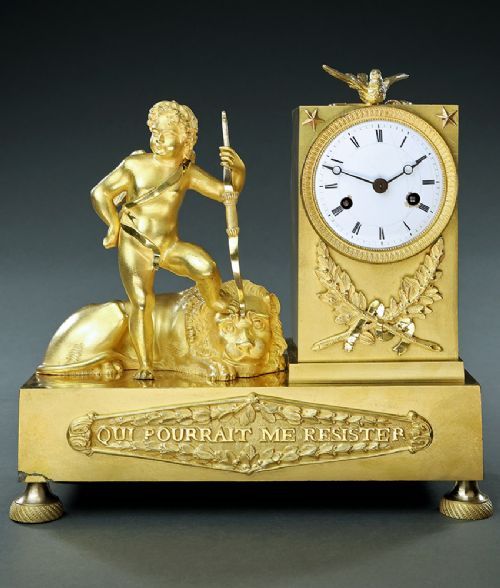
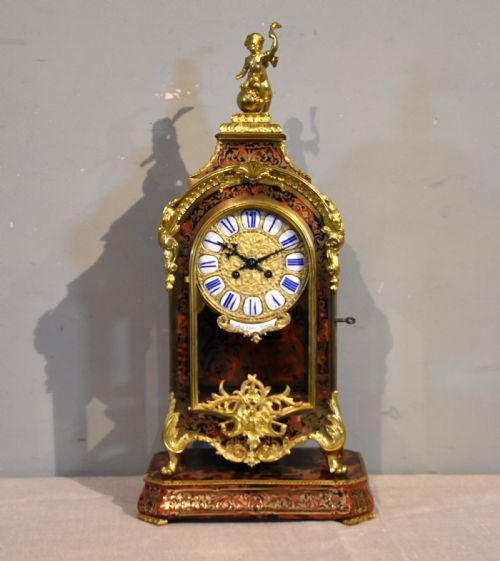


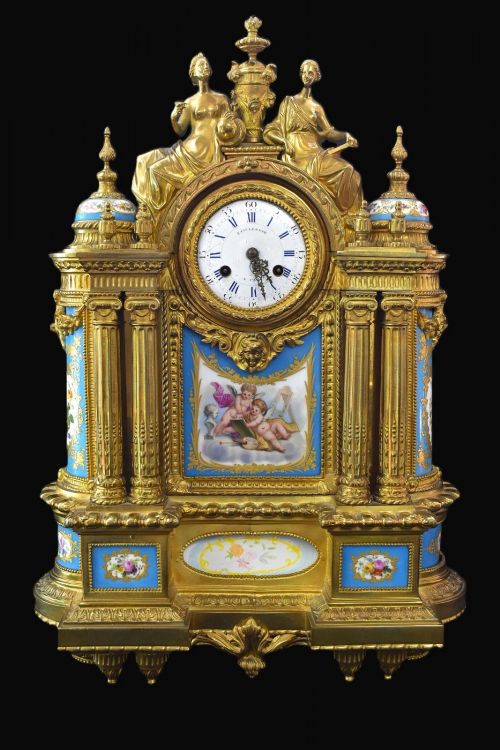
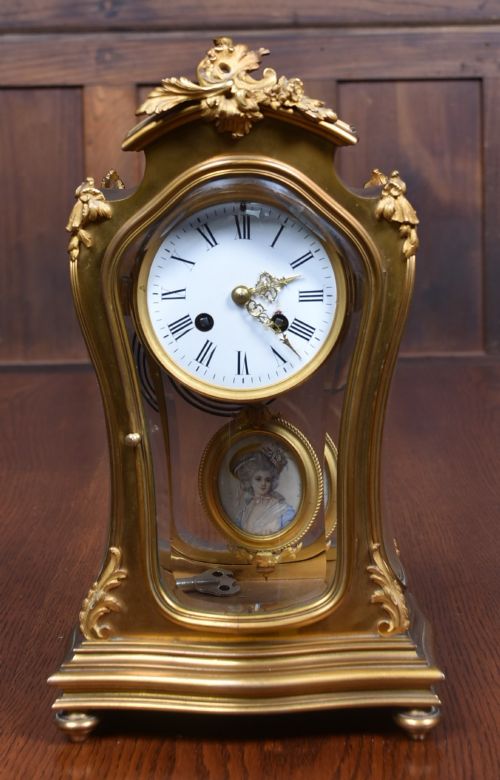
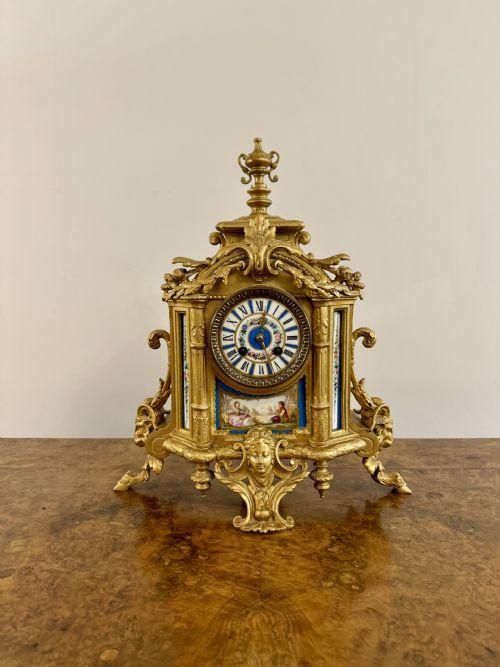


Decorative Bronze Clock
When you search for a decorative bronze clock, you find heavy metal cases shaped by French founders, carrying enamel dials and mounted with figures, foliage and gilt finishes.
Decorative Bronze Clock
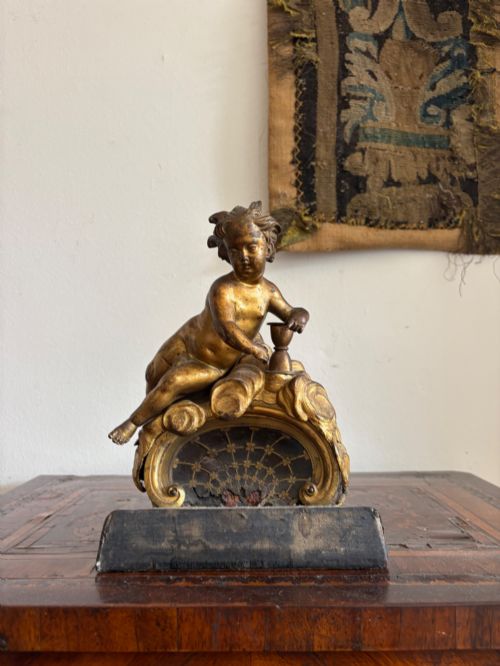
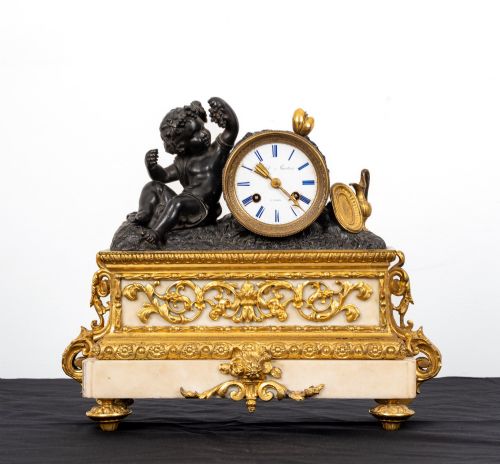
A decorative bronze clock brings heavy metal casting and gilt surfaces into a room, most often taking the form of a mantel clock from the nineteenth century. These pieces emerge predominantly from French workshops working in styles such as French Empire, Rococo Revival, Louis XVI and Napoleon III, turning timepieces into sculptural ornaments.
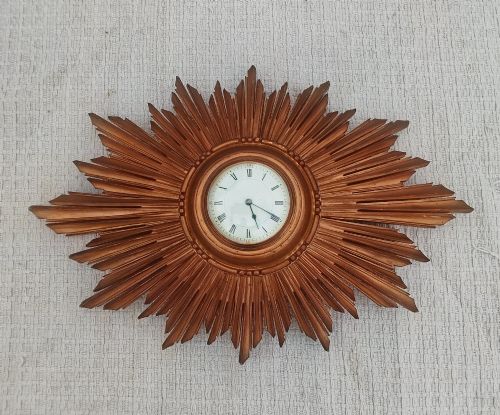
Beyond standard mantel clocks, the selection includes wall clocks, bracket clocks, glass-cased crystal regulators and clock garniture sets flanked by matching decorative objects. Smaller items like finial ornament mounts and table timepieces also appear, showing how bronze and ormolu found their way onto various domestic surfaces.
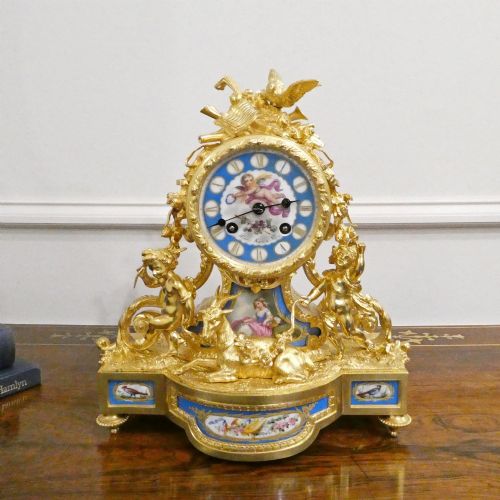
The materials span far beyond plain metal, combining cast bronze and ormolu with porcelain panels, marble plinths, enamel dials and tortoiseshell inlays. Whether cast with figures representing mythological triumphs, animals, or architectural motifs, each piece serves as both a functional timekeeper and a dominant centrepiece.
Materials and Construction Methods
Founders created these bodies by casting bronze or brass before applying heavy mercury gilding or ormolu finishes to achieve a bright, reflective surface. Many cases incorporate carved marble plinths, hand-painted porcelain panels from factories like Sevres or Meissen, and translucent glass panels for crystal regulators.
Clock dials typically feature fired enamel numerals on white backgrounds, sometimes complemented by hand-painted miniatures, delicate brass hands, and champleve enamel borders. Movements inside range from simple 8-day mechanisms to fusee movements and signed French escapements designed to strike hours and quarters.
A porcelain harlequin and a mischievous poodle occasionally share shelf space with classical bronze deities.
Distinctions in Quality
Quality reveals itself in the crispness of the bronze chasing, where sharper relief work on acanthus leaves, figures and mounts separates superior casting from softer, blurred production. The integration of materials also matters, as tightly fitted marble bases, well-preserved porcelain plaques, and original fire-gilt surfaces command higher regard than poorly matched replacements.
The mechanical integrity inside the case dictates standard, with signed movements by known makers and fully restored, working gear trains offering greater dependability. A coherent design where the subject matter, such as mythological figures or architectural Boulle work, remains harmoniously proportioned marks the upper tier of these timepieces.
Henry Marc·Siffel and Cartier·Etienne Lenoir·Rodier·Le Roy Paris·Thuret·PH Mourey·Hessen Paris·Henri Jacot
The Decorative Bronze Clock Glossary
- Ormolu
- Gilded bronze produced by applying a mercury and gold amalgam to a bronze base and heating it to drive off the mercury. This technique creates a rich, durable golden finish characteristic of fine French decorative metalwork.
- Champleve
- An enamelling technique where troughs or cells are hollowed out of the metal surface and filled with vitreous enamel powder before firing. It frequently decorates the dials and bezels of late nineteenth-century clocks.
- Boulle
- A form of marquetry utilising brass and tortoiseshell inlaid in contrasting patterns, named after the cabinetmaker Andre-Charles Boulle. It frequently appears on bracket clocks and mantel clock cases from French traditions.
- Garniture set
- A decorative arrangement consisting of a central clock flanked by matching ornamental pieces such as urns, candelabra or vases. These sets were designed to sit harmoniously on a mantelpiece or console table.
- Crystal regulator
- A clock encased primarily in bevelled glass panels held within a brass or gilt bronze frame. This design allows the pendulum and movement to be viewed clearly from multiple angles.
- Finial
- A decorative ornament that caps the top of a clock case or mount. They take forms ranging from simple architectural shapes to detailed cast putto figures.
Decorative Bronze Clock: Frequently Asked Questions
How do I wind an antique clock?
Use the appropriate key provided with the movement to turn the winding squares gently until resistance is felt, taking care not to overwind the mainspring.
Most traditional French movements require weekly winding to keep accurate time across their eight-day cycles.
Where should I place a heavy marble clock?
Position the piece on a sturdy, level surface such as a mantelpiece, heavy sideboard, or dedicated console table that can easily support the substantial weight of bronze and stone.
Avoid placing the clock in areas subject to direct sunlight or damp conditions that could affect the enamel dial and internal metalwork.
How can I tell a Louis style clock from an Empire one?
Louis XIV and Rococo styles feature flowing asymmetric scrollwork, naturalistic foliage, and elaborate gilt bronze casting, while Empire clocks lean towards classical symmetry, military motifs, and solemn architectural lines.
Examining the casting motifs and the overall silhouette usually clarifies which historical revival period inspired the maker.
What is a clock garniture set?
A garniture set groups a central mantel clock with two matching decorative sidepieces, such as urns or candelabra, designed to be displayed together as a unified ensemble.
These matching groups became popular decorative arrangements in nineteenth-century drawing rooms and formal reception spaces.