
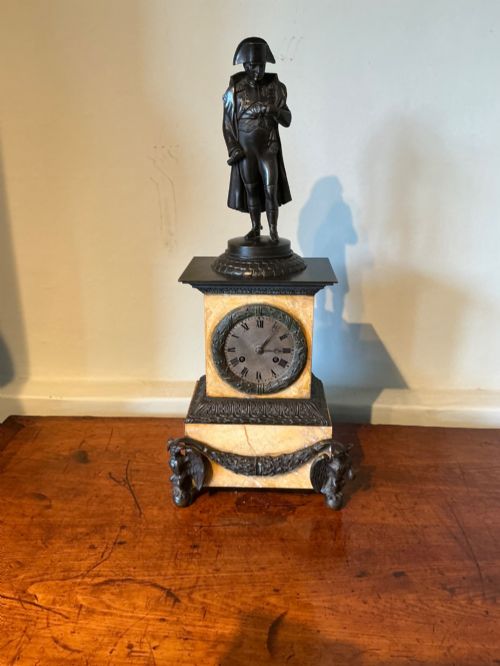
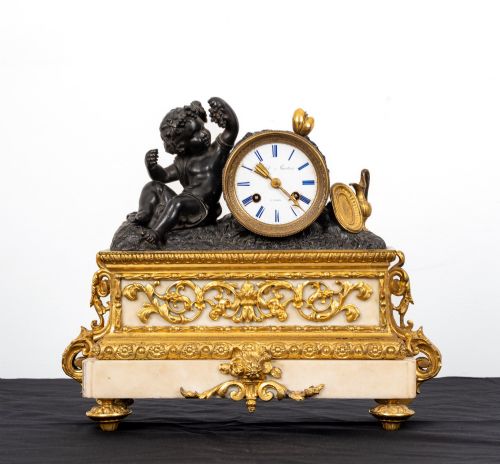
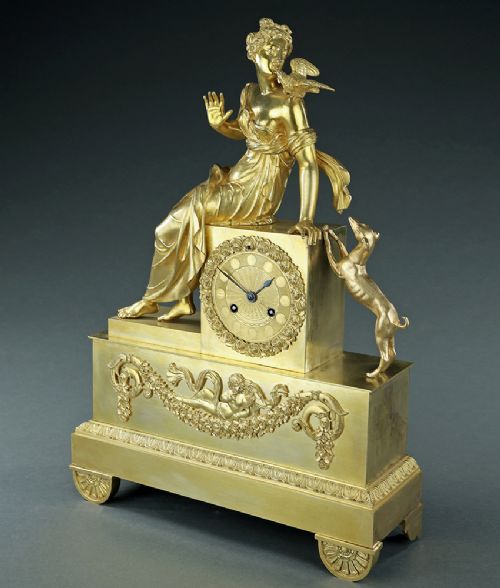
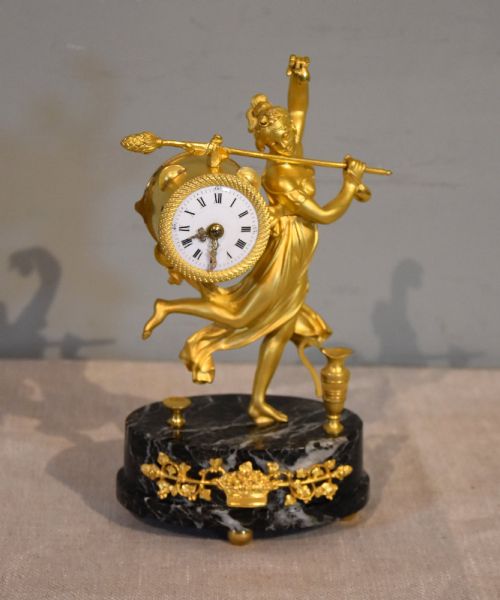
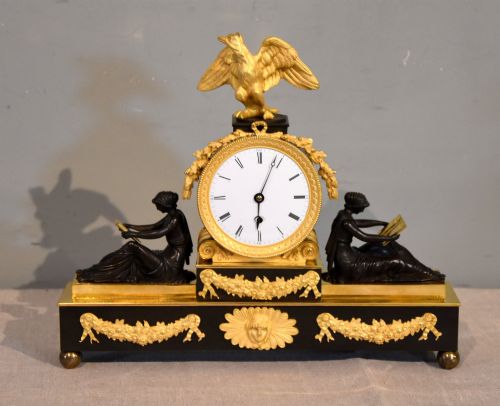
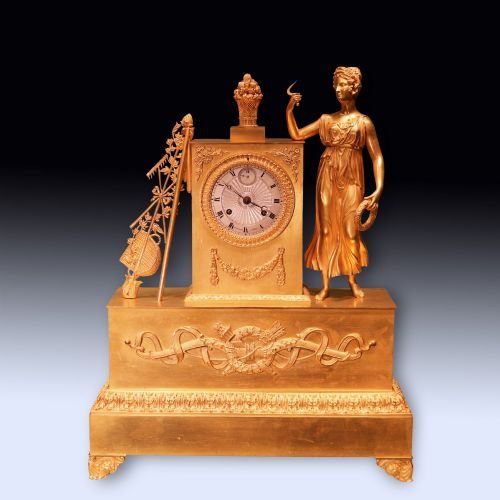


Empire Figural Clock
An empire figural clock places classical mythology or historical personages atop a heavy metal timepiece, bringing architectural presence and sculptural weight to a room.
Empire Figural Clock
An empire figural clock centres on a standing or seated cast figure, ranging from classical deities like Diana or Urania to historical figures such as Napoleon, mounted directly above or beside the dial. These heavy timepieces predominantly emerge from nineteenth-century French workshops, styled in French Empire, Regency, or Neoclassical tastes.
The most common versions met on this page combine cast gilt bronze, or ormolu, with contrasting dark patinated bronze and solid marble bases. Mantel clocks and timepieces dominate the forms, frequently accompanied by side garnitures or sculptural motifs involving lions, cherubs, and palm trees.
How they were made
Maker-founders cast these pieces in bronze, brass, or gilt metal, applying mercury gilding or modern electroplating to achieve the bright ormolu surfaces alongside dark patinated finishes. The structural bases rely on heavy blocks of marble, shaped to support the substantial weight of the metalwork and the internal clock movements.
The listings on this page span the 19th century, Regency, and Victorian periods, utilising materials including ormolu, marble, gilt bronze, and enamel.
What varies in quality
The precision and depth of the bronze-chasing separate standard production models from exceptional ones, visible in the crispness of hair, fabric folds, and facial expressions. Castings that retain sharp relief without soft edges or blurriness indicate superior workshop output.
The integration between the sculpture and the marble or bronze plinth determines visual coherence, with better pieces utilising heavy, high-grade marble and secure mechanical fixings. Furthermore, the presence of signed movements from established makers elevates the horological merit of the clock.
Siffel and Cartier·Canaillor of Paris·Japy Freres·Au Bon Sauvage·Deniere Et Fils·Victor Paillard Paris·Bellenot Paris·Bently and Beck London·Freres Raingo·Cleret of Paris
The Empire Figural Clock Glossary
- Ormolu
- Gilt bronze created by applying a gold and mercury amalgam to a bronze base and heating it. This historic fire-gilding technique produces a rich, durable yellow gold surface found on nineteenth-century French clocks.
- Garniture
- A set of decorative matching objects, usually consisting of a central clock flanked by two matching vases or candelabra. These sets were designed to sit harmoniously together on a mantelpiece.
- Fusee
- A conical pulley used in clock movements to maintain an even pull as the mainspring unwinds. This mechanism improves the timekeeping accuracy of the timepiece.
- Patinated Bronze
- Bronze treated with chemical solutions to produce a controlled dark brown, green, or black surface colour. This dark finish provides visual contrast against bright ormolu mounts.
- Timepiece
- A clock that tells the time without striking the hours or quarters on a bell or gong. Many early French and English examples operate as simple timepieces.
Empire Figural Clock: Frequently Asked Questions
What is an empire figural clock?
An empire figural clock is a heavy mantel timepiece featuring a cast metal sculpture of a classical god, historical leader, or allegorical figure. These pieces combine sculptural art with functional clockwork.
Most examples date from the nineteenth century and incorporate materials like ormolu, patinated bronze, and marble. They were designed as prominent decorative objects for principal rooms.
How do I wind the clock?
Most of these clocks require a specific winding key inserted into small holes on the enamel dial to tension the internal springs. Care must be taken not to overwind the mechanism.
Many listings note whether a clock has been recently serviced or includes its original winding key. Professional servicing is recommended to keep older movements running smoothly.
Where should I place it?
Due to their substantial weight and marble bases, these clocks require a sturdy surface such as a mantelpiece, heavy sideboard, or console table. They work best as visual centerpieces in a room.
Keep them away from direct sunlight, damp walls, and heat sources to protect the delicate enamel dials and gilt finishes. Ensuring a level surface also helps the pendulum swing evenly.
How do I identify the period?
Periods are identified through a combination of sculptural style, dial design, and mechanical construction methods. Regency pieces often feature English fusee movements, while French Empire works display Neoclassical motifs.
Signatures stamped on the bronze or engraved on the back plate often provide specific maker details and clues to the decade of manufacture. Comparing the casting quality helps distinguish early nineteenth-century work from later revivals.