




Green Marble Bronze Urns
Green marble bronze urns bring classical French grandeur to a room, uniting rich stone bodies with crisp cast metal mounts.
Green Marble Bronze Urns
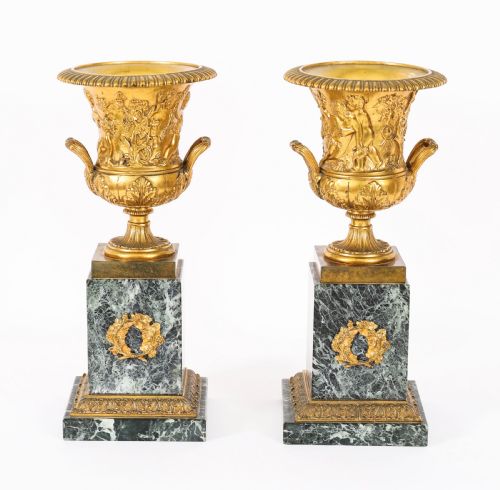
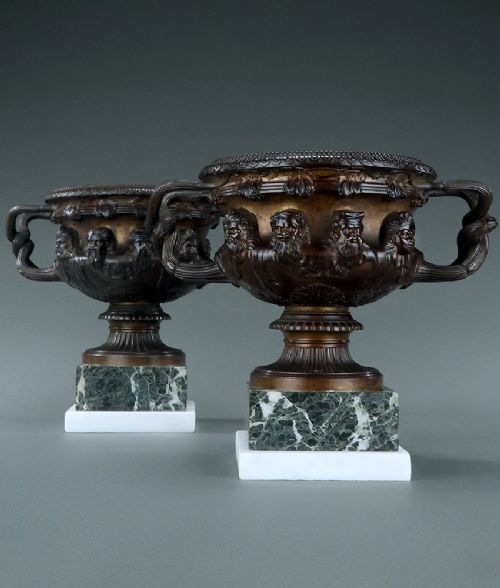
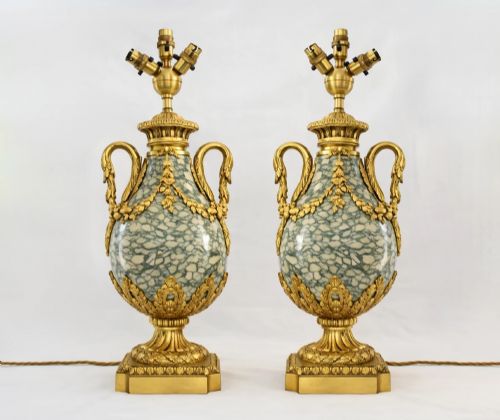
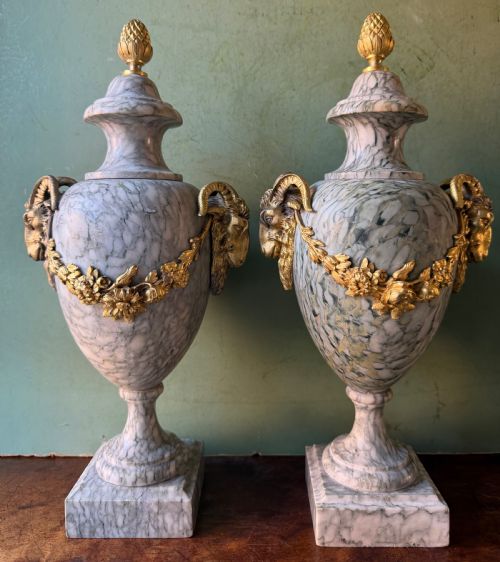
When buyers search for green marble bronze urns, they encounter decorative vessels, cassolettes, and table lamps rooted in nineteenth-century French design. These pieces adapt antique forms into ornamental objects and functional lighting.
The selection on this page relies heavily on nineteenth-century examples, spanning periods from eighteen sixty to nineteen thirty. Grand Tour souvenirs and Louis XVI revival pieces dominate the selection.
Most items appear in pairs, taking the form of classical vases or pedestals mounted on square or stepped plinths. Bronze and ormolu mounts complement the turned marble bodies.
How they were made
Turned green marble forms the core of these vessels, paired occasionally with white marble sections or simulated green marble effects. Artisans shaped the stone on lathes before applying metal components.
Casting bronze and ormolu created the decorative collars, handles, and foliage mounts that frame the stone bodies. Guilds utilised fire gilding and patination to finish the metal surfaces.
Later adaptations converted decorative urns and cassolettes into table lamps by running electrical wiring through the centres. Fabric shades often complete these electrified conversions.
Green Marble Bronze Urns Retail Price Guide 2026
Typical asking prices for green marble bronze urns among the pieces listed under this phrase on Sellingantiques today, from the lower quarter to the upper quarter. They describe what is for sale here now, not the wider market.
Listings feature items from the nineteenth century, including specific years like eighteen sixty, eighteen seventy, eighteen eighty, eighteen ninety, alongside nineteen twenty and nineteen thirty.
What varies in quality
The crispness of the bronze casting determines the visual weight of the mounts, separating sharp chisel work from softer secondary strikes. Superior ormolu shows deep golden tones and meticulous hand-chasing after casting.
The selection of the marble itself dictates the decorative impact, with richer veining and uniform turning marking superior examples. Well-matched pairs demonstrate careful stone selection by the maker.
The Green Marble Bronze Urns Glossary
- Cassolette
- A dual-purpose vessel featuring a reversible lid that functions as a small bowl or a solid cover. These items frequently appear as decorative urns or lamps.
- Ormolu
- Finely chopped gold amalgamated with mercury and applied to bronze through heat, creating a durable golden finish. This technique defines high-end French mounts.
- Grand Tour
- A traditional trip through Europe undertaken by upper-class scholars and collectors during the eighteenth and nineteenth centuries. Souvenirs from these travels included classical bronze and marble vases.
- Louis XVI Style
- A neoclassical aesthetic characterised by symmetry, straight lines, and classical architectural motifs such as acanthus leaves and urns. Revival pieces from the nineteenth century draw heavily on this vocabulary.
- Plinth
- A heavy rectangular or square base supporting an urn or vase. These bases frequently incorporate marble or stepped bronze feet.
Green Marble Bronze Urns: Frequently Asked Questions
What is a cassolette?
A cassolette is a French decorative vase with a removable or reversible lid designed to serve different ornamental functions. In nineteenth-century interiors, these vessels sat on mantelpieces and tables as centrepieces.
Many surviving examples have been converted into table lamps while retaining their original stone and metal bodies.
Are these urns period originals?
The pieces listed originate primarily from the nineteenth and early twentieth centuries, spanning the grand tour and louis xvi revival periods. Makers during this era reinterpreted classical proportions using period casting and stone-turning methods.
Dates range from mid-nineteenth-century grand tour pieces to later twentieth-century lighting adaptations.
How do I clean the marble?
Polished stone surfaces require gentle dusting with a dry microfibre cloth to prevent the accumulation of grit in natural fissures. Water and chemical cleaners can damage historical patinas and porous stone.
Metal mounts should remain untouched by harsh polishes to preserve the original bronze patination.
Were these always lamps?
Many items began as decorative urns, vases, or cassolettes before undergoing conversion into table lamps in later decades. The addition of electrical fittings allowed these classical forms to serve modern domestic lighting needs.
Pairs often show the modifications required to run internal wiring through the stone and metal bases.