



French Empire Bronze Vases
French empire bronze vases bring classical dignity and monumental weight to a room, channelling antique grandeur through nineteenth-century metalwork.
French Empire Bronze Vases
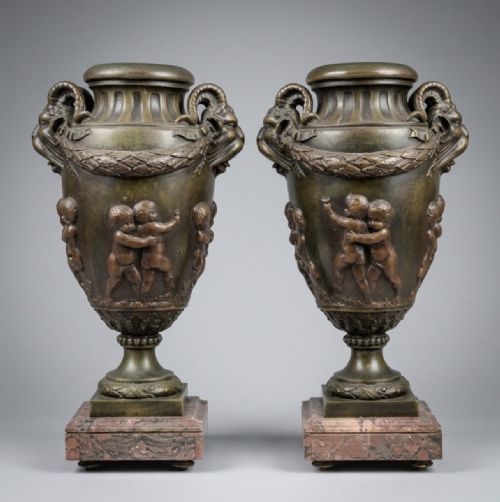
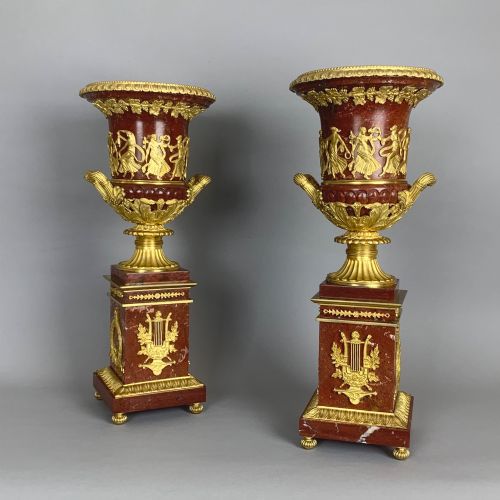
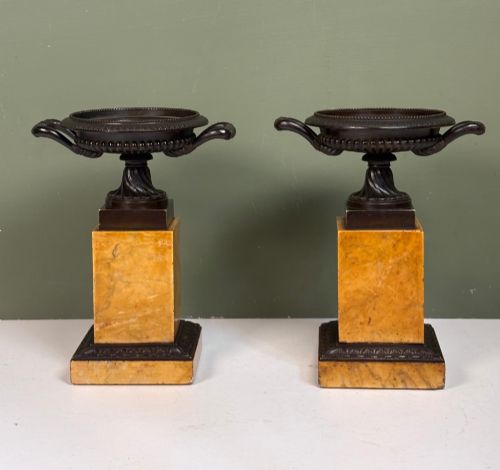
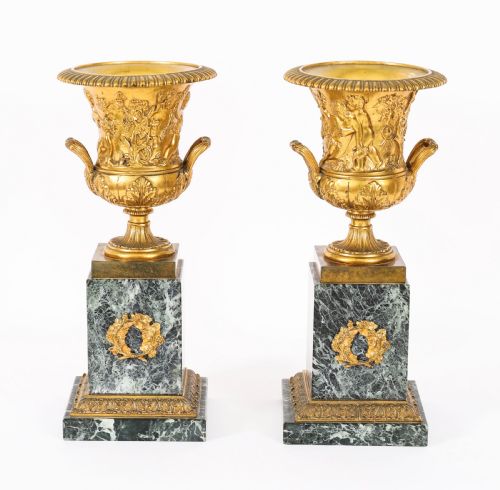
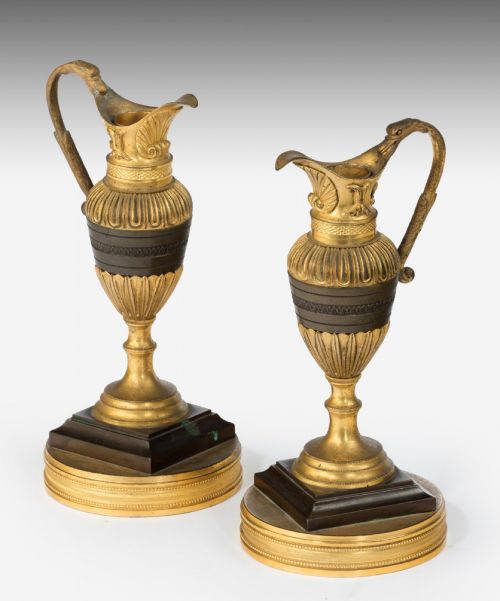
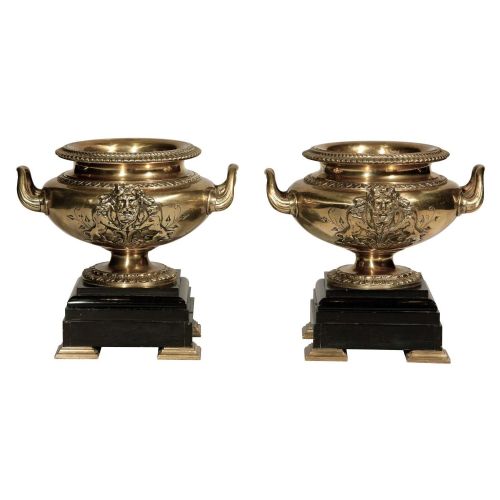
French empire bronze vases appear primarily as decorative urns, tazzas, and amphorae resting on heavy stone plinths. The pieces you encounter most often on this page date from the nineteenth century, spanning periods from Charles X to the late eighteen-eighties.
Makers designed these objects as architectural ornaments for mantelpieces and side tables, drawing directly on neoclassical and ancient Roman motifs. Pairs dominate the selection, frequently combining cast metal with contrasting bases of marble, onyx, or alabaster.
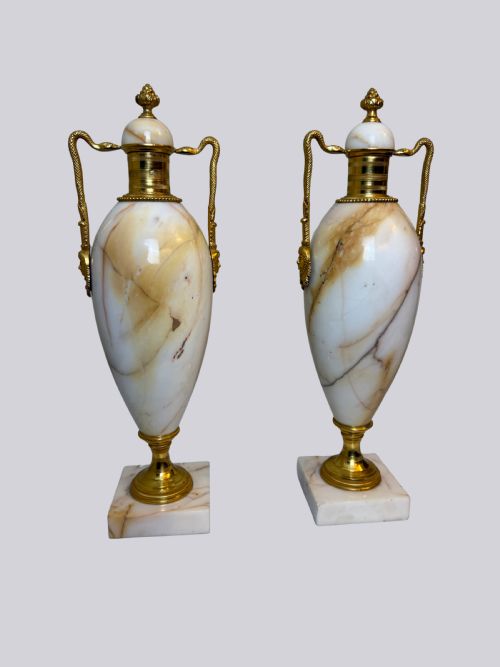
Form follows strict classical proportions, moving from campana shapes to lidded cassolettes and ewers. The aesthetic leans heavily into French empire and neo-classical vocabularies, reflecting a nineteenth-century fascination with Grand Tour souvenirs.
Materials and construction
Foundry workers cast the main bodies in bronze or spelter, often finishing the surfaces with a dark patination or rich gilding known as ormolu. This metalwork pairs closely with turned bases of white onyx, green marble, or rouge marble.
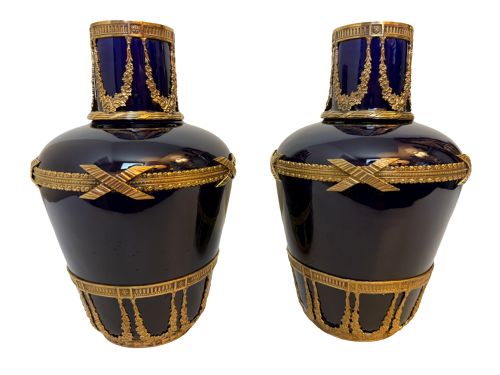
Craftsmen mounted delicate ormolu mounts, handles, and collars onto glass, porcelain, and stone bodies using threaded rods and screws. Sèvres porcelain inserts and blue glass bodies also appear, secured by intricate cast bronze trim.
Some nineteenth-century makers snuck secret inner compartments into lidded cassolettes, presumably for storing very tiny classical secrets.
Defining quality
The precision of the bronze chasing determines the crispness of acanthus leaves, classical figures, and beaded borders. Superior examples exhibit deep hand-chiselling after casting, whereas lesser pieces retain soft, muddy casting lines.
The choice and turning of the stone base separate standard production from exhibition pieces. Solid, finely grained marble and heavy fire-gilded ormolu mounts indicate superior workshop standards from the nineteenth century.
The French Empire Bronze Vases Glossary
- Ormolu
- A technique of applying finely ground high-carat gold to bronze objects. This mercury gilding creates a rich, lasting surface finish found on many nineteenth-century mounts.
- Campana
- A bell-shaped vessel form derived from ancient Roman pottery. These vases flare outward toward a distinct everted rim.
- Cassolette
- A decorative vase featuring a reversible lid that functions either as a solid cover or a burner. They frequently incorporate marble and ormolu mounts.
- Tazza
- A shallow bowl or vase raised on a high foot and stem. Nineteenth-century examples often sit on heavy stone plinths.
- Amphora
- A two-handled jar with a narrow neck used in classical antiquity. French empire interpretations translate this shape into bronze and marble decorative objects.
French Empire Bronze Vases: Frequently Asked Questions
How were these vases used?
Nineteenth-century households placed these bronze and marble vessels on mantelpieces, pedestals, and console tables as purely decorative centrepieces. They served to display classical taste and wealth rather than hold cut flowers.
Larger lidded urns and cassolettes functioned as architectural ornaments that anchored symmetrical interior schemes in formal reception rooms.
Where should I display them?
These heavy objects require sturdy surfaces like marble-topped console tables, substantial wooden sideboards, or dedicated mantel shelves. Their classical silhouette suits traditional period rooms as well as contemporary minimalist spaces.
Keep them away from direct sunlight if they incorporate delicate porcelain bodies or coloured glass inserts to prevent fading.
How do I clean bronze and marble?
Dust the metal and stone regularly with a soft, dry lint-free cloth to prevent particulate buildup. Avoid chemical cleaning agents or metal polishes, which can strip historic ormolu gilding and damage patinated bronze.
Marble bases benefit from a gentle wipe with a barely damp cloth followed immediately by dry buffing to preserve the natural stone surface.