





Green Glaze Jug
A green glaze jug brings rich colour and tactile depth to a room, ranging from robust Victorian majolica to delicate studio pottery.
Green Glaze Jug
A green glaze jug encompasses a diverse range of utilitarian and decorative vessels, spanning centuries of ceramic tradition. Buyers seeking a green glaze jug will encounter large wash sets, studio pieces, and robust earthenware vessels from various historical periods.
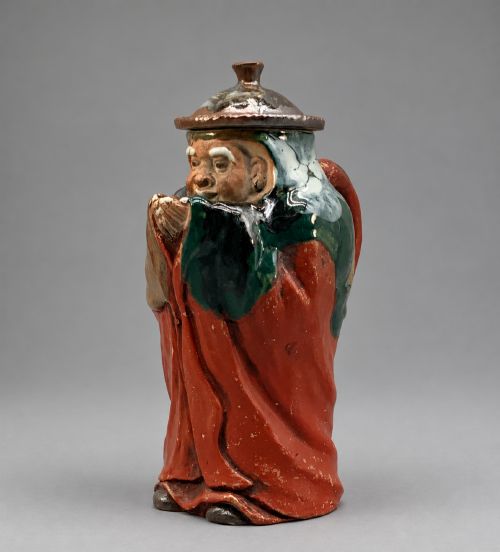
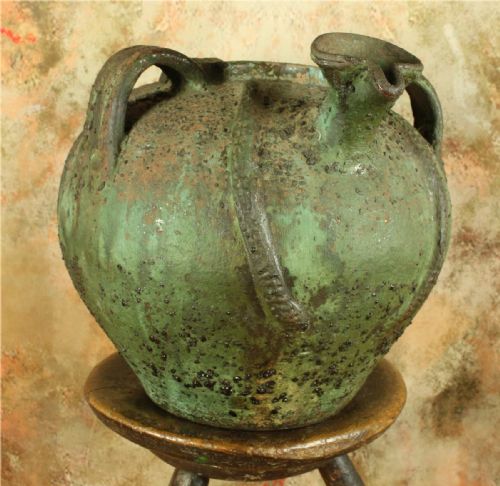
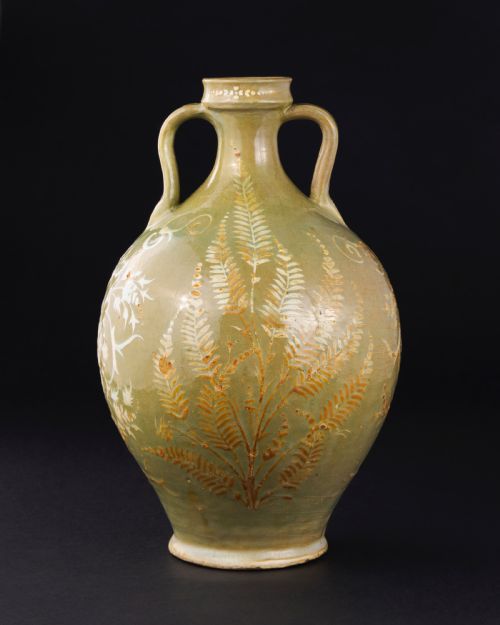
The selections on this page demonstrate the enduring appeal of green ceramic surfaces across different cultures and eras. Examples stretch from seventeenth-century Persian vessels and eighteenth-century French olive jugs to nineteenth-century British studio pottery and majolica.
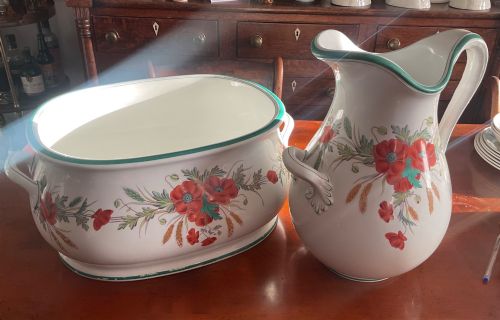
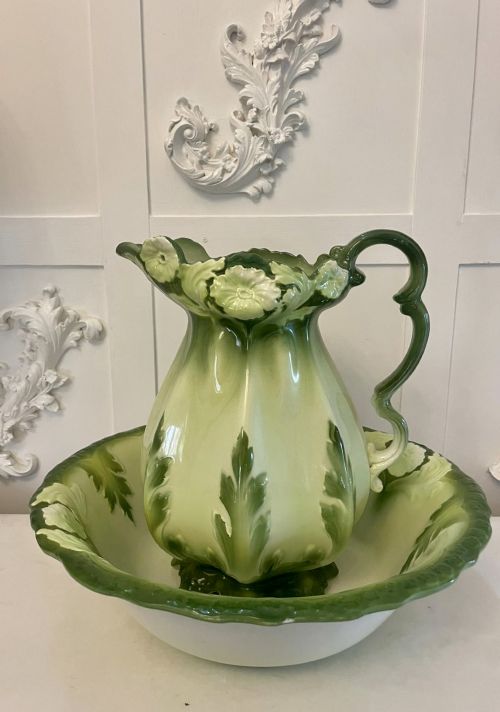
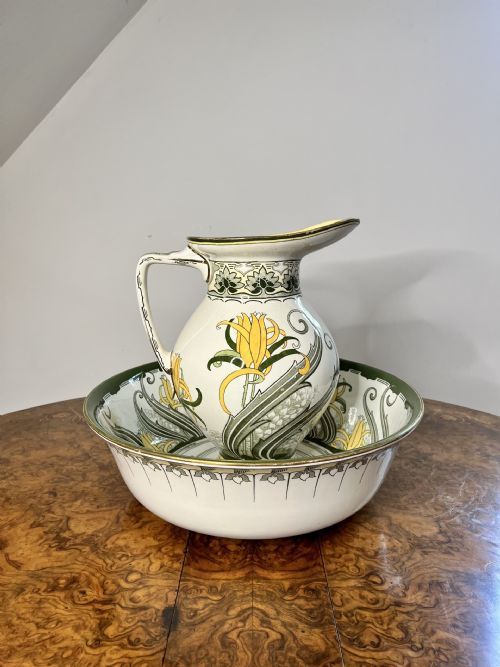
Domestic washing sets and decorative ewers form a significant portion of the available forms. These domestic items sit alongside sculptural studio pieces by makers such as Sir Edmund Elton, reflecting both everyday utility and artistic ambition.
Materials and construction
Earthenware and stoneware form the structural bodies of these pieces, providing the sturdy foundations necessary for liquid containment. Potters shaped these clays on the wheel or moulded them into complex botanical and figural forms.
The defining characteristic is the application of rich green glaze, which pools in recesses and highlights surface textures. Techniques range from salt-glazing and slip decoration to the lush, dripping celadon and majolica finishes seen on nineteenth and twentieth-century examples.
Green Glaze Jug Retail Price Guide 2026
Typical asking prices for green glaze jug among the pieces listed under this phrase on Sellingantiques today, from the lower quarter to the upper quarter. They describe what is for sale here now, not the wider market.
A French walnut oil pot brings three distinct handles to the table, solving the ancient dilemma of passing olive oil in a crowded eighteenth-century kitchen.
Judging quality and character
Quality rests in the harmony between the ceramic form and the behaviour of the glaze across its surface. Superior pieces exhibit depth and variation in the green tones rather than a flat, uniform colour.
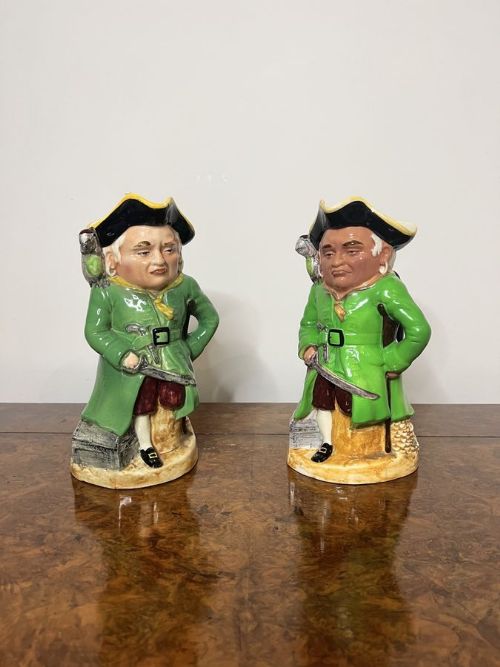
The crispness of moulded details, such as bullrushes, leaves, or figural elements, separates exceptional items from standard production wares. Furthermore, the balance of the handle and the weight of the vessel indicate the maker's skill.
Minton·Doulton Lambeth·Sir Edmund Elton·George Jones
The Green Glaze Jug Glossary
- Majolica
- A type of earthenware decorated with opaque coloured glazes over an absorbent clay body. This technique allows for vibrant greens and browns often seen in Victorian and majolica water vessels.
- Celadon glaze
- A pale green glaze originating in East Asia, prized for its jade-like appearance. It results from iron oxide interacting within a reduction kiln atmosphere.
- Salt-glaze ceramic
- Pottery finished by throwing common salt into the kiln during the high-temperature firing phase. This creates a textured, slightly pitted surface akin to orange peel.
- Earthenware
- Porous pottery fired at lower temperatures than stoneware. It requires a glazed surface to become completely impermeable to liquids.
- Ewer
- A large jug with a wide spout and a curved handle, traditionally used for holding water. Many examples serve a purely decorative function.
Green Glaze Jug: Frequently Asked Questions
Can I use an antique jug for holding fresh flowers?
Many of these vessels were originally designed for domestic utility, such as wash sets or water storage, and can safely hold water.
However, porous earthenware or pieces with historical fragility require careful handling to preserve the internal glaze and structural integrity.
How do I distinguish majolica from standard glazed earthenware?
Majolica is defined by its colourful lead-based glazes applied directly over a white tin-opacified enamel or raw clay body, often featuring moulded botanical reliefs.
Standard glazed earthenware typically relies on simpler monochrome or slip finishes without the characteristic glossy, relief-heavy surface of Victorian majolica.
What period do most green glazed jugs come from?
The selection spans a broad chronological range, though nineteenth-century Victorian and Edwardian pieces appear most frequently.
Earlier examples from the seventeenth and eighteenth centuries, such as French olive jugs or Persian vessels, represent rarer finds with distinct regional characteristics.
How should I clean an antique ceramic jug?
Dusting with a soft, dry cloth is usually sufficient for regular maintenance of decorative surfaces.
Avoid submerging older earthenware in water for extended periods, especially if the ceramic body shows any hairline fractures or historical repairs.