


Green Enamel Plate
A green enamel plate brings together vibrant colour and careful metalwork or porcelain, offering striking visual depth for any collection.
Green Enamel Plate
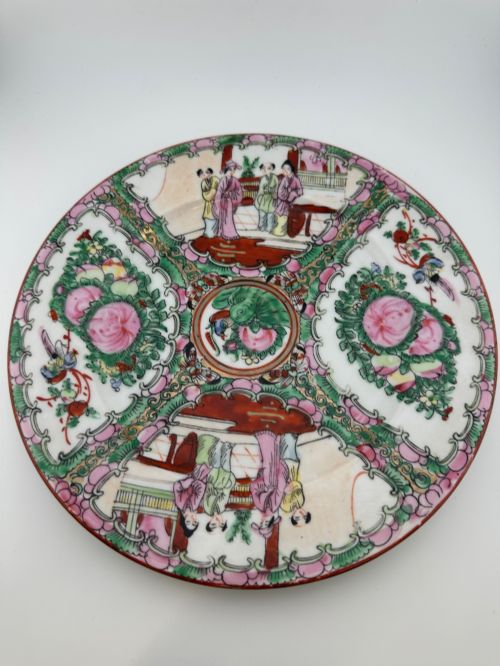
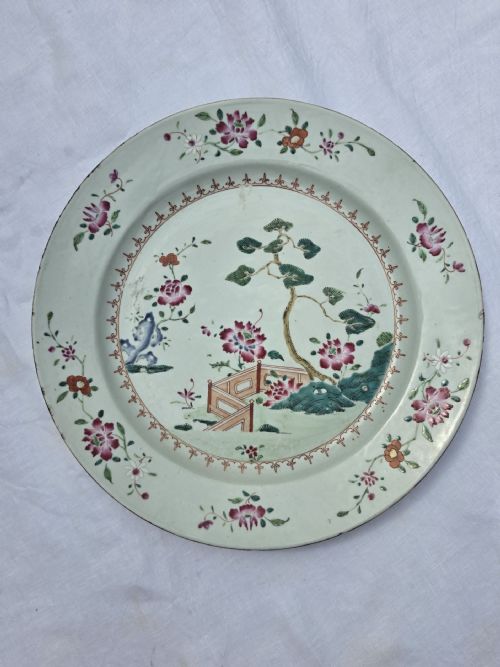
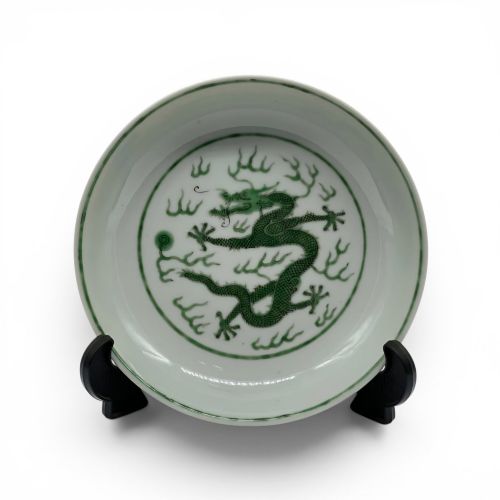
You are most likely to meet Japanese cloisonne chargers decorated with birds, dragons, or botanicals, as well as Chinese porcelain plates bearing famille rose or imperial-style green dragon motifs. These forms range from decorative chargers and large trays to plates and bowls.
The dates stretch from the late 17th century through the Victorian era up to the early 20th century, encompassing diverse traditions from Arita, Kutani, and Canton. Each piece reflects the distinct aesthetic priorities of its origin, whether the meticulous wirework of Japanese cloisonne or the hand-painted enamels of Chinese export wares.
How they were made
Makers utilised copper, brass, and porcelain as the foundational bases for these objects, applying enamel glaze and overglaze enamel to build up rich surface decoration. In cloisonne pieces, thin metal wires form individual cells that hold the coloured enamel pastes before firing and polishing.
Porcelain items relied on hard-paste bodies decorated with hand-painted mineral pigments, sometimes enhanced with gilt details. The combination of precise kiln firings and skilled brushwork allowed artisans to achieve durable surfaces and intricate pictorial scenes.
What varies in quality
The standard of execution in the enamel work and the precision of the underlying design determine the distinction between ordinary and exceptional examples. Finer pieces display smooth, evenly polished enamel surfaces with minimal pitting and highly controlled wirework or brush detail.
Compositional balance and the complexity of the subject matter also set finer items apart from standard production. Artisans who executed sophisticated tonal gradations in the green enamel and rendered subjects such as dragons or birds with anatomical clarity achieved superior results.
Minton
The Green Enamel Plate Glossary
- Cloisonne
- Enamelling technique where metal wire is soldered to a metal base to create compartments for enamel paste. This method produces intricate linear patterns across chargers and plates.
- Charger
- A large decorative plate used historically for display rather than dining. These substantial pieces provide a wide canvas for complex pictorial scenes.
- Famille rose
- A palette of opaque Chinese ceramic enamels dominated by pink or rose colours, introduced in the Qing dynasty. It appears alongside green and other hues on export porcelain.
- Totai shippo
- Japanese wire-free cloisonne where enamel is applied over a textured base such as pottery or tree bark. This technique creates a distinctive organic surface texture.
- Aka-e
- Japanese painted red ware associated with Arita kilns, often combined with overglaze enamels. These dishes date from the Edo period and earlier.
Green Enamel Plate: Frequently Asked Questions
How were green enamel plates used historically?
Many of the larger chargers and trays served as decorative display pieces in reception rooms rather than functional tableware. Their intricate designs were meant to be admired on walls, stands, or sideboards.
Smaller porcelain dishes saw use during formal dining or tea service, though surviving examples often owe their preservation to collector care rather than heavy daily use.
How do I distinguish Japanese cloisonne from Chinese porcelain?
Japanese cloisonne pieces feature a metal body, usually copper or brass, decorated with raised wire outlines filled with coloured enamel. You can feel the distinct texture of the wires across the surface.
Chinese pieces in this category utilise a ceramic base, whether hard-paste porcelain or earthenware, decorated with smooth painted enamel glazes fired directly onto the clay.
What periods do these green enamel pieces come from?
The available items span several centuries, with particular concentrations in the late 19th century during the Meiji period in Japan. You will also find 18th-century Chinese export wares and pieces from the Edo period.
Dating relies on stylistic markers, material composition, and traditional signatures or factory marks where present on the base or reverse.
How should I care for antique enamel and porcelain?
Keep these items out of direct sunlight to prevent fading in the delicate enamel colours. Dust them gently with a dry, soft cloth rather than using harsh cleaning agents.
Avoid submerging metal-backed cloisonne pieces in water, as moisture can affect the old solders and metal bases over time.