
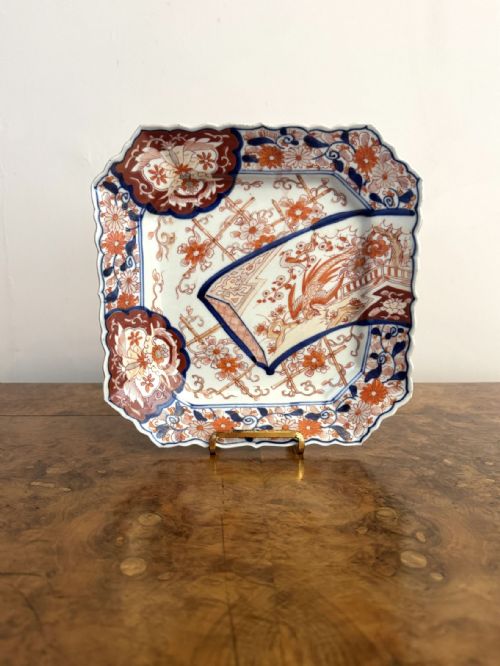
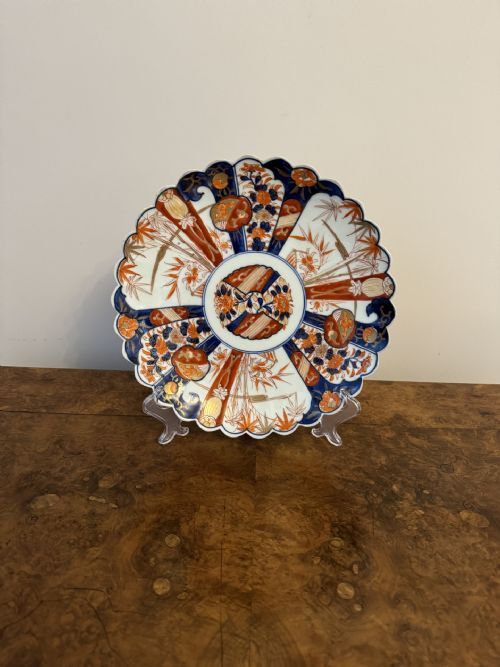


Shaped Porcelain Display Dish
A shaped porcelain display dish brings vibrant patterns and striking geometry to a wall or cabinet.
Shaped Porcelain Display Dish
When you search for a shaped porcelain display dish, you encounter decorative plates, dishes, and bowls from the nineteenth century and around nineteen hundred. These pieces span Japanese Imari and Qing Dynasty aesthetics, offering varied forms for presentation.
How they were made
These items utilise hard-paste porcelain shaped into specific geometrical and organic forms like fans, shells, and squares. Makers applied glaze to the porcelain base before firing to create a durable surface.
Decoration relies on enamel and overglaze enamel work, frequently enhanced with gold leaf, gilt, and gilding. This combination of ceramic techniques produces the rich visual depth seen across Japanese Imari and Canton Famille Verte pieces.
Object forms include decorative plates, dishes, bowls, and square, fan, or shell shaped variations.
What varies in quality
Quality rests in the precision of the moulding for unusual shapes like shells, fans, and scalloped edges. A well-formed piece maintains crisp geometry and clean lines along every curved or angled border.
The application of enamel and gold leaf or gilt determines the visual richness of the surface. Mastery in overglaze enamel painting separates standard decorative wares from exceptional examples.
The Shaped Porcelain Display Dish Glossary
- Imari
- A style of Japanese porcelain decorated in underglaze blue and overglaze colours, typically red and gold. This aesthetic heavily influences the nineteenth century plates and dishes found in this selection.
- Famille Verte
- A Chinese porcelain palette centred on green enamel, originating in the Qing Dynasty. Pieces in this style display intricate polychrome designs.
- Hard-paste porcelain
- A dense, durable ceramic material fired at high temperatures. It forms the robust white body beneath the glaze and enamel decoration.
- Gilding
- The application of gold leaf or gilt powder to the surface of the porcelain. It adds metallic highlights to specific areas of the design.
Shaped Porcelain Display Dish: Frequently Asked Questions
How were shaped porcelain display dishes used?
These items served primarily for visual presentation rather than daily dining. Owners placed them in cabinets or on walls to showcase intricate patterns and unusual silhouettes.
Their distinct forms, such as fans and shells, made them focal points in period interiors.
What periods do these dishes come from?
The listings span the nineteenth century and around nineteen hundred. This era covers specific stylistic movements like Qing Dynasty production and Japanese Imari.
Dates derive directly from the recorded attributes of each physical object.
What materials make up these pieces?
Objects consist of hard-paste porcelain finished with glaze. Decoration incorporates enamel, overglaze enamel, gold leaf, and gilt.
These materials combine to create the colourful patterns characteristic of the style.
How do I identify different shapes?
Makers shaped the porcelain into squares, fans, shells, and scalloped edges during production. Each distinct outline alters how the dish receives light and displays on a wall.
Examining the physical border reveals the specific geometric or organic form.