


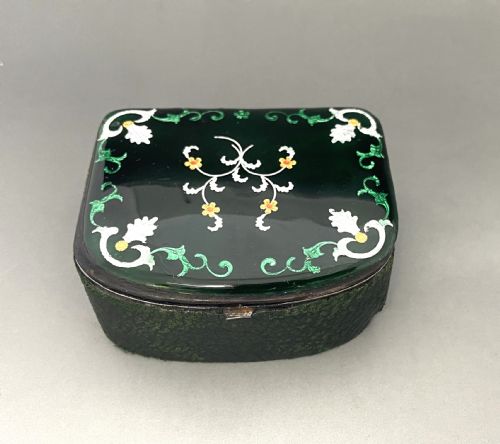


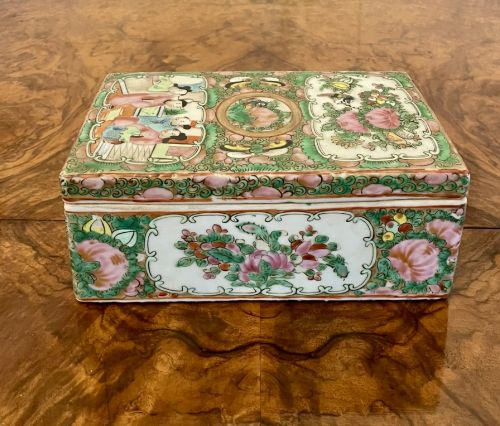
Green Enamel Box
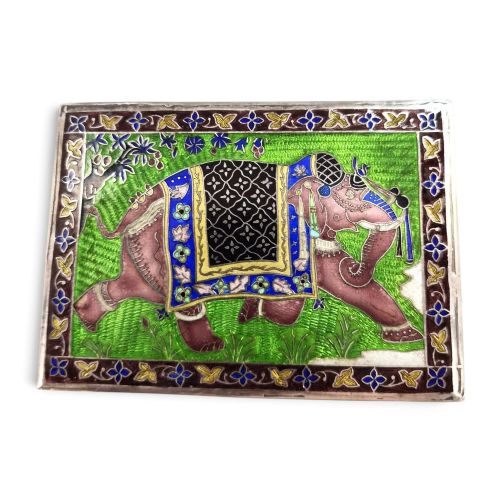
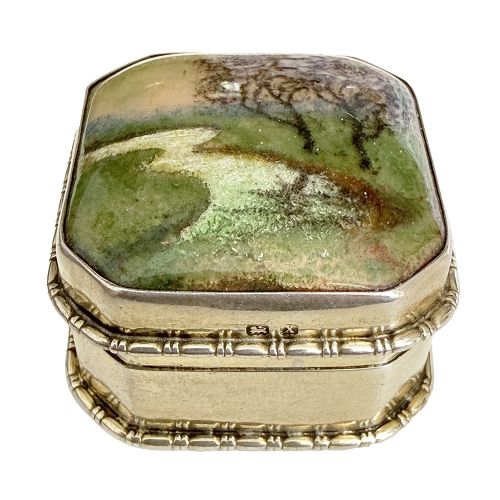
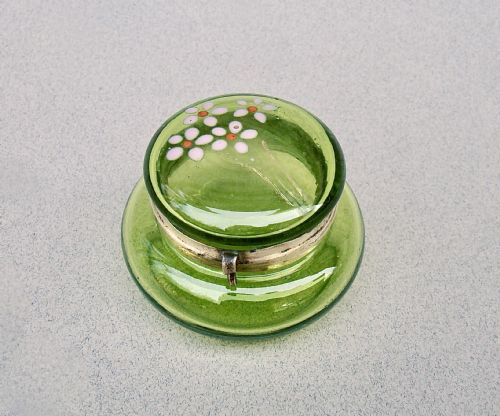
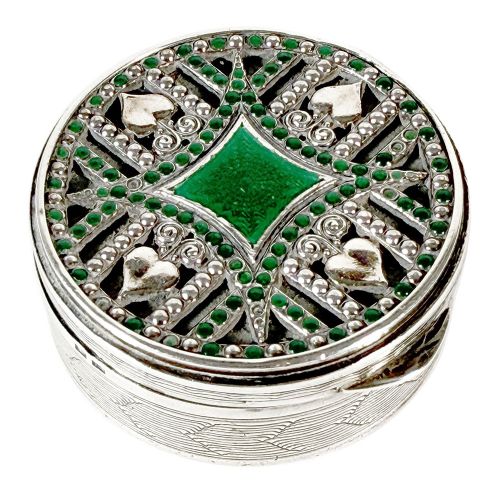
These small green enamel box examples range from nineteenth-century glass trinket pieces to sterling silver Art Deco containers made to hold pills, powder or trinkets.
Green Enamel Box
A green enamel box encompasses a variety of small containers designed for domestic or personal use, appearing frequently as nineteenth-century green glass trinket boxes decorated with enamel or as sterling silver vessels finished with translucent guilloche enamel. These objects span periods from the Georgian era through to the mid-twentieth century, with Victorian and Art Deco examples forming a substantial part of the selection.
The functional forms include pill boxes, powder compacts, cigarette cases, jewellery boxes and lidded jars. Glass bodies share space with silver, brass, porcelain and chrome constructions, demonstrating diverse manufacturing origins across Britain, France, Austria and Asia.
How they were made
Makers fused powdered glass onto metal or glass surfaces through kiln firing, creating smooth enamel finishes in shades ranging from lime and pale green to deep emerald. Sterling silver mounts, brass frames and glass bodies were shaped by hand or machine before decorative enamel panels were applied.
Guilloche techniques introduced intricate machine-turned geometric patterns beneath translucent green enamel layers, while hand-painted enamel floral or figural motifs appeared on glass and porcelain surfaces alongside metal castings.
Green Enamel Box Retail Price Guide 2026
Typical asking prices for green enamel box among the pieces listed under this phrase on Sellingantiques today, from the lower quarter to the upper quarter. They describe what is for sale here now, not the wider market.
Listings feature items spanning the Georgian period, Victorian era, Arts and Crafts movement, Art Nouveau and Art Deco styles.
What varies in quality
Quality rests on the crispness of the underlying metalwork and the evenness of the enamel layer. Superior examples display flawless guilloche engraving beneath clear, vibrant enamel without chipping or cloudiness.
The weight and purity of the metal housing, such as heavy sterling silver or solid brass, distinguish finer pieces from lighter chrome or plated alternatives, while the precision of hinged lids and closures indicates the standard of original craftsmanship.
Fleetwood Varley·George Adam Scheid·Liberty and Co·Richard Hudnut·Victor Saglier·Moser
The Green Enamel Box Glossary
- Guilloche enamel
- A decorative technique where a metal surface is engraved with repetitive geometric patterns by a machine before transparent enamel is applied over the top. This allows light to reflect through the colour, creating depth and movement.
- Trinket box
- A small lidded container historically used on dressing tables or desks to store rings, pins, and small personal valuables. They appear in glass, porcelain, and silver.
- Cloisonne
- An ancient metalwork technique where fine metal wires are soldered to a base to form compartments, which are then filled with enamel paste and fired. Japanese examples from the Edo period demonstrate this method.
- Sterling silver
- An alloy consisting of ninety-two point five percent silver and seven point five percent other metals, typically copper, used widely for British and continental boxes.
- Art Deco
- A design style prevalent during the 1920s and 1930s characterised by sleek geometric shapes, stylised motifs, and modern industrial materials.
Green Enamel Box: Frequently Asked Questions
What were green enamel box items used for originally?
These containers served practical daily functions on dressing tables, desks and in pockets during the Victorian and Art Deco periods. Owners kept small items such as postage stamps, sewing pins, face powder and medicinal pills inside them.
Larger versions accommodated cigarettes or jewellery, combining personal utility with decorative display in domestic interiors.
How can I tell the period of a box?
Dating relies on hallmarks stamped into silver mounts, manufacturing styles and material combinations. Victorian and nineteenth-century pieces often feature heavy glass bodies with hand-painted enamel, whereas 1920s and 1930s examples utilise geometric guilloche enamel over sterling silver or chrome.
Maker marks and registration numbers provide specific production years where present on metal components.
How do I care for antique enamel?
Enamel is essentially fused glass and requires gentle handling to prevent scratching or chipping against harder surfaces. Cleaning should be done with a soft, dry cloth without harsh chemical solvents or abrasive metal polishes.
Silver mounts can be cleaned separately with appropriate silver cream, taking care to avoid direct contact with the enamel panels.
Are these pieces marked with silver hallmarks?
Many sterling silver boxes carry standard assay office hallmarks indicating the town, year of manufacture and silver standard. British pieces often feature lion passant marks and date letters, while continental items bear various national control stamps.
Glass and chrome pieces generally rely on style, structure and signature details rather than official metal hallmarks for identification.