



Grand Tour Lion
When you collect a grand tour lion, you bring home a miniature piece of classical antiquity that wealthy travellers once carried back from Italy.
Grand Tour Lion
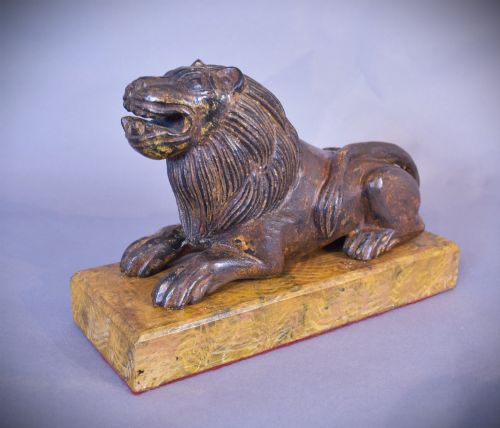
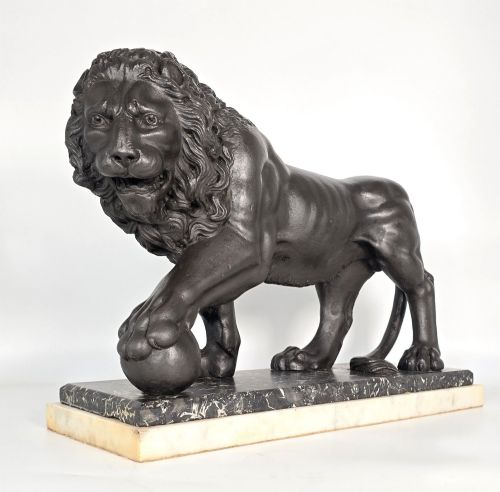
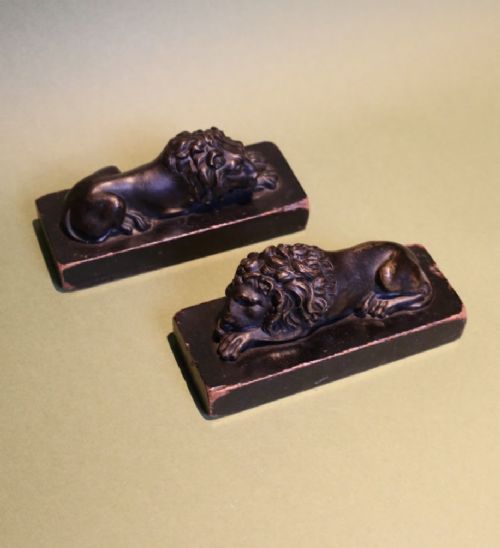
A grand tour lion represents a miniature or reduction of a famous sculpture seen by travellers during their travels through Italy. The most common versions met on this page include bronze and marble figures modelled after the Medici lions, the Canova lions, and the winged Lion of Saint Mark.
These works take several forms beyond standard sculptures, appearing as fountain heads, wall panels, architectural salvage, and candelsticks. Many sit mounted upon marble plinths, reflecting their origins as souvenir desk objects or cabinet pieces from the nineteenth century and earlier.
How they were made
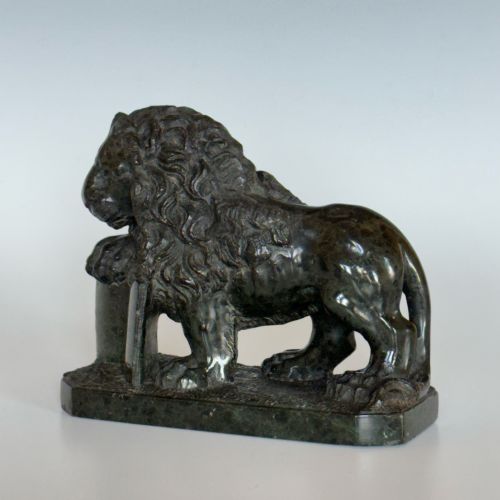
Sculptors and artisans worked primarily in cast bronze, patinated metal, and carved stones such as marble, serpentine, and alabaster. Bronze versions often relied on precise casting techniques to capture fine details, while stone pieces required careful hand carving from blocks of green, white, or Sienna marble.
Many sculptures were paired with contrasting bases made from rouge griotte or other decorative marbles, sometimes incorporating gilt bronze or silvered elements to enhance the visual weight of the souvenir.
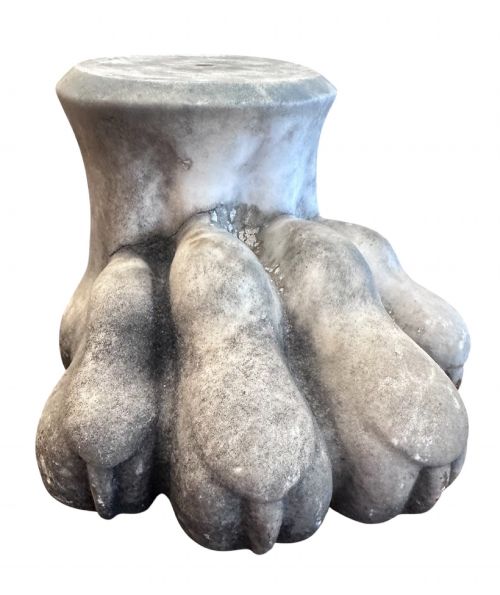
Some travellers preferred carrying home a humble lion paw or a fountain head rather than a whole beast.
What varies in quality
Material selection also dictates value, with dense stones like Carrara or Sienna marble and heavy, well-cast bronze setting the highest tier apart from softer alabaster or lighter plaster models.
The Grand Tour Lion Glossary
- Medici Lion
- A pair of marble sculptures of lions, one with its paw upon a ball, originally paired at the Villa Medici in Rome and widely copied as grand tour souvenirs.
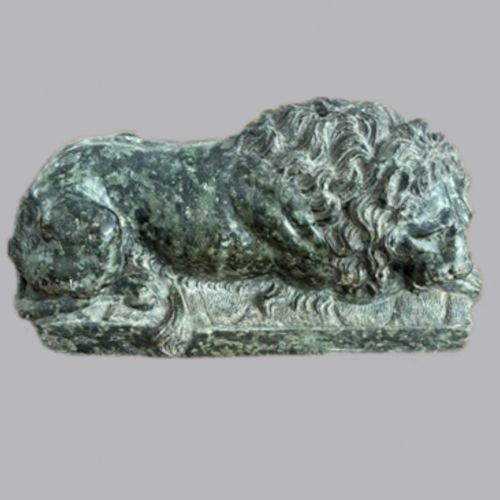
- Canova Lion
- Sculptures modelled after the monumental lions designed by Antonio Canova for the tomb of Pope Clement XIII in Saint Peter's Basilica.
- Serpentine
- A dark green silicate mineral often used by Italian carvers to mimic antique stones for nineteenth-century souvenir figures.
- Campana Urn
- A bell-shaped classical vessel form frequently associated with neoclassical decorative arts and architectural ornaments.
- Plinth
- A heavy base of marble, stone, or wood upon which a sculpture or fountain head is mounted.
Grand Tour Lion: Frequently Asked Questions
Who was Antonio Canova?
Antonio Canova was a celebrated Italian neoclassical sculptor whose monumental tomb lions became favourite subjects for souvenir makers. His distinct designs influenced numerous bronze and alabaster models produced throughout the nineteenth century.
Pieces after Canova are especially common among surviving grand tour objects.
How do I display them?
These sculptures suit tabletops, mantelpieces, and dedicated cabinets where their weight and material can be appreciated closely. Many feature integrated marble bases designed to anchor the piece visually.
Pairing symmetrical bronze or stone lions on either side of a fireplace or console table reflects their traditional arrangement.
Are all these lions from the nineteenth century?
While the majority of grand tour souvenirs date from the nineteenth century, the tradition extends back earlier and includes works from the seventeenth century onwards. Later revival pieces from the early twentieth century also appear.
Examining the wear on the bronze or the type of marble helps distinguish the period of manufacture.