





Green Marble Statue
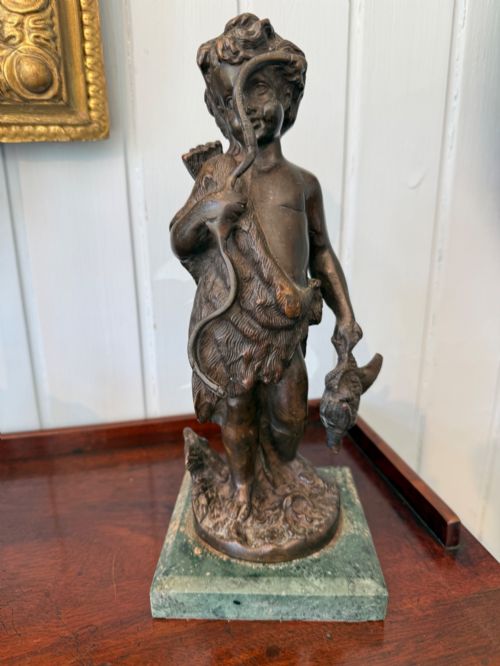
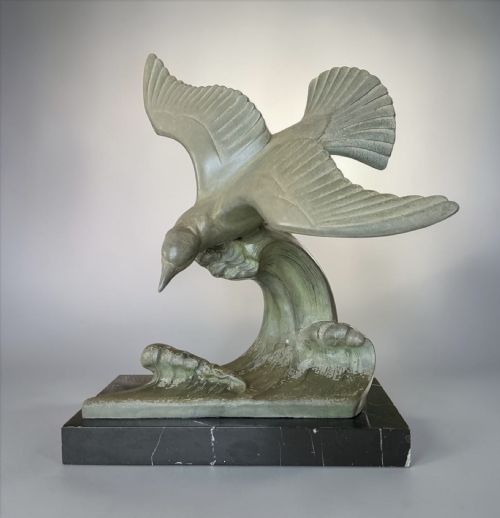
These pieces take the form of a green marble statue, translating classical antiquity, animalier studies, and twentieth-century modernism into dense, polished stone and cast metal.
Green Marble Statue
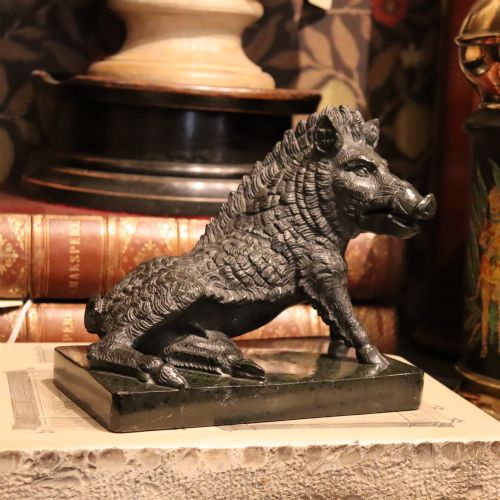
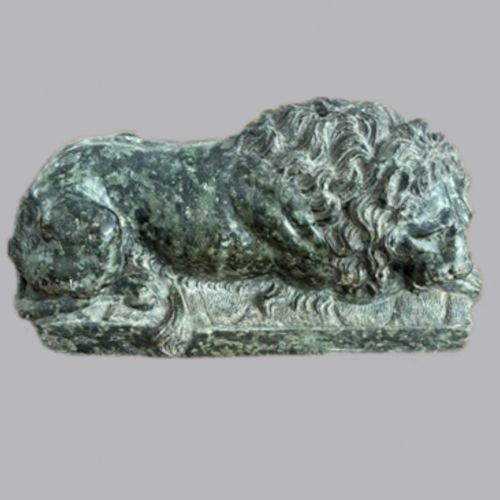
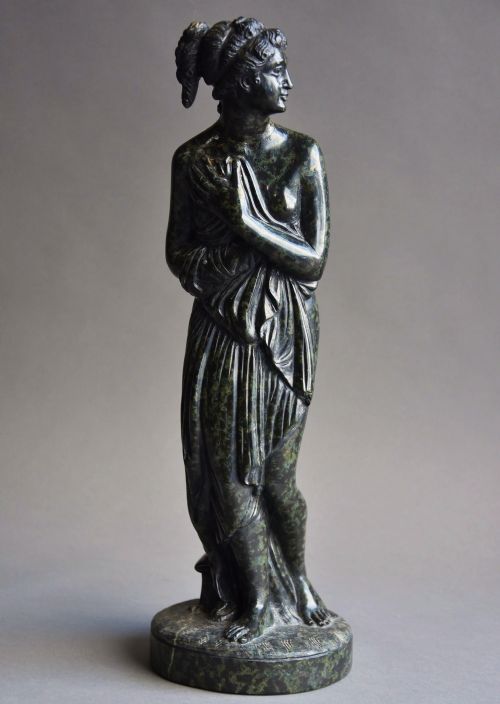
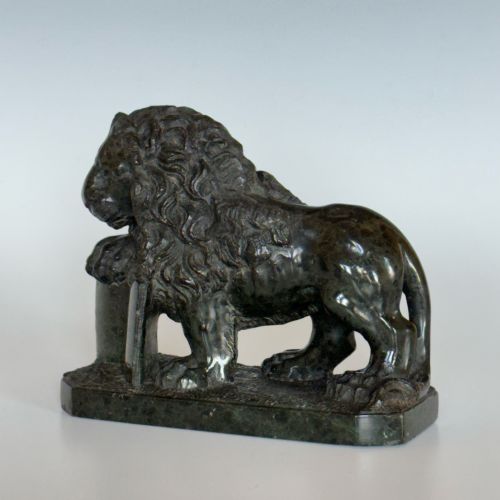
A green marble statue in this selection most commonly appears as a nineteenth-century Italian Grand Tour souvenir, reproducing famed classical sculptures, mythical beasts, and architectural lions. These Italian works utilise rich serpentine and verdo prato marbles to emulate ancient bronzes and excavated stone.
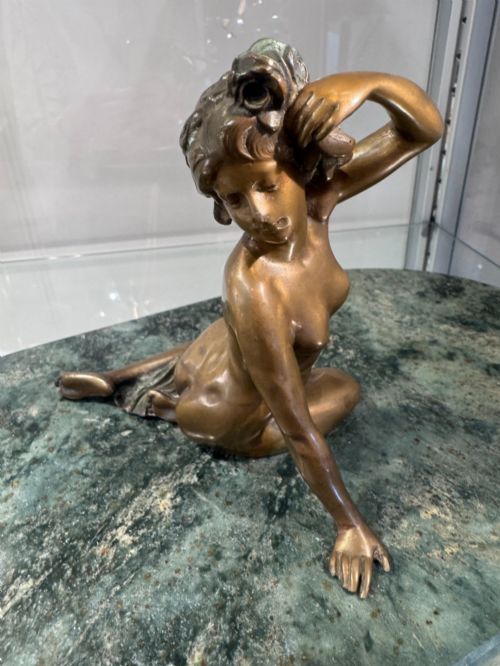
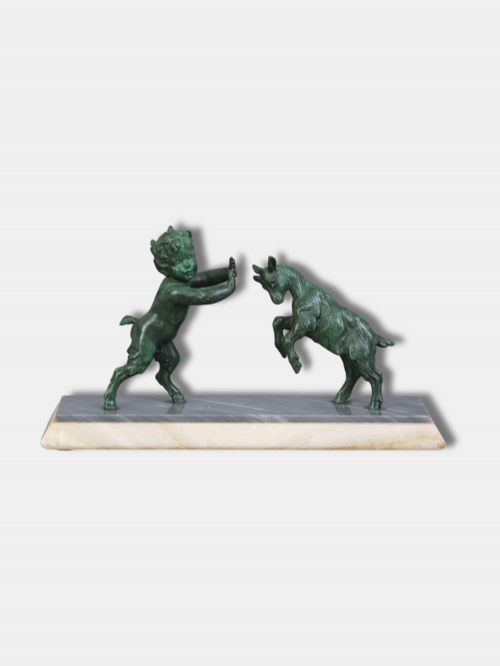
Beyond nineteenth-century classical revivals, the listings encompass later twentieth-century interpretations, including Art Deco figures, animal studies, and functional objects such as bookends and lamps mounted on stone plinths.
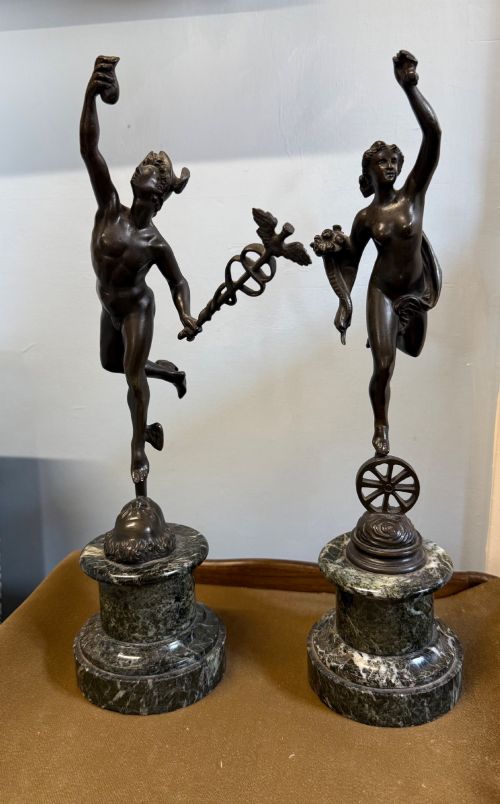
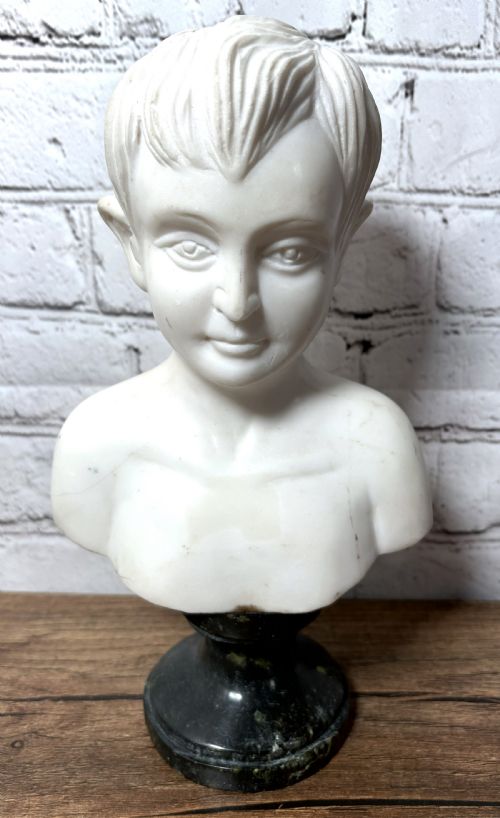
The dominant forms lean heavily toward sculptural representations of animals, literary figures, and mythological subjects, carved from variegated green stones or paired with contrasting cast bronze components.
Materials and Construction
The creation of these works relies on the combination of hand-carved natural stone and lost-wax or sand-cast metal elements. Artisans worked serpentine, verdo prato, and Hualien green marbles using chisels and abrasive grits to achieve smooth, lustrous surfaces.
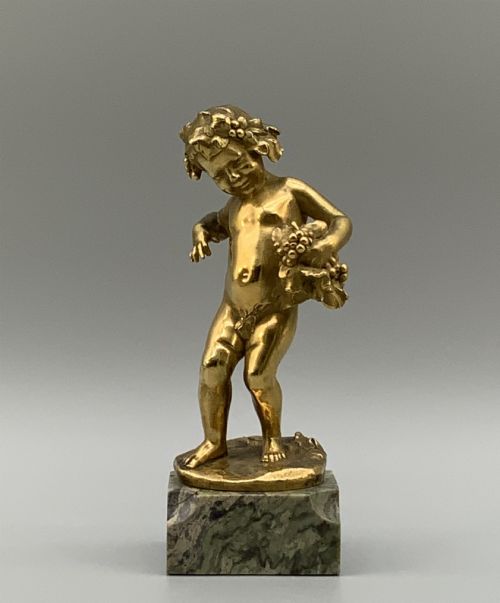
Metal components, predominantly cast bronze or spelter, were frequently patinated, gilded, or cold-painted before being mechanically secured to heavy stone bases or pedestals.
Several stone lions on this page have guarded imaginary Italian palazzos for over a century without ever catching a mouse.
Factors of Quality
Quality rests primarily in the crispness of the stone carving and the fidelity of the secondary cast metal elements. Superior pieces display deeply undercut details, anatomically precise musculature, and natural figuring within the marble that enhances rather than interrupts the subject.
Lesser examples exhibit generalized smoothing from mass production, hazy surface finishes, or mismatched mounts where the stone plinth and the upper figure show separate origins.
Charles Louis Malric·Emile Carlier·Jules Bonheur·Antoine L Barye·Paul-Édouard Delabrièrre
The Green Marble Statue Glossary
- Grand Tour
- A nineteenth-century tradition where affluent travellers acquired classical antiquities and miniature stone or bronze replicas in Italy as cultural souvenirs.
- Serpentine Marble
- A green, magnesium-rich silicate rock with mottled or veined patterns, frequently utilised by Italian stone carvers for antique models.
- Animalier
- A nineteenth-century artistic genre focused on the realistic depiction of animals, particularly predators, horses, and domestic hounds.
- Verdo Prato
- A dark green Italian marble often selected for classical pedestals, architectural models, and carved animal figures.
- Spelter
- A zinc alloy cast and patinated to imitate bronze, commonly found in decorative figures and bookends from the early twentieth century.
Green Marble Statue: Frequently Asked Questions
How should I clean green marble?
Natural stone surfaces require gentle dusting with a dry, soft cloth to prevent abrasive particles from scratching the polished finish.
Water and chemical cleaning agents should be avoided unless handled by a professional conservator, as moisture can penetrate unsealed stone.
Are these figures solid bronze?
Many figurative elements are cast from bronze or the less costly zinc alloy known as spelter, while the bases are formed from solid stone.
Examining the underside and surface patina helps distinguish heavier bronze castings from lighter composite materials.
How do I date a marble sculpture?
Dating relies on tool marks, the style of the base, and the specific geological variety of the marble utilised by the workshop.
Nineteenth-century pieces often exhibit hand-finished undersides and rich serpentine veining characteristic of traditional Italian quarries.