
Gilt Bronze Cherub
A gilt bronze cherub brings winged mythological charm to nineteenth-century French mantel clocks, candelabra, and decorative household bronzes.
Gilt Bronze Cherub
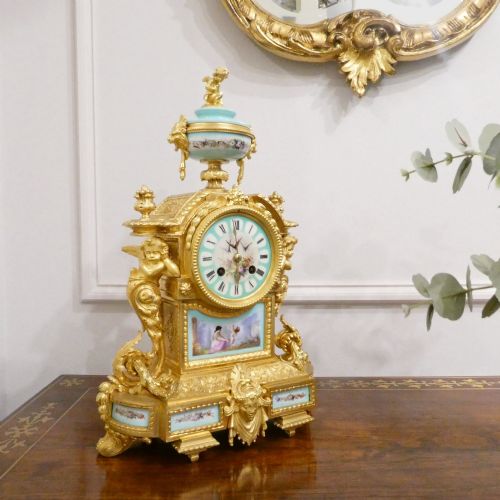
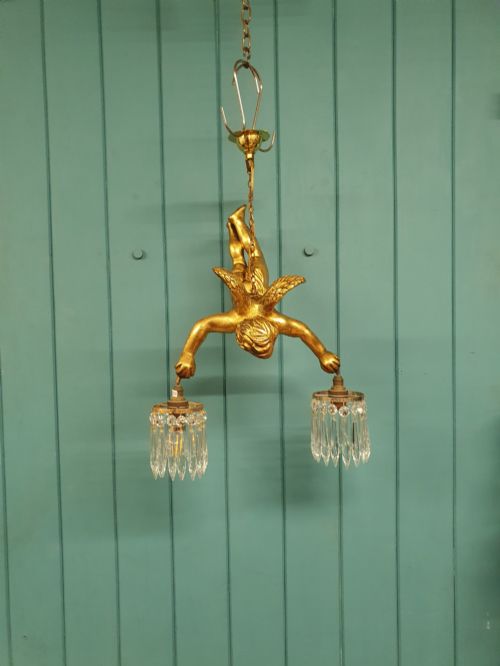
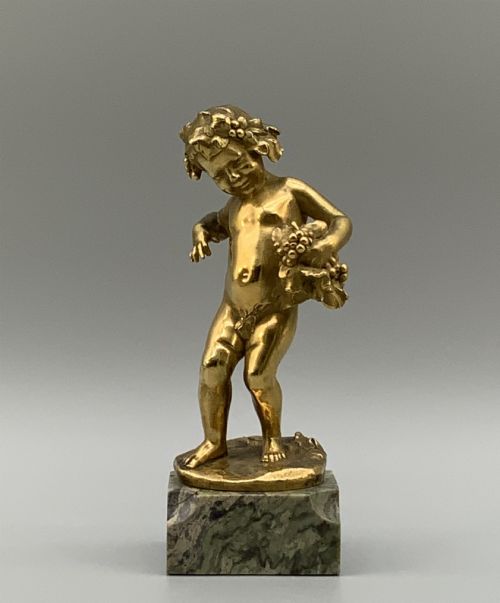
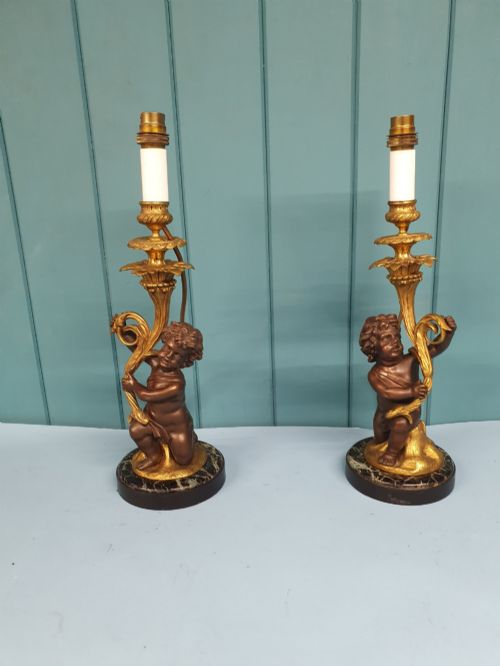
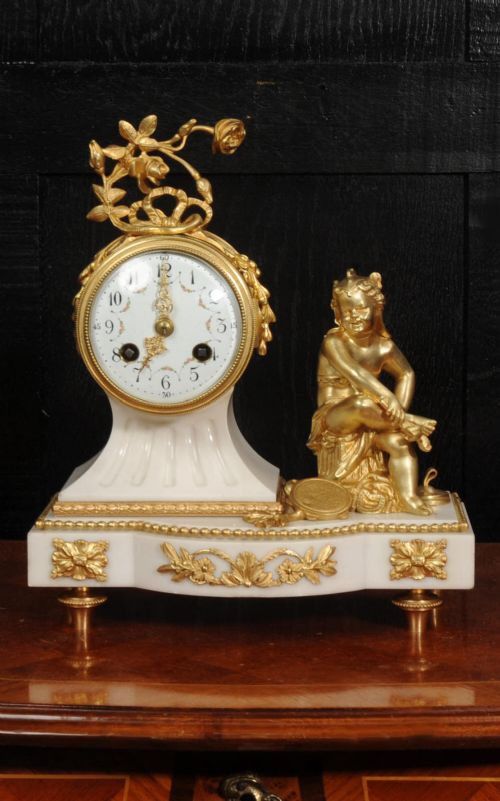
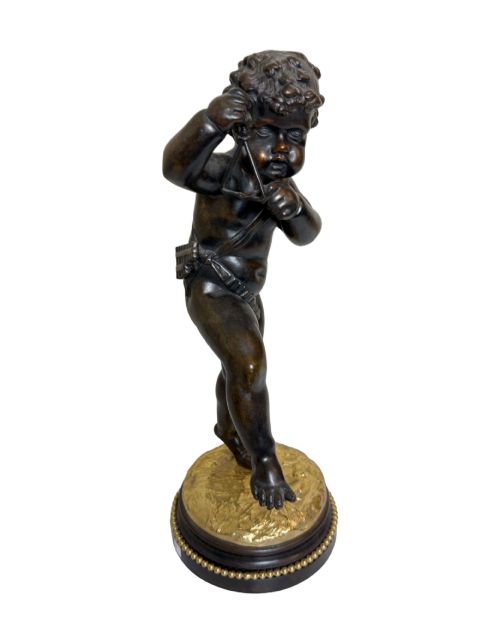
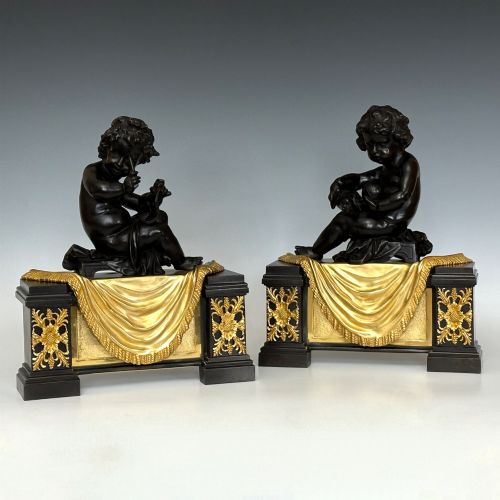
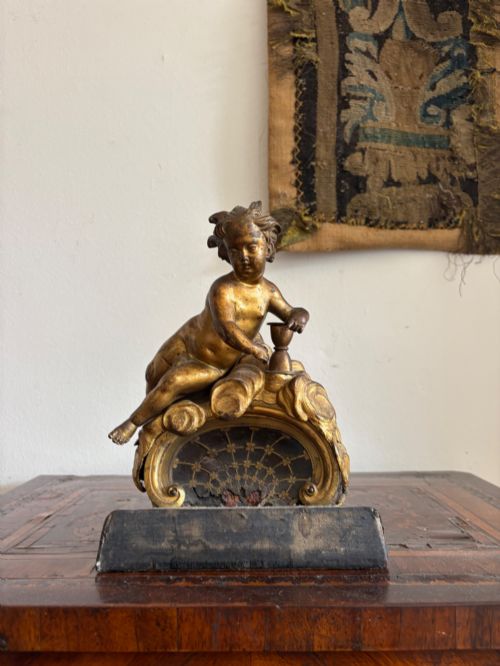
When you search for a gilt bronze cherub, you are looking at cast metal figural ornaments representing winged infant figures, most frequently found on nineteenth-century French mantel clocks, candelabra, and desk accessories.
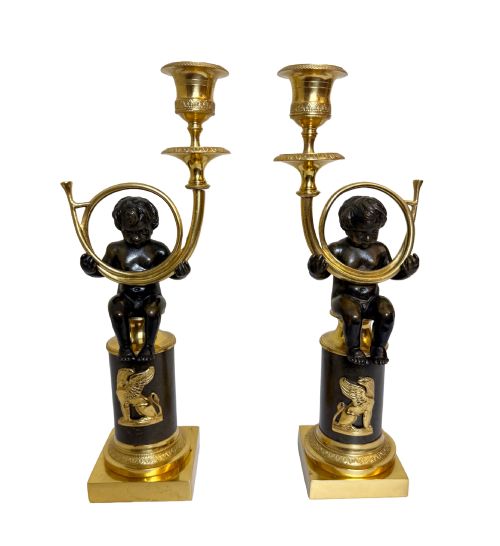
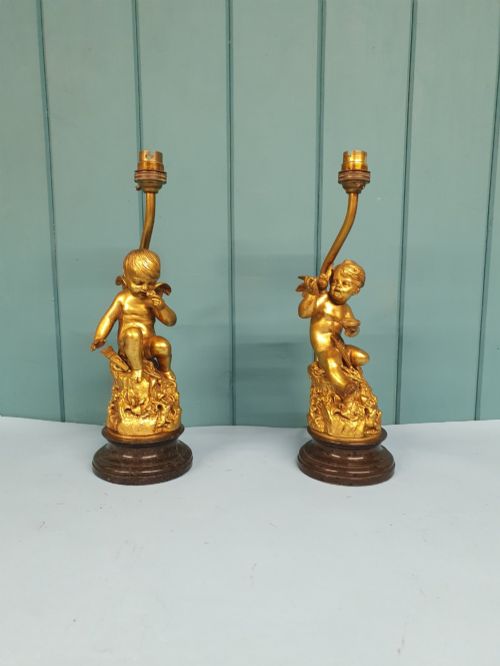
The versions you are most likely to meet on this page span the Victorian period and the late nineteenth century, appearing as candelabra mounts, clock garnitures, or standalone desk sculptures.
These pieces often incorporate classical revival styles such as French Rococo, Louis XIV, and Empire, reflecting nineteenth-century European interior taste.
Materials and casting methods
The primary construction relies on bronze or spelter cast in multi-part moulds, finished with either mercury gilding, known as ormolu, or a patinated dark surface.
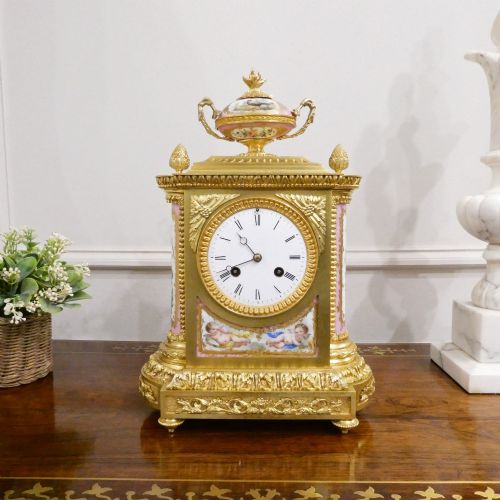
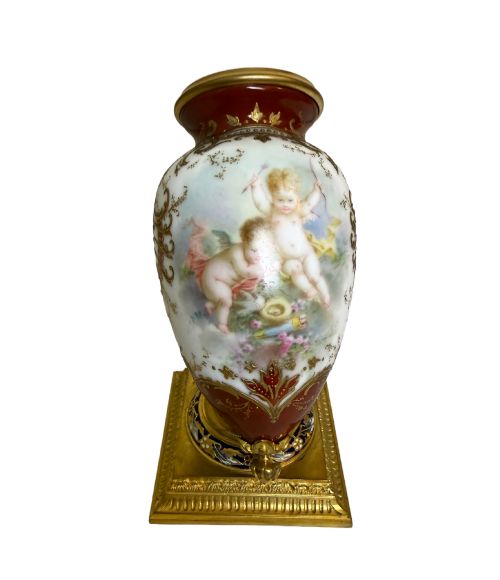
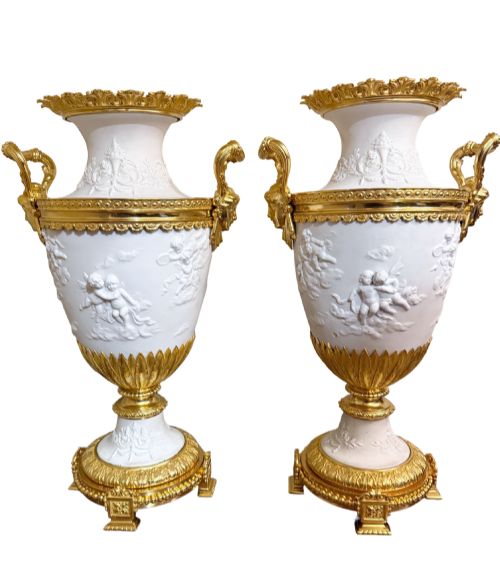
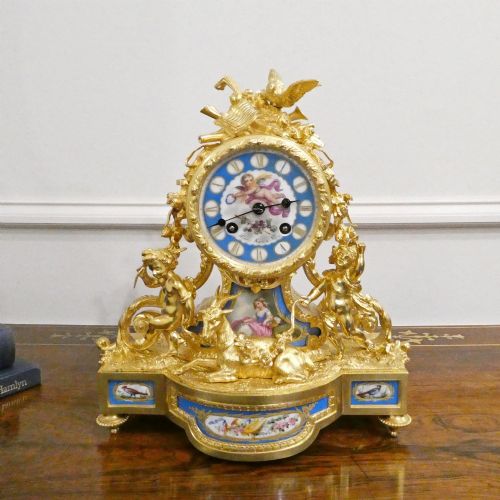
Many objects combine gilt bronze with contrasting natural materials such as white marble bases, hand-painted porcelain panels from Sèvres, and inset glass or cut crystal elements.
Several cherubs double as timekeepers, clutching star-studded globes or listening intently to invisible heartbeats.
Distinctions in craftsmanship
The integration of secondary materials defines the tier of the piece, distinguishing heavy, uniform white marble plinths and hand-painted porcelain components from simpler cast assemblies.
Susse Frères·Japy Freres·Henry Marc·Henry Dasson
The Gilt Bronze Cherub Glossary
- Ormolu
- Gilded bronze produced by applying a mercury and gold amalgam to a bronze base and heating it to drive off the mercury. This technique creates a durable, warm metallic finish common on nineteenth-century French decorative objects.
- Putto
- A representation of a plump, naked winged infant in classical art. These figures appear frequently as cherubs supporting candelabra branches or flanking clock dials.
- Chenet
- An alternative term for an andiron used in pairs on a fireplace hearth. Many examples feature cast gilt bronze figures including cherubs.
- Garniture
- A set of matching ornamental objects designed to be displayed together on a mantelpiece, typically comprising a central clock flanked by matching candelabra or vases.
- Tazza
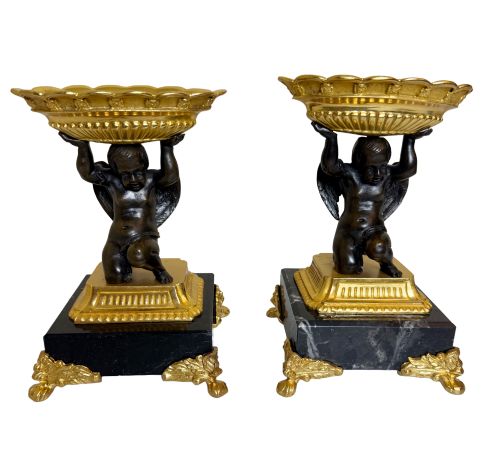
- A shallow saucer-shaped cup or vessel mounted on a stem and foot. These often incorporate cast cherub mounts or handles.
Gilt Bronze Cherub: Frequently Asked Questions
What are gilt bronze cherub clocks made of?
These mantel clocks combine cast bronze and ormolu mounts with structural elements of white marble, slate, or porcelain.
The clock movements sit within the main body, while cast putti or cherubs recline across the top or flank the dial.
How do I identify nineteenth-century French candelabra?
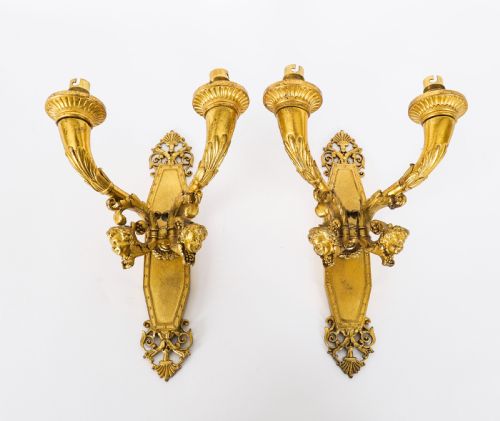
Nineteenth-century French candelabra often utilise heavy cast bronze with distinct ormolu and patinated finishes, featuring multiple branch sockets supported by figural cherubs.
Look for threaded component construction underneath the base rather than modern welded joints.
Where were these cherub figures displayed?
Original nineteenth-century interiors positioned these decorative bronzes primarily on drawing-room mantelpieces, bureau desks, and side tables as part of matched garniture sets.
Pairs of candelabra or wall lights typically flanked mirrors or doorways to enhance artificial lighting.
How can I tell different revival styles apart?
Rococo revival pieces display asymmetrical scrollwork, naturalistic floral motifs, and playful cherubs, whereas Empire style incorporates strict symmetry, classical drapery, and military emblems.
Louis XIV examples emphasise heavier, formal architectural framing around the central figures.