
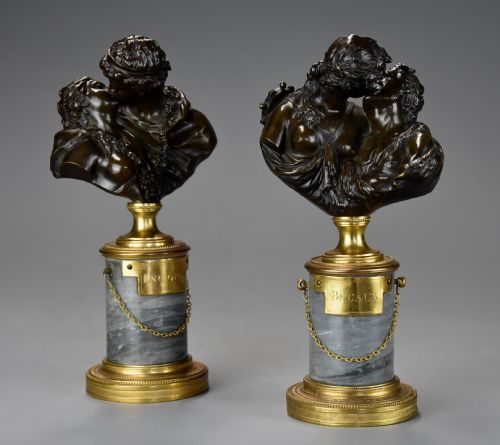


Grand Tour Bronze Bust
When you handle a grand tour bronze bust, you hold a tangible piece of classical antiquity brought home by nineteenth-century travellers.
Grand Tour Bronze Bust
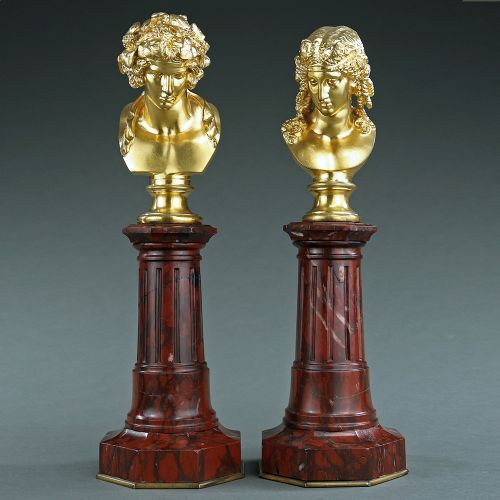
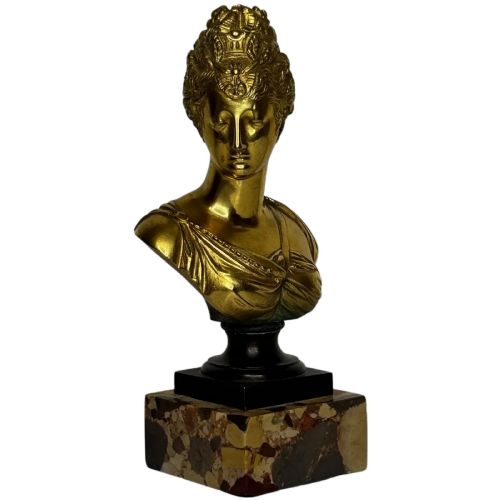
A grand tour bronze bust represents a miniature or cabinet-sized portrait of a classical deity, philosopher, emperor, or hero, modelled after famous antiquities seen by travellers in Italy. These souvenirs were produced primarily during the nineteenth century across various European workshops, capturing the enduring fascination with ancient Greek and Roman sculpture.
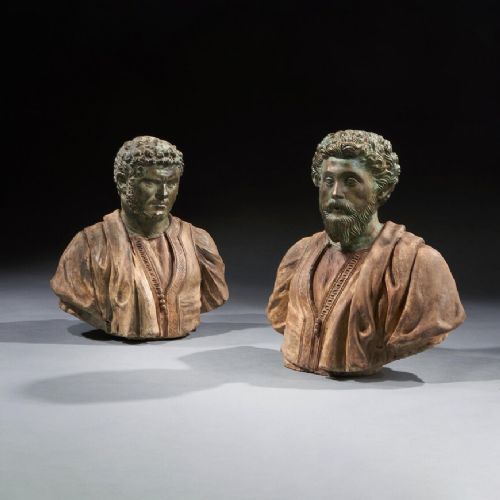
The most common form you will meet on this page is a patinated or gilt bronze casting mounted onto a contrasting marble or stone plinth. Subjects range widely from mythological figures like Apollo and Athena to historical personages such as Homer, Caesar, and Seneca.
How they were made
Foundries utilised traditional lost-wax or sand-casting techniques to capture the fine details of hair, drapery, and facial expression from classical prototypes. Molten bronze was poured into moulds, then finished by hand using chisels and files to sharpen the contours.
The warm metallic surfaces received chemical patination to simulate aged bronze, ranging from dark chocolate brown to bright verdigris, or were occasionally painted, gilded, or combined with terracotta, plaster, and carved marble bases.
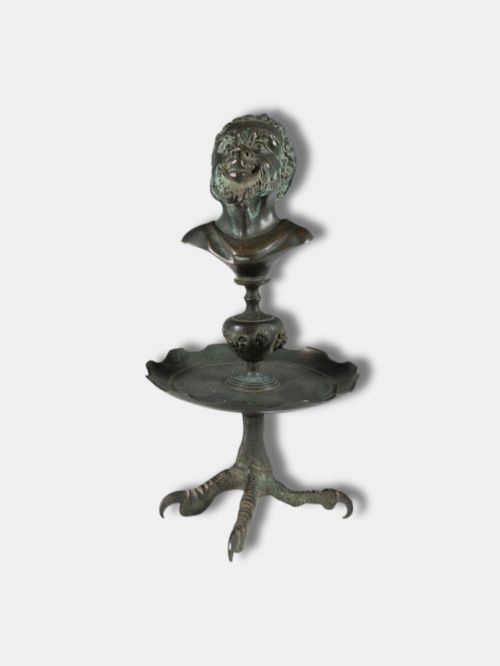
Among the philosophers and emperors, a bronze eagle's claw holds up an oil lamp with a satyr.
What varies in quality
The quality of the mount matters equally, with dense marbles like Sienna or polished black stone providing a stable, well-proportioned architectural foundation for the metal bust above.
Jean Antoine Houdon·Mathurin Moreau·Bulio·Richard Aurili
The Grand Tour Bronze Bust Glossary
- Patination
- The chemical treatment or natural weathering applied to the surface of the metal to achieve a specific colour and finish. It protects the bronze while giving it the appearance of age.
- Lost-wax casting
- A method of metal casting in which a molten metal is poured into a mould that has been created by means of a wax model. Once the wax is melted away, the bronze takes its exact place.
- Plinth
- The heavy base or block upon which the bust is mounted. These are frequently fashioned from coloured marbles or contrasting stones.
- Grand Tour
- The traditional journey of Europe undertaken by upper-class European young men of sufficient means during the eighteenth and nineteenth centuries. Souvenirs collected along the way included these small sculptures.
- Neoclassical
- The Western cultural movement inspired by the classical art and culture of ancient Greece and Rome. This aesthetic heavily informs the subject matter and style of these portrait studies.
Grand Tour Bronze Bust: Frequently Asked Questions
How were these busts used?
Travellers placed these cabinet bronzes on desks, bookshelves, and specially constructed pedestals within their homes as symbols of classical learning and refined taste. They served as scholarly conversation pieces and tangible memories of foreign travel.
Some examples also doubled as functional objects, such as lamp components or architectural ornaments integrated into larger marble temples and decorative desk sets.
How do I identify the subject?
Subjects are typically identified by distinctive attributes, hairstyles, or inscribed titles on the plinth, depicting figures such as Roman emperors, Greek philosophers, or mythological deities. Familiarity with classical mythology and Roman history helps decipher who is portrayed.
Commonly encountered subjects include philosophers like Seneca, rulers like Caracalla, and mythological heroes such as Ajax and Antinous, often copied directly from celebrated museum sculptures.
How do I care for a bronze bust?
Maintain the surface simply by dusting the bronze gently with a dry, soft cloth to prevent particulate accumulation. Avoid using chemical polishes or abrasive cleaners, which can strip away the historical patination.
Keep the piece away from excessive moisture and direct sunlight to protect both the metal patina and the underlying marble or stone plinth.