
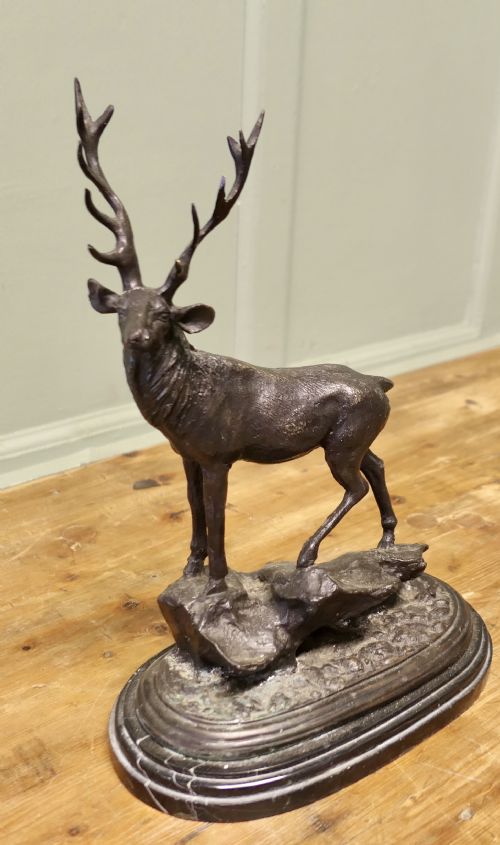
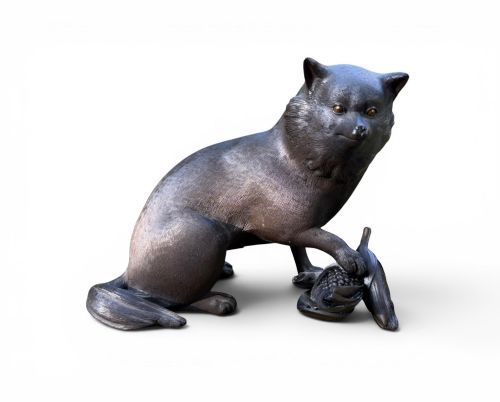
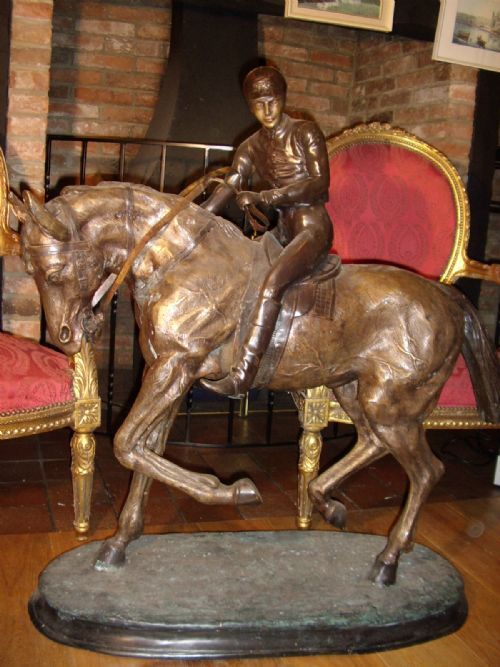
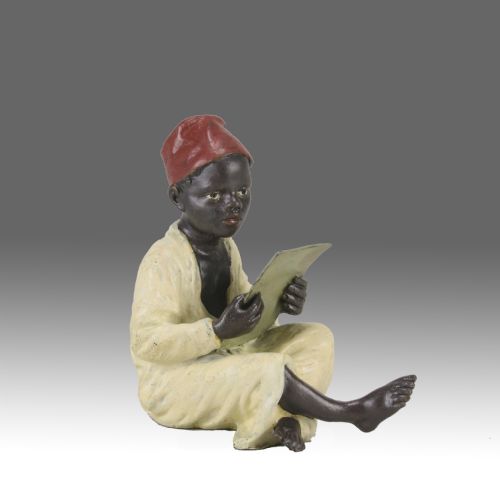


Signed Bronze Statue
When you search for a signed bronze statue, you are looking at figurative works bearing the signatures of founders and modellers from the nineteenth and twentieth centuries.
Signed Bronze Statue
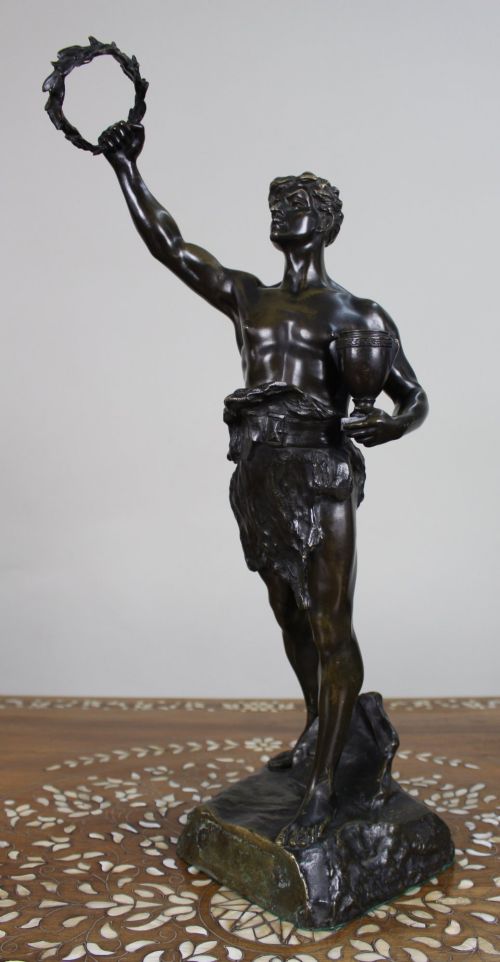
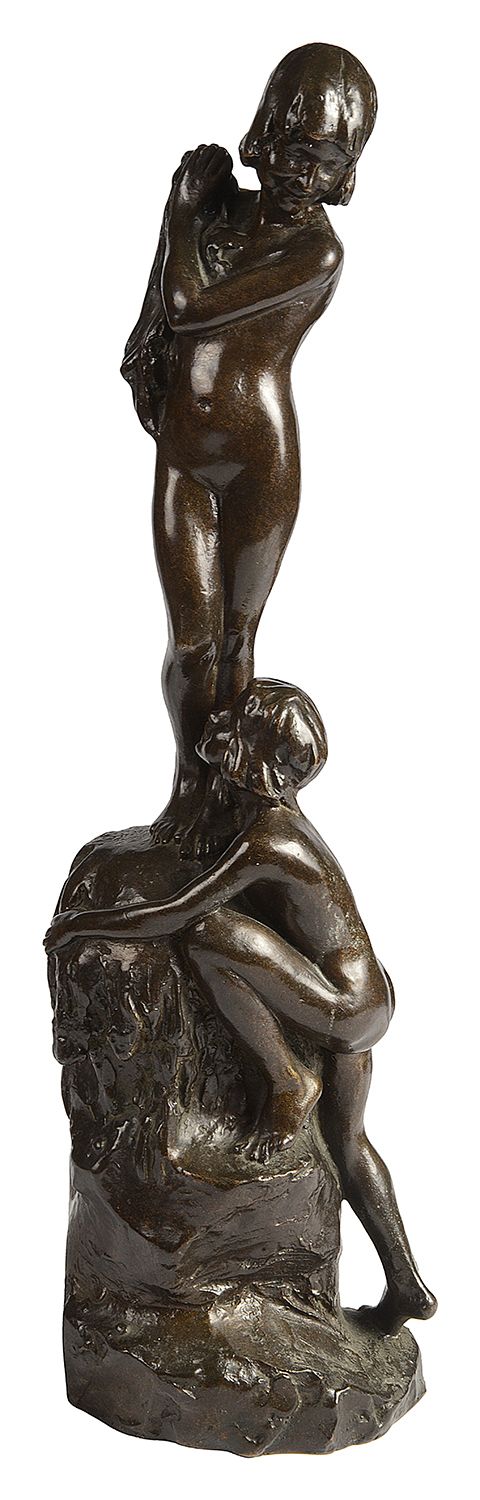
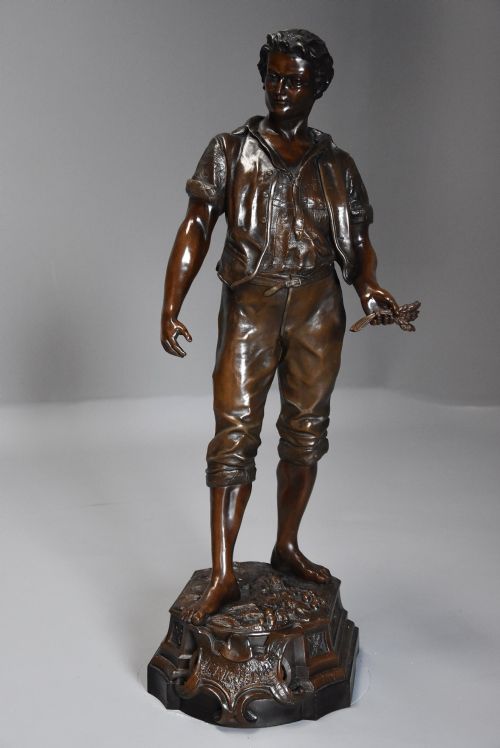
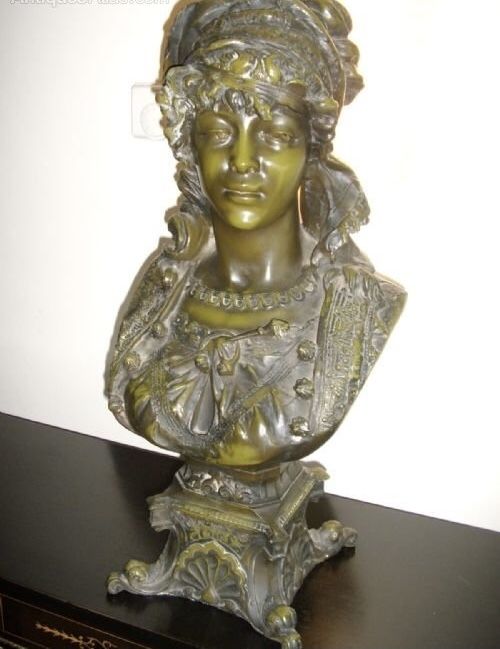
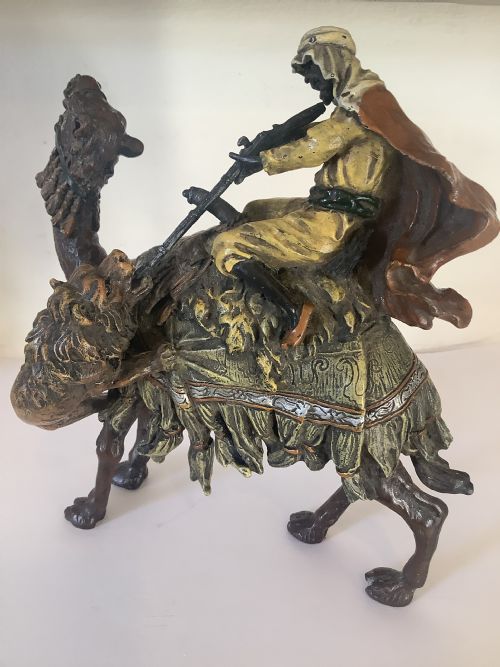
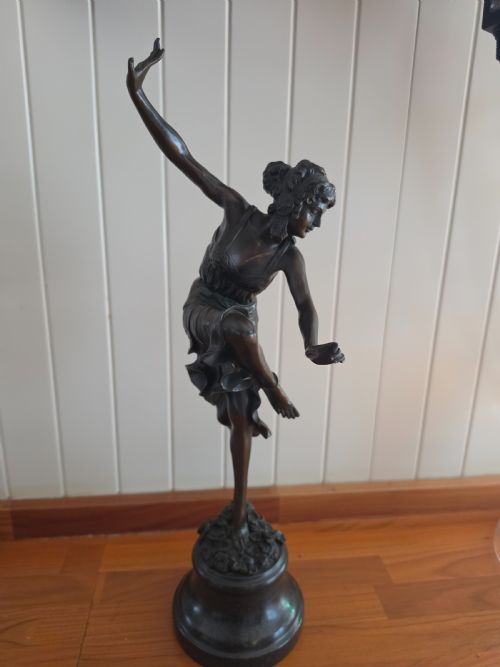
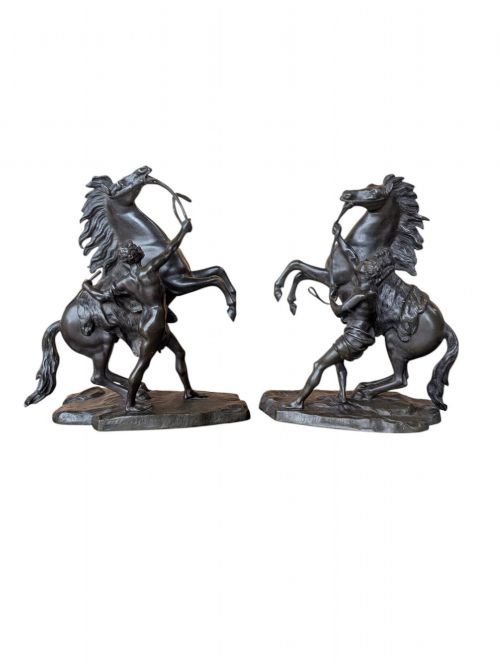
A signed bronze statue represents the collaborative effort between sculptor and foundry, carrying signatures, founder marks, or cyphers directly into the metal. The selections here include nineteenth-century French figures, Animalier studies of wildlife, Orientalist subjects, and Art Deco dancers.
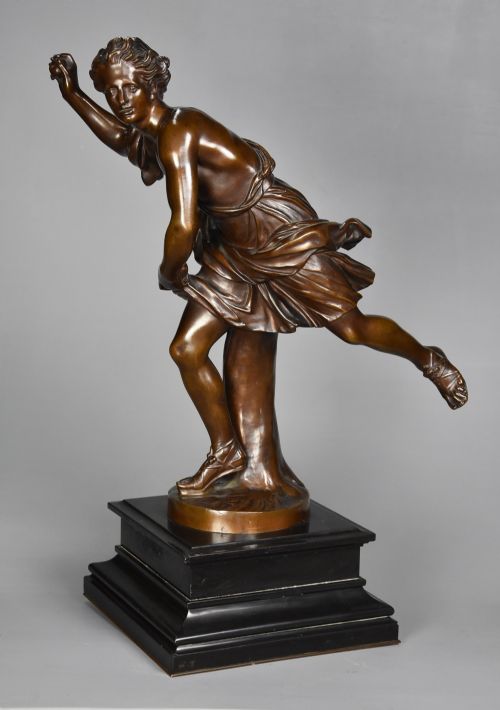
The forms span human figures from classical antiquity and mythology to children, dancers, and labourers, alongside detailed animal studies. Many of these pieces are mounted on carved marble plinths or ebonised wood bases, completing the sculptural presentation.
Originating predominantly from French ateliers, Italian foundries, and Japanese Meiji period workshops, these works frequently employ the lost-wax casting method to capture fine details in the metal.
Materials and casting methods
The pieces on this page rely primarily on cast bronze, patinated bronze, and occasionally bronzed spelter, combined with marble plinths and root wood bases. Artisans applied chemical patination to produce varied surface tones ranging from deep black to warm brown.
Materials documented in the inventory include patinated bronze, cold-painted metal, carved marble plinths, and ebonised wood bases.
Distinguishing quality in the metal
Quality rests upon the crispness of the chase work, where skilled artisans hand-tooled the raw metal after casting to sharpen hair, drapery, and facial expressions. Finer examples retain subtle depth in their patination and feature precise signature incisions rather than shallow stamped lettering.
The integration of the figure with its base demonstrates execution standards, seen where a bronze is fitted snugly to a shaped marble plinth or secured to a carved wooden mount. Stronger works display realistic anatomical movement and balanced composition, whether depicting a charging tiger or a dancer in motion.
Barbedienne·Franz Bergman·D.H. Chiparus·E.Villanis·Seiunsai Miyamoto Sei
The Signed Bronze Statue Glossary
- Animalier
- A nineteenth-century artistic movement focused on the realistic depiction of animals, particularly predators, horses, and dogs in dynamic action. French sculptors popularised this genre across European foundries.
- Lost-wax casting
- A traditional manufacturing method known as cire perdue, where a master model is encased in wax and mould material, melted out, and replaced with molten bronze. This technique allows for complex undercuts and fine surface details.
- Patina
- The surface coloration and sheen developed naturally over time or applied artificially through chemical treatments. It protects the metal and defines the visual tone of the sculpture.
- Spelter
- An alloy of zinc and lead used as a cheaper alternative to bronze, frequently patinated to imitate copper or bronze finishes. It appears in nineteenth-century decorative figures.
- Okimono
- A Japanese ornamental statuette designed for display in a household interior, commonly carved in ivory or cast in bronze during the Meiji period.
Signed Bronze Statue: Frequently Asked Questions
What does a signature on a bronze mean?
A signature on a bronze typically indicates the sculptor who modelled the original work rather than the artisan who poured the molten metal. These inscriptions appear as incised lettering, raised signatures in the mould, or foundry stamps.
Foundries often placed their own marks alongside the artist's signature to authenticate the casting origin and batch production.
Where were these sculptures made?
The majority of these sculptures originate from European art centres, particularly Paris and Vienna, during the nineteenth and early twentieth centuries. Foundries in these cities employed specialist metalworkers to cast and finish works for international markets.
Japanese workshops during the Meiji period also produced distinctive bronze figures and okimono for export.
How should I clean an antique bronze?
Antique bronze requires minimal intervention to preserve its original patination and historical surface wear. Dust the sculpture gently with a soft, dry brush and avoid chemical polishes or water.
Applying a very light coat of microcrystalline wax can protect the metal from atmospheric moisture if maintained by experienced collectors.