





Grand Tour Dancing Satyr
These grand tour dancing satyr figures bring classical antiquity into your home as finely cast souvenir bronzes from the nineteenth century.
Grand Tour Dancing Satyr
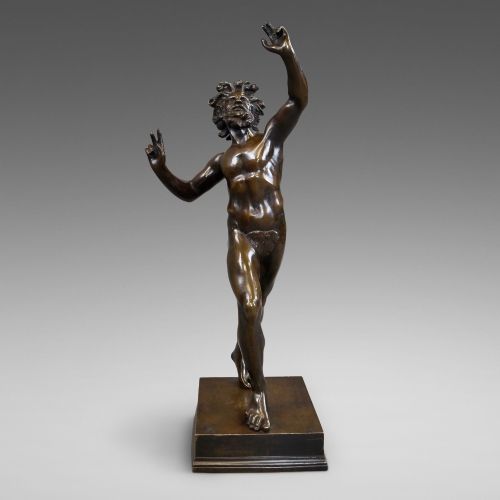
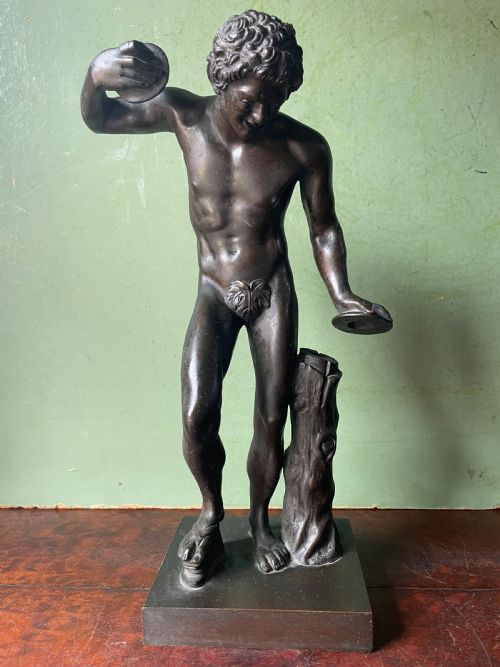
When you search for a grand tour dancing satyr, you are looking at nineteenth-century souvenir sculptures modelled after ancient Roman bronzes excavated in Pompeii and Naples. The most common version met on this page is a small-scale bronze casting of the Dancing Faun, often depicted with cymbals or clappers in dynamic motion.
These figures capture the neoclassical taste of travellers on the Grand Tour who collected miniature replicas of famous museum pieces. Makers drew direct inspiration from the original discoveries in the Museo Nazionale in Naples to satisfy wealthy European and British tourists.
Materials and methods of production
Foundries produced these reductions primarily in bronze, sometimes utilising patination techniques to simulate excavated ancient metalwork, while alternative examples appear in plaster. Artisans cast the figures using traditional methods to capture the musculature and expressive movement of the classical subjects.
Marble frequently serves as a material for the integral bases that support the metal figures, providing stability and a neoclassical architectural finish. The patinated surfaces range from dark brown tones to lighter verdigris effects, reflecting nineteenth-century interpretations of ancient patinas.
Several figures come equipped with miniature cymbals ready to strike, proving that even heavy nineteenth-century metalwork loves a party.
Distinctions in quality and execution
The quality of the bronze patina and the integration with the marble base also differentiate the workshop output. A carefully patinated surface with subtle tonal variations elevates a souvenir casting from a standard commercial piece to a refined cabinet sculpture.
Augusto Rivalta·Clodion
The Grand Tour Dancing Satyr Glossary
- Grand Tour
- A traditional trip through Europe undertaken by upper-class young men to absorb classical art and culture. The souvenirs they collected define this category of sculpture.
- Patinated Bronze
- Metal sculpture treated with chemicals to produce a specific surface colour and finish. This process often simulates the aged appearance of buried antiquities.
- Reduction
- A smaller copy of a larger statue or monument. Nineteenth-century foundries specialised in reducing famous museum pieces for private homes.
- Neoclassical
- A style of art and architecture inspired by the classical art of ancient Greece and Rome. It dominated European taste throughout the eighteenth and nineteenth centuries.
- Clappers
- Handheld percussion instruments played by the figure in several representations. They appear frequently in sculptures modelled after the Dancing Faun of Pompeii.
Grand Tour Dancing Satyr: Frequently Asked Questions
What is a grand tour dancing satyr?
A nineteenth-century souvenir sculpture modelled after ancient Roman statues discovered in Pompeii or Naples. These bronze or plaster reductions were collected by travellers touring Europe.
They capture classical mythological subjects, most notably the Dancing Faun, holding cymbals or clappers in lively poses.
How were these bronzes displayed?
Victorian collectors usually placed these figures on desk tops, library tables, or within specialised cabinet displays. Their modest scale made them suitable for domestic interior decoration.
Many examples feature fitted marble bases designed to elevate the sculpture and complement neoclassical interiors.
How do I date a grand tour bronze?
Dating relies on the casting quality, the nature of the patina, and the style of the base or fixings. Most pieces on this page date from the nineteenth century.
Examinations of the bronze surface often reveal tool marks or casting methods characteristic of nineteenth-century European foundries.