


Gothic Style Storage Cabinet
A gothic style storage cabinet brings medieval architectural gravity into a room through heavy timber and pointed arches.
Gothic Style Storage Cabinet
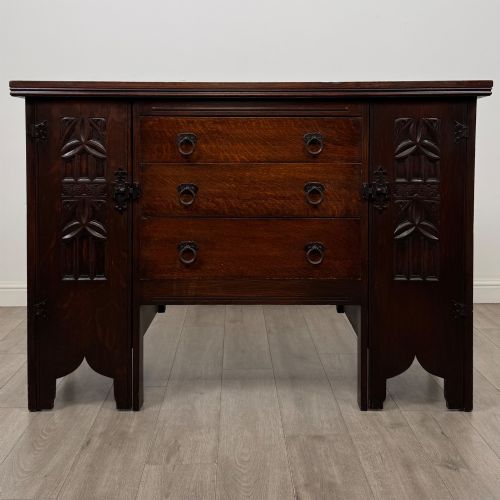
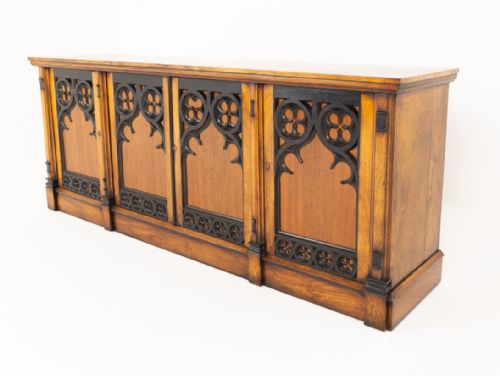
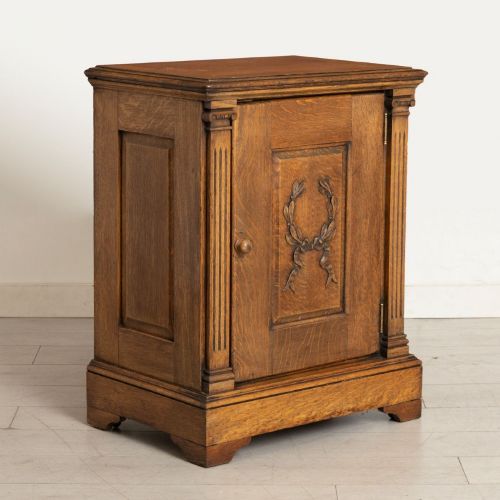
A gothic style storage cabinet encompasses cupboards, sideboards, dressers, and display cabinets built across the nineteenth and twentieth centuries.
You will most frequently meet Edwardian and Victorian examples alongside pieces dated from eighteen fifty to nineteen thirty.
Makers drew on Gothic Revival, Tudor Revival, and Renaissance Revival traditions to shape these heavy storage forms.
Materials and construction
Joiners built these cabinets primarily in solid oak, occasionally turning to pine, ebonised wood, and multi-wood combinations for varied surface tones.
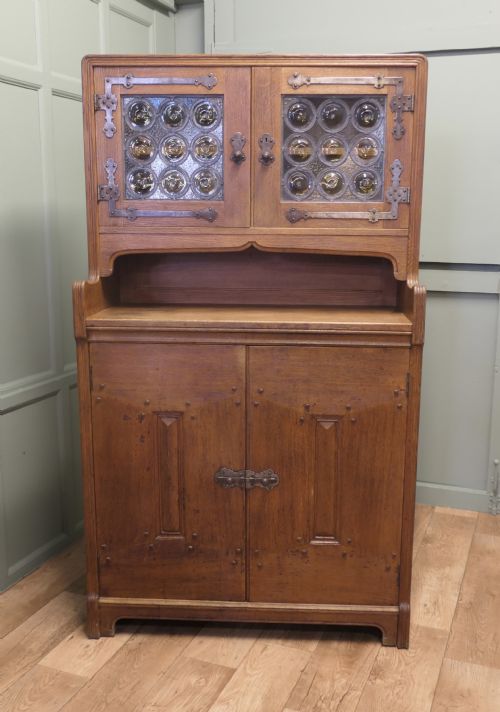
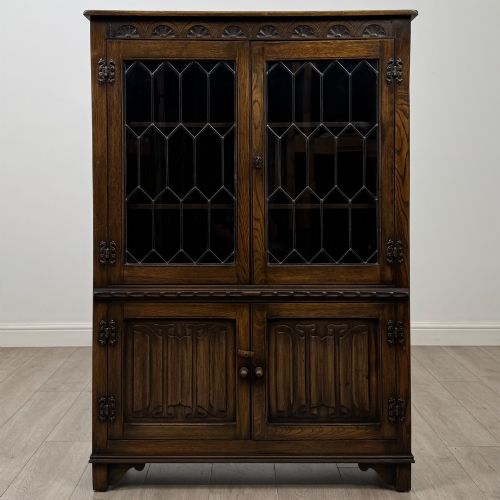
Metalwork played a structural and decorative role, incorporating iron, brass, wrought iron, and lead alongside glass paneling.
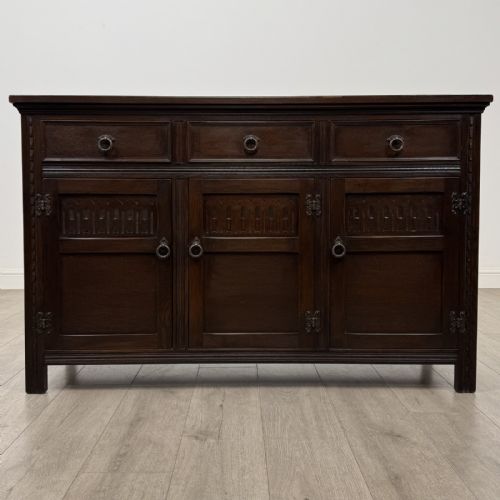
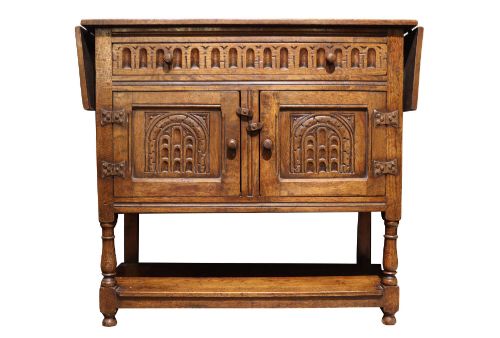
Carving defined the surfaces, utilising linenfold panels and structural timber mouldings to mimic medieval stone and woodwork.
One adventurous cabinet emerged designed by Liberty, proving even medieval church architecture could join the nineteenth-century high street.
Judging the work
The distinction between standard utility storage and finer work lies in the depth and execution of the timber carving.
Cabinets utilising golden oak with integrated architectural elements display a higher ambition in design than plain functional boxes.
Liberty
The Gothic Style Storage Cabinet Glossary
- Gothic Revival
- A nineteenth-century movement that revived medieval architectural forms, pointed arches, and heavy proportions in domestic furniture.
- Linenfold
- A style of wood carving that imitates folded fabric, frequently seen on the panels of cupboards and cabinets.
- Livery Cabinet
- A tall storage piece traditionally used for food or beverages, adapted in later periods for general household storage.
- Creedence Cabinet
- A small medieval-style side table or cupboard used originally for displaying plate or testing food for poison.
- Ebonised Wood
- Timber treated to resemble ebony, creating a dark, uniform finish common in revival furniture.
Gothic Style Storage Cabinet: Frequently Asked Questions
What rooms suit a gothic style storage cabinet?
These cabinets work well in dining rooms, libraries, or hallways where their substantial proportions anchor the space.
Their dark timber and architectural details demand a room with enough scale to absorb their visual weight without feeling overcrowded.
How do I identify a revival period piece?
Look closely at the construction methods, tool marks, and timber preparation, which reveal nineteenth or twentieth-century workshop practices.
Revival furniture often blends gothic linenfold carving with modern carcass construction typical of the Victorian and Edwardian eras.
Are these cabinets practical for modern storage?
Most pieces offer deep shelving and enclosed cupboards well-suited for books, dinnerware, or media equipment.
Internal configurations vary, so checking the depth of the shelves helps determine suitability for contemporary household items.
What is the difference between a sideboard and a cupboard?
Cupboards generally provide fully enclosed vertical storage behind doors, whereas sideboards often incorporate surface display space and lower drawers.
Both forms utilise heavy oak framing and revival carving styles across this selection.