

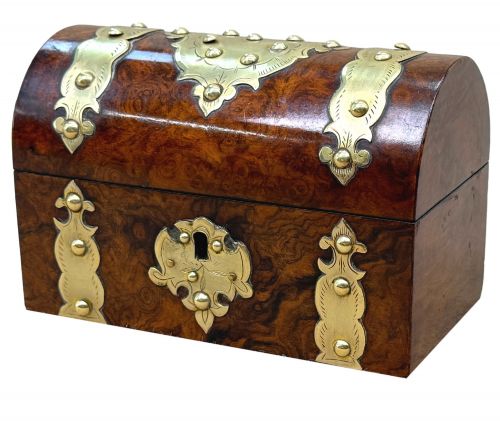

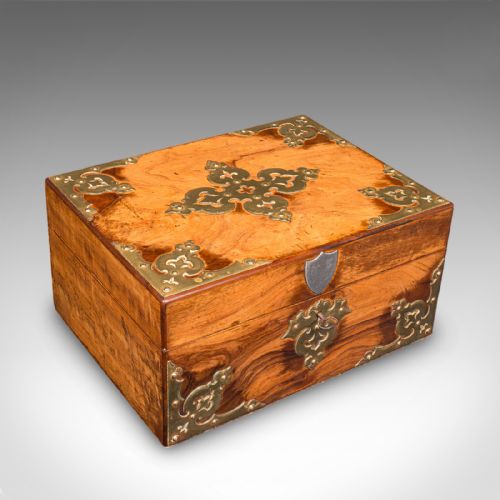


Gothic Strapwork Casket
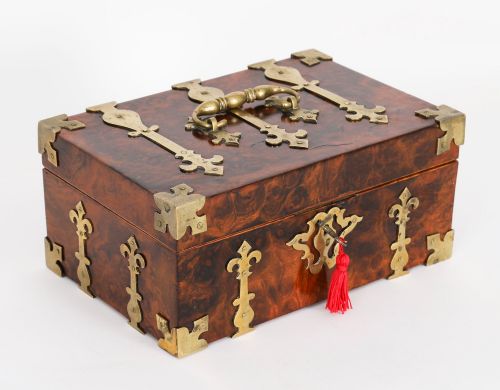
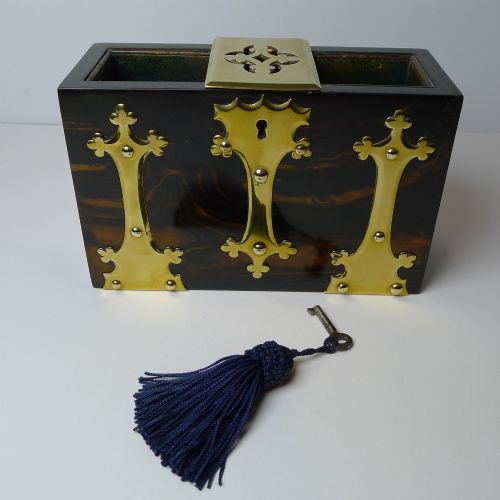
These gothic strapwork casket pieces are nineteenth-century brass-bound wooden boxes created for desks and dressing tables during the Victorian era.
Gothic Strapwork Casket
When you search for a gothic strapwork casket, you are looking at nineteenth-century wooden boxes designed for stationery, jewellery, and desk use. The pieces found here date from the Victorian period, particularly around eighteen sixty and eighteen eighty, reflecting the revival of medieval design.
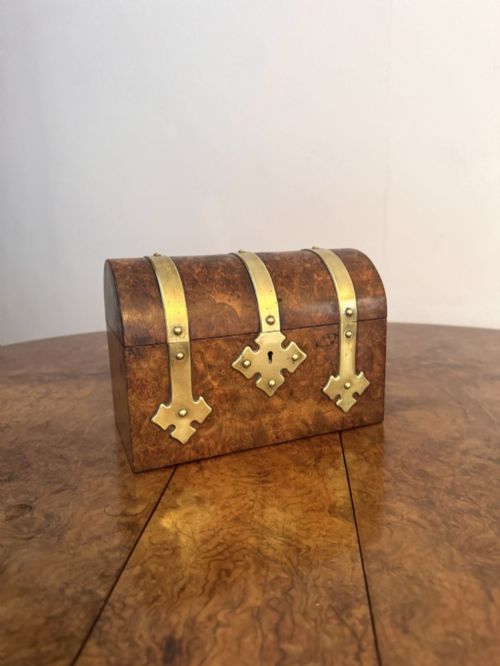
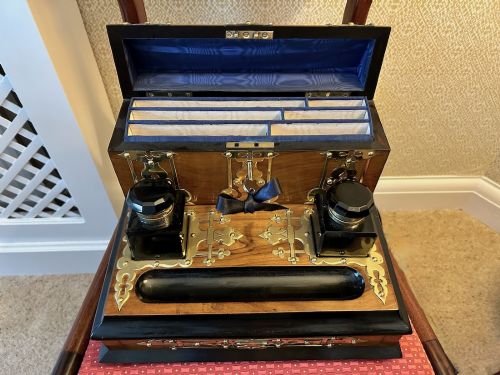
Most examples on this page take the form of stationery boxes, dome top boxes, or desk sets. They serve practical functions while displaying the decorative metalwork characteristic of nineteenth-century revivalist taste.
Makers utilised various timber foundations, pairing them with metal mounts to achieve the characteristic appearance associated with these boxes. The scale ranges from compact workboxes to larger desk accessories intended for prominent placement in period interiors.
How they were made
Cabinet makers built these boxes using solid and veneered timbers including burr walnut, pollard oak, amboyna, and coromandel. These woods were chosen for their rich grain patterns, which provided a textured background for metal fittings.
Brass mounts, strapwork, and ormolu were applied to reinforce corners and decorate the lids and panels. Interiors often lined with silk or fitted with glass components completed the construction.
Gothic Strapwork Casket Retail Price Guide 2026
Typical asking prices for gothic strapwork casket among the pieces listed under this phrase on Sellingantiques today, from the lower quarter to the upper quarter. They describe what is for sale here now, not the wider market.
Some Victorian owners stored secret love letters inside these heavy brass-bound boxes, locking them away from prying family members.
What varies in quality
The quality of a gothic strapwork casket depends on the selection of timber veneers and the precision of the brass work. Dense burr walnut and figured coromandel indicate higher tier production than plain woods.
Better examples demonstrate careful alignment of metal strapwork and robust internal fittings like velvet or silk linings. The weight of the brass mounts and the crispness of the construction separate standard utilitarian boxes from finer display pieces.
The Gothic Strapwork Casket Glossary
- Burr Walnut
- A timber derived from walnut tree growths that produces intricate, swirling grain patterns. It was frequently utilised on Victorian boxes for decorative impact.
- Strapwork
- Ornamental metal bands or strips applied to the surface of a box. This technique provides both structural reinforcement and a distinctive linear pattern.
- Coromandel Wood
- A dense, heavy timber from South East Asia featuring dark brown and black stripes. Collectors prize it for its rich colour and durability.
- Ormolu
- Gilded bronze mounts applied to furniture and decorative objects. It adds metallic contrast to the wooden surfaces of nineteenth-century boxes.
- Stationery Box
- A specialised desk accessory designed to hold writing paper and envelopes. These pieces often feature tiered internal dividers.
Gothic Strapwork Casket: Frequently Asked Questions
What are gothic strapwork caskets?
These pieces are nineteenth-century wooden boxes decorated with brass strapwork and mounts in a Victorian Gothic Revival style. They were manufactured during the eighteen sixties and eighteen eighties.
They encompass stationery boxes, jewellery caskets, and desk sets designed to organise correspondence and personal valuables on a writing table.
How were these boxes used?
Victorian households utilised these caskets on desks, in studies, and upon dressing tables to store letters, writing implements, and trinkets. Their fitted interiors kept small items organised.
They also functioned as decorative display objects that demonstrated the owner's taste for medieval revival aesthetics within the home.
How do I live with a gothic strapwork casket?
These boxes integrate easily onto modern sideboards, bookshelves, or desks where they provide practical storage for small items. Their wooden and brass surfaces require minimal maintenance beyond dusting.
Keep them away from direct sunlight and extreme humidity to protect the timber veneers and internal silk linings from fading or drying out.
How do I tell periods apart?
Pieces from eighteen sixty often feature simpler dome top forms and basic brass banding on walnut or oak. Later examples from eighteen eighty frequently incorporate more elaborate amboyna, coromandel, or malachite accents.
Reviewing the specific timber varieties and the complexity of the brass strapwork helps establish where a piece sits within the nineteenth-century timeline.