


Victorian Brass Strapwork Casket
These Victorian brass strapwork caskets are heavy timber boxes bound in metal mounts, offering both robust storage and striking surface decoration for a desk or dressing table.
Victorian Brass Strapwork Casket
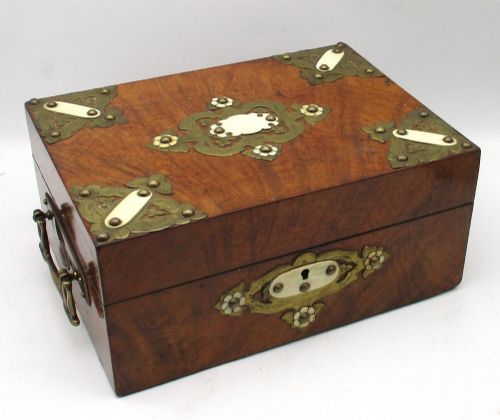
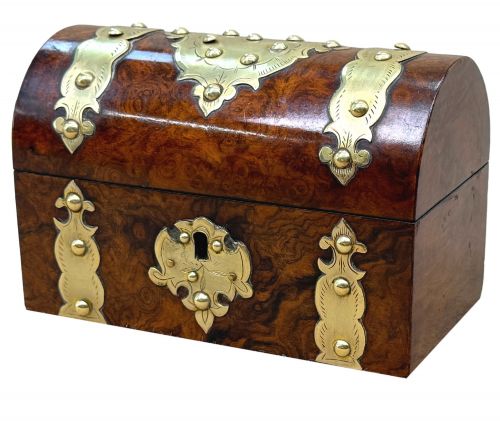
A Victorian brass strapwork casket is a sturdy wooden box reinforced with decorative metal bands and mounts, designed to hold letters, stationery, jewellery or desk accessories. When searching for a Victorian brass strapwork casket, buyers encounter variations in form from domed stationery boxes to flat-topped writing cases and games boxes.
The objects date primarily from the nineteenth century, with specific examples appearing from around eighteen-sixty to eighteen-ninety. Styles range from plain utilitarian timber mounted in brass to elaborate Gothic Revival pieces influenced by architectural metalwork.
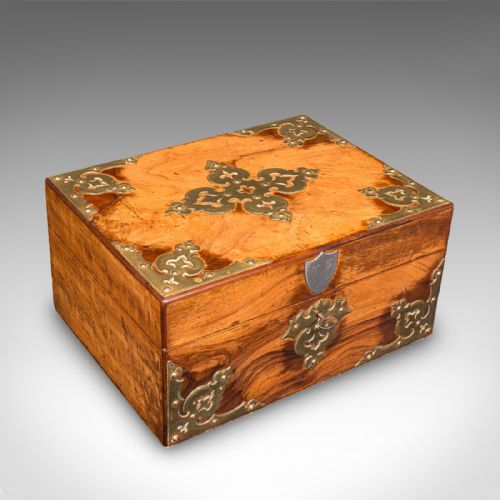
Makers utilised dense figured woods such as walnut, burr walnut, coromandel and pollard oak as a foundation for the heavy metal strapwork. Interiors often lined with silk, glass or porcelain reveal the domestic utility of these pieces alongside their decorative exterior appeal.
Materials and construction
Cabinetmakers constructed the carcass from solid woods or applied thick veneers of burr walnut, coromandel, amboyna or pollard oak over a secondary timber. These dense woods provided a stable base capable of supporting heavy brass mounts and hinges without warping.
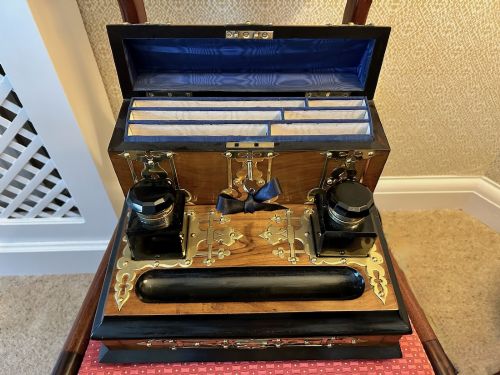
The signature strapwork consists of cut, pierced and engraved sheet brass fastened to the wood with small brass pins or screws, often supplemented by applied ormolu mounts and malachite insets. Interiors frequently combined silk linings, glass inkwells and fitted porcelain trays to complete the functional desk or dressing accessories.
Listings feature nineteenth-century forms including stationery boxes, jewellery caskets, scent bottle boxes and four-piece desk sets.
Judging quality
Quality rests in the precision of the brass strapwork and the complexity of the timber grain used for the body. Superior examples display deeply figured burr walnut or richly grained coromandel paired with crisp, hand-engraved metal mounts rather than simple stamped sheet brass.
The integrity of the internal fittings, such as original silk linings, working locks with keys, and matching glass or porcelain components, distinguishes finer pieces from those that have suffered later alterations or loss of original elements.
The Victorian Brass Strapwork Casket Glossary
- Strapwork
- Decorative bands of metal applied to the surface of a box or furniture piece in geometric or intersecting patterns. This technique provided both structural reinforcement and visual contrast against the timber.
- Coromandel
- A dense, heavy exotic wood featuring dark brown colouring with contrasting black stripes, favoured for luxury nineteenth-century boxes. It provides a smooth, polished surface that complements bright brass mounts.
- Burr Walnut
- A veneer taken from the growth growths or burls of walnut trees, displaying highly figured, swirling grain patterns. Cabinetmakers selected this material for high-status boxes to create dramatic visual movement.
- Gothic Revival
- An architectural and decorative style drawing inspiration from medieval forms, featuring pointed arches, heavily pierced metalwork and ecclesiastical motifs. This style heavily influenced nineteenth-century metal-mounted caskets.
- Ormolu
- Gilded bronze or brass applied as decorative mounts, feet or handles on nineteenth-century woodwork. The golden finish adds richness to the darker timber bodies of desk accessories.
Victorian Brass Strapwork Casket: Frequently Asked Questions
What were brass strapwork caskets used for?
These caskets served various domestic and writing purposes in the nineteenth century, holding personal correspondence, stationery, loose jewellery or bottled scents.
Their robust construction protected valuable items while sitting securely on library desks, writing tables or dressing chests.
How do I date a Victorian casket?
Dating relies on combining the timber choice, mount style, and construction methods visible in the hinges and locks. Pieces utilising heavy coromandel or gothic brasswork typically align with mid-nineteenth-century production.
Makers' marks stamped on locks or trade labels inside the lid also help establish a precise decade of manufacture.
Are interiors usually original?
Interiors frequently experienced wear due to the heavy use of ink, pens, and jewellery over generations. Silk linings and leather writing surfaces were often replaced when damaged.
Original glass inkwells, porcelain trays, and fitted partitions represent a more complete state for any desk accessory.
How should I care for timber and brass?
Maintenance requires keeping the wood and metal away from direct sunlight and excessive humidity to prevent timber splitting or veneer lifting. Gentle dusting with a dry cloth preserves the polished finish of both brass strapwork and figured wood.
Avoid liquid polishes that can seep under metal mounts or stain fabric linings.