
Gothic Revival Brass
These gothic revival brass pieces bring medieval ecclesiastical styling and heavy nineteenth-century metalwork into domestic spaces.
Gothic Revival Brass
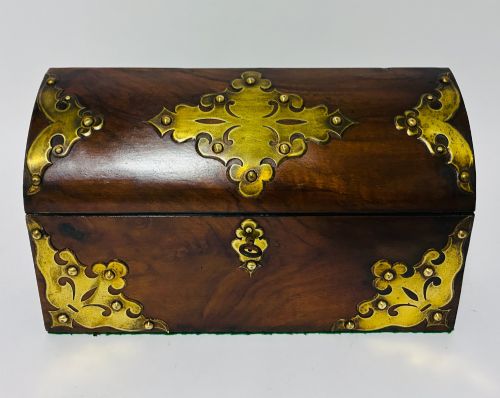
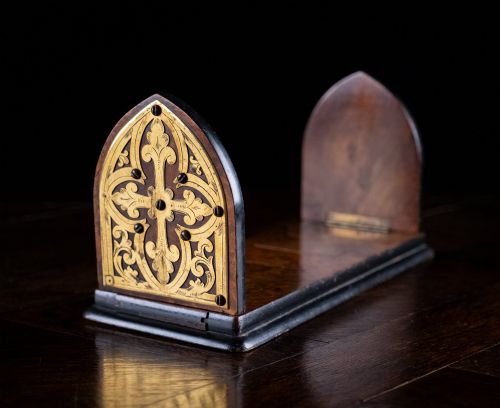
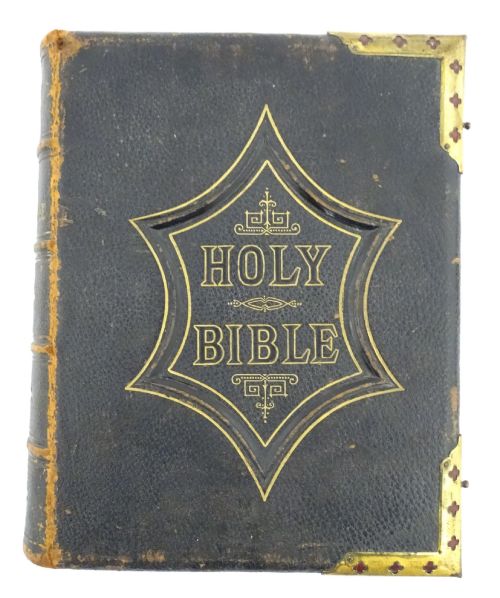
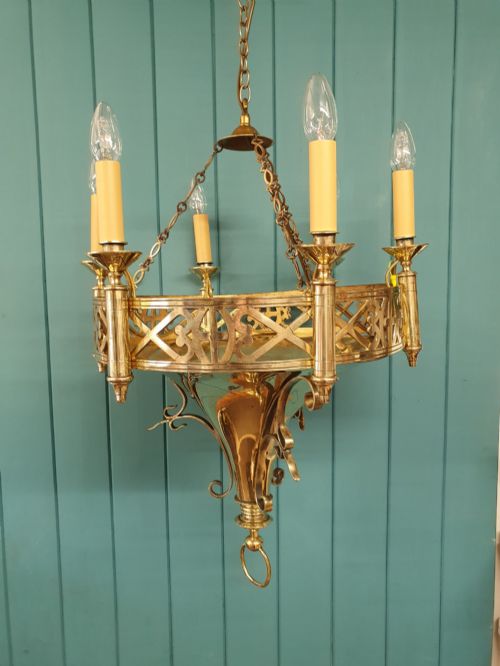
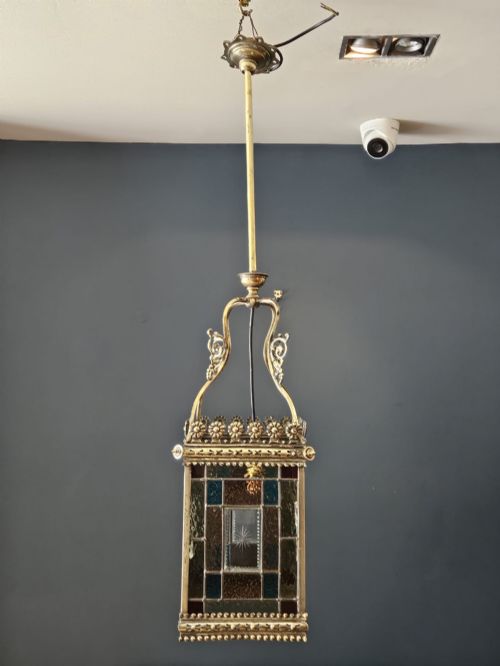
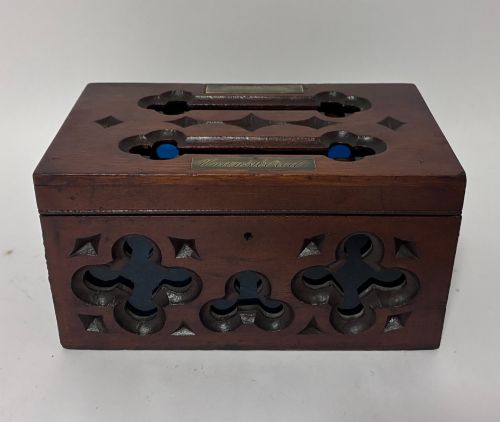
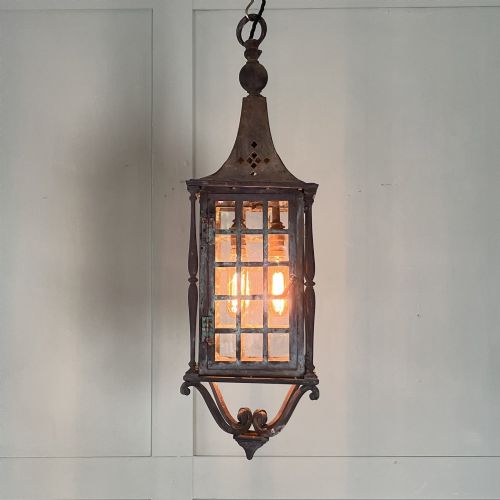
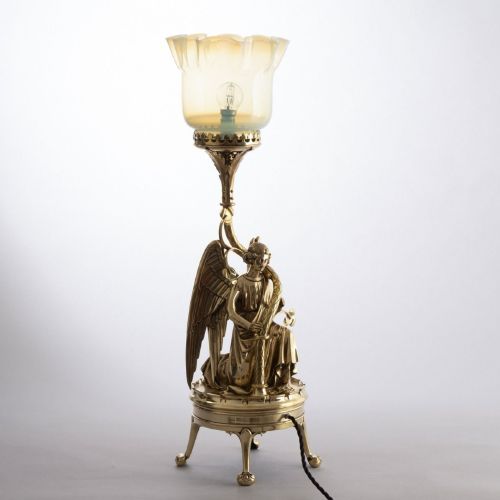
When searching for gothic revival brass, collectors encounter ecclesiastical metalwork, church candlesticks, altar garnitures, and domestic lighting fixtures designed in the nineteenth and early twentieth centuries. The domestic iterations include desk accessories, stationery boxes, doorstops, and heavy hanging lanterns fitted with leaded or vaseline glass panels.
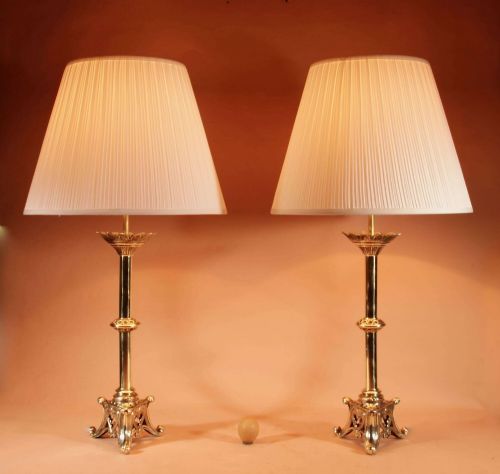
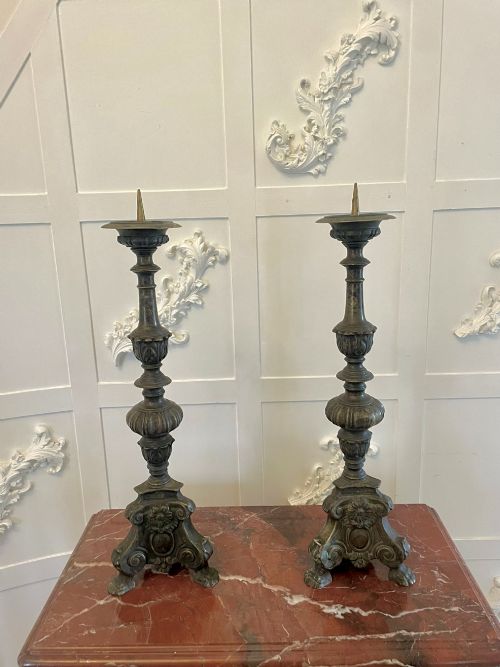
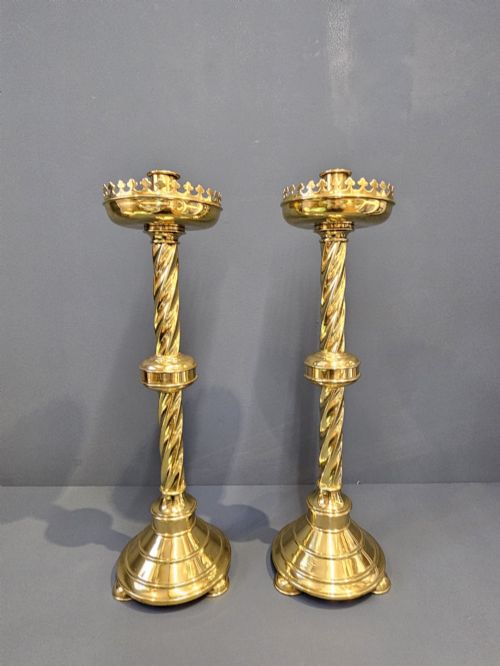
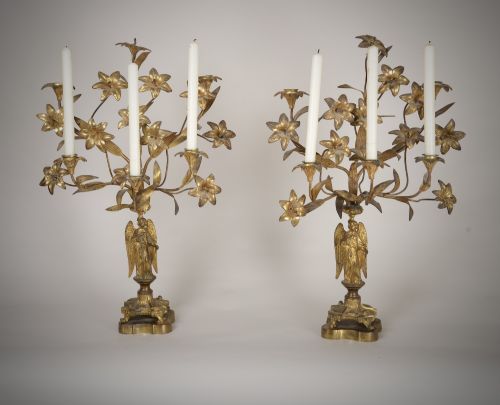
Candlesticks and prickets dominate the available forms, ranging from modest domestic examples to monumental church furnishings standing on multi-tiered bases. These items draw heavily on medieval architectural motifs such as pointed arches, quatrefoils, and grotesque masks, translating stonework into cast and chased metal.
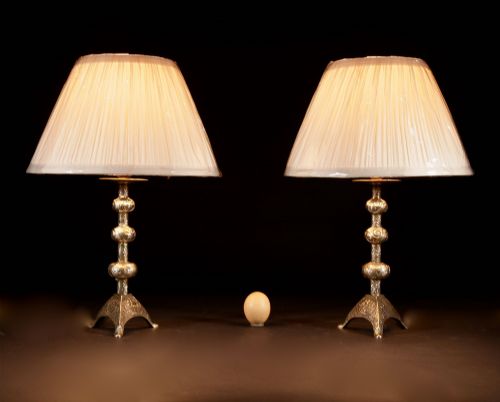
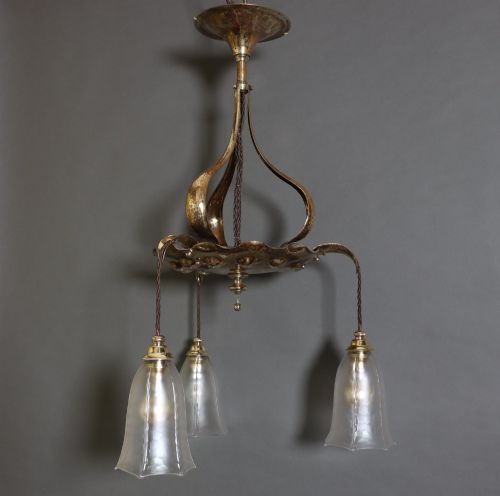
The aesthetic bridges the Victorian period into the Arts and Crafts era, where functional items like gasoliers, chandeliers, and table lamps received the same medieval revival treatment. Buyers select these objects for their robust weight, patinated surfaces, and unapologetic historical borrowing.
Materials and Casting Techniques
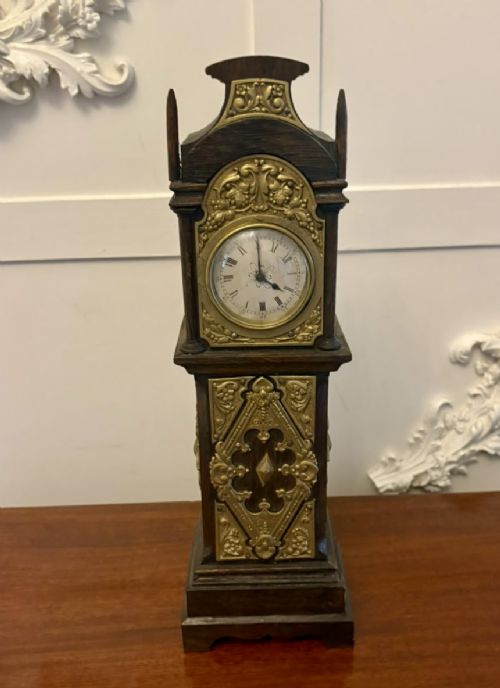
The primary material is cast brass, frequently complemented by bronze, gilt brass, and applied decorative elements such as opalescent glass, cabochons, and malachite panels. Heavier pieces rely on sand casting to achieve thick profiles and deep relief ornament, which is then hand-finished with chasers and files.
Secondary structural components often incorporate dense hardwoods like oak, walnut, and coromandel to house brass strapwork, hinges, and lock escutcheons. Glass components - ranging from clear leaded panes to coloured vaseline and opalescent shades - were hand-cut or mouth-blown to fit complex metal lanterns and gasoliers.
The listings show a strong presence of Victorian and Edwardian manufacturing, utilising brass, oak, glass, and bronze.
Assessing Craft and Execution
Quality rests in the crispness of the casting and the depth of the chasing work, distinguishing mass-produced commercial items from finely articulated studio pieces. Sharp architectural details, well-defined surface ornamentation, and clean joints indicate superior workshop production.
The choice of secondary materials and integrated decorative stones dictates the upper tier of the range. Items featuring hand-cut leaded glass, carefully fitted semi-precious cabochons, or structural elements in exotic timbers display a higher level of ambition than plain utilitarian brass.
Wm. Tonks & Sons·Hart & Son·Winterhalder·Barber & North·George Orpwood
The Gothic Revival Brass Glossary
- Pricket candlestick
- A candlestick featuring a central metal spike designed to impale the base of a candle rather than sitting inside a socket. These forms are frequently found on large altar candlesticks.
- Gasolier
- A branched hanging light fixture designed to burn coal gas, often converted later for electricity. They frequently feature multiple arms and glass shades.
- Vaseline glass
- A type of glass containing uranium dioxide that produces a distinctive yellow-green colour, often glowing under ultraviolet light. It appears in late nineteenth-century lamp shades and lantern panels.
- Casket
- A decorative box for holding valuables or stationery, usually reinforced with metal straps or hinges. In this context, they are often veneered in exotic woods and mounted with gothic brasswork.
- Chasing
- The art of finishing and detailing metal surfaces by hand using hammers and punches. This technique sharpens cast relief work and adds texture.
Gothic Revival Brass: Frequently Asked Questions
How do I clean antique brass?
Antique brass benefits from gentle dusting with a dry or slightly damp cloth to preserve the accumulated patina. Aggressive commercial metal polishes strip away the aged surface character that collectors value.
For stubborn grime, mild soap and warm water applied with a soft brush will clean the crevices without harming the original metal finish.
Are these lighting fixtures safe to use?
Many older gasoliers and lamps have undergone conversion for modern electrical systems, but older wiring requires professional inspection. An accredited electrician should check internal components before regular domestic use.
Unconverted items can be fitted with appropriate modern wiring safely while retaining their original exterior appearance and structural integrity.
How do I distinguish church brass from domestic pieces?
Church pieces generally feature larger dimensions, heavier weighted bases, and explicit liturgical forms like pricket spikes, altar vases, and lecterns. They often display robust construction designed to withstand heavy daily ecclesiastical use.
Domestic objects incorporate similar gothic motifs but are scaled for tabletops, desks, or hallways as stationery boxes, smaller candlesticks, and doorstops.
What periods do these pieces span?
The objects cover the nineteenth and early twentieth centuries, centring primarily on the Victorian era and the subsequent Arts and Crafts movement. Production dates stretch from the early nineteenth century through the 1920s.
Stylistic revivals during this timeframe often drew directly on medieval and twelfth-century architectural sources, blending historical inspiration with contemporary manufacturing techniques.