



Embossed Brass Urns
Embossed brass urns bring heavy texture and warm metallic tone to a room, spanning styles from Victorian Gothic to Art Deco.
Embossed Brass Urns
When you search for embossed brass urns, you encounter vessels designed for display, planting, and illumination across the nineteenth and early twentieth centuries. These objects range from jardinieres and altar vases to two-handled trophy vessels and lidded urns.
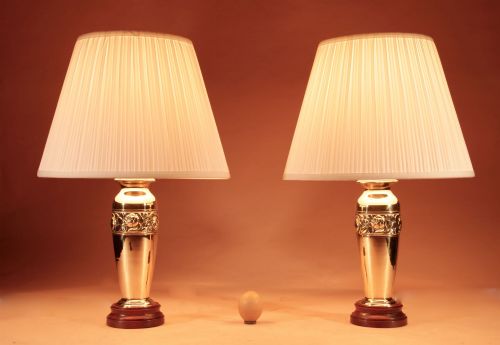
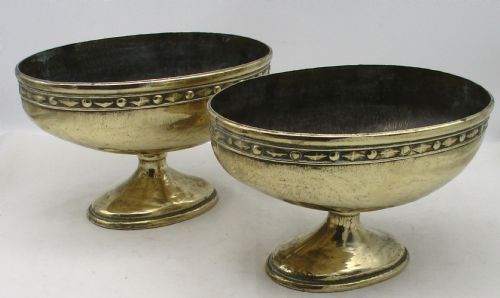
The selection on this page relies heavily on Victorian and Edwardian examples, alongside pieces from the Art Deco period and the Chinese Republic era. Forms shift from heavy planters and log bins to slender table lamps and pedestal bowls.
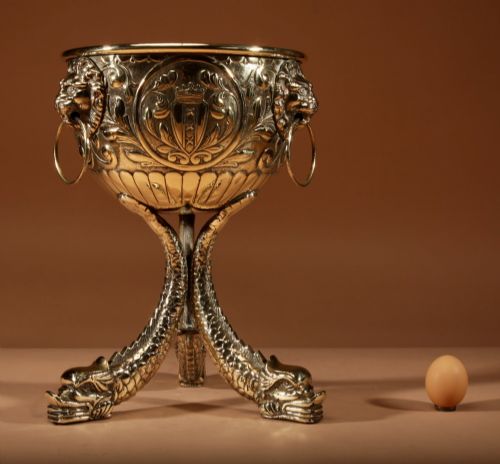
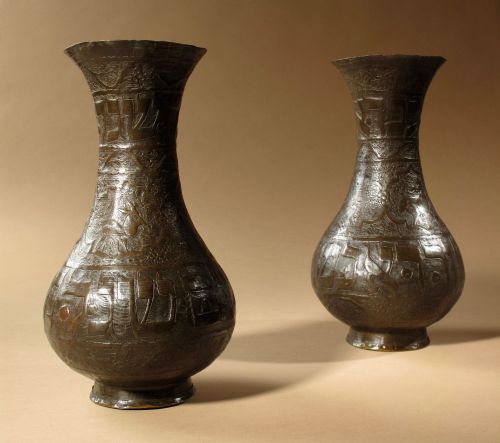
Makers drew on diverse aesthetic traditions, producing French Rococo Revival pieces, Renaissance Revival work, and Judaica alongside domestic Victorian designs. Each item brings a distinct silhouette and surface treatment shaped by its original function.
How they were made
Construction relies primarily on brass, sometimes paired with copper, wood, or fabric elements to form the body and base of each vessel. Metalworkers utilised sheet brass and cast components, joining sections to create sturdy structures capable of holding plants or water.
Surface decoration depends on embossing and casting techniques, pressing patterns and motifs directly into the metal plate. This tooling creates raised designs that catch the light, defining the character of styles from Dinanderie work to ornate revival pieces.
Listings feature diverse object forms such as jardinieres, table lamps, pedestal bowls, and lidded urns.
What varies in quality
The distinction between ordinary and superior pieces rests on the crispness of the surface embossing and the weight of the metal used in the construction. Heavier gauge brass and deeper, more deliberate tooling indicate a higher standard of manufacture.
Proportion and the handling of decorative details also separate standard production items from finer studio or workshop output. Well-executed handles, balanced pedestals, and harmonious motifs reveal the skill of the original maker.
The Embossed Brass Urns Glossary
- Dinanderie
- A traditional term for decorative brass and copper objects, often featuring hammered or embossed designs. This medieval craft revival name applies to heavy nineteenth and twentieth-century vessels.
- Jardiniere
- An ornamental pot or stand designed to hold plants or flowers indoors. These containers often feature embossed metal bodies and sturdy bases.
- Altar Garniture
- A set of decorative vessels placed upon a church altar, typically including vases and candlesticks. These matched sets display formal religious motifs and durable metal construction.
- Repoussé
- A metalworking technique where the artisan hammers the design from the reverse side to create a raised pattern on the front. This method gives embossed urns their tactile surface texture.
Embossed Brass Urns: Frequently Asked Questions
How do I identify a Victorian brass urn?
Victorian examples often display heavy casting, dark patination, and dense decorative motifs drawn from Gothic or Renaissance Revival styles. Look for robust construction and traditional ornamentation.
They frequently appear as planters, trophy vases, or jardinieres with deep embossed surface patterns typical of nineteenth-century metalwork.
Are these urns suitable for holding water and real plants?
Many of these pieces were built as jardinieres or planters intended to house potted plants or cut flowers with appropriate liners. However, older metal seams can weaken over extended periods of heavy moisture exposure.
Using a modern inner vessel protects the antique brass from direct water contact and prevents corrosion inside the urn.
How do Art Deco brass urns differ from Victorian ones?
Art Deco pieces from the nineteen-twenties favor clean geometric lines and streamlined forms over the ornate, florid decoration of the Victorian era. They often appear paired as table lamps or modern decorative vessels.
Surface decoration is sparser, letting the polished metal finish and silhouette define the piece rather than heavy embossed relief work.
How should I clean antique brass urns?
Maintain these metal surfaces with a soft dry cloth to remove dust without disturbing the aged patina that accumulates over decades. Avoid harsh chemical cleaners or abrasive polishes that strip away historical character.
Allowing the natural oxidation to remain preserves the depth and visual warmth of the original brass and copper work.