




Gothic Brass Box
A gothic brass box brings heavy Victorian architectural form and sturdy metal strapwork together for serious desk storage.
Gothic Brass Box
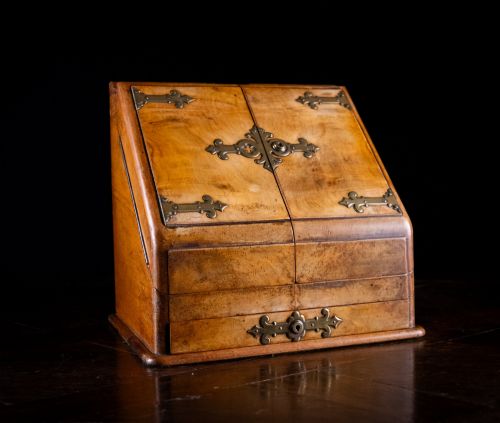
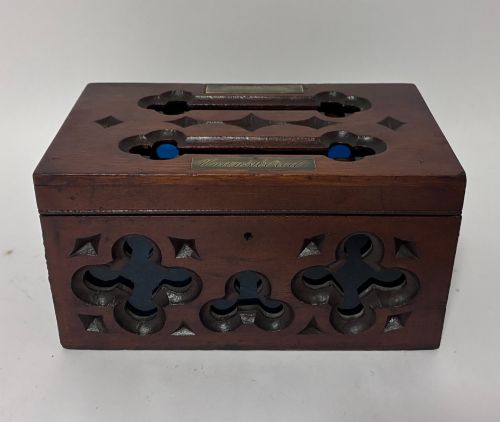
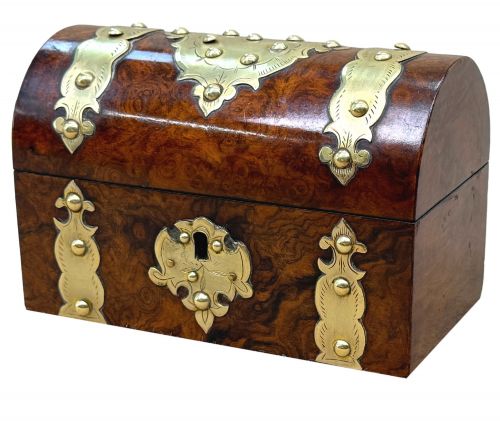
When searching for a gothic brass box, collectors examine Victorian desktop containers built to hold correspondence, writing paper, or small valuables. These items emerge from the nineteenth century, bearing the architectural arches and pointed motifs characteristic of the Gothic Revival style.
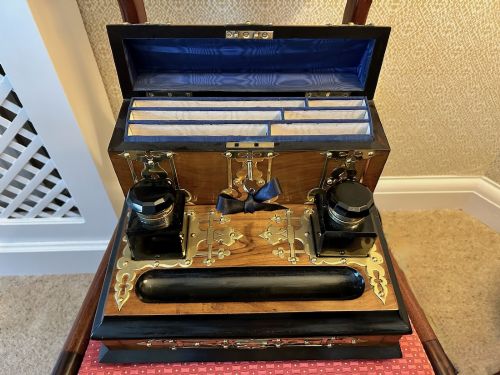
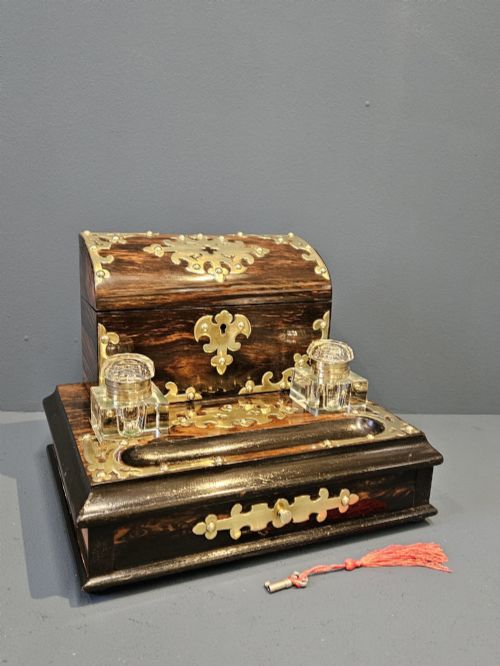
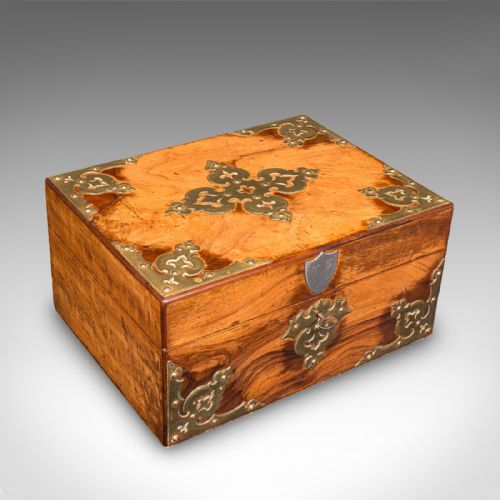
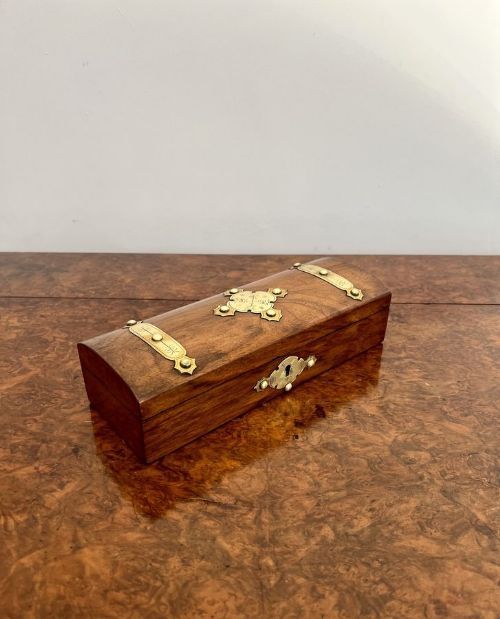
Most examples found here take the form of stationery boxes, correspondence caskets, and desk stands designed for the Victorian study. Walnut, coromandel, and oak provide the primary wooden bodies, reinforced by heavy brass straps, hinges, and mounts.
Alongside standard rectangular caskets, dome-top variations and sloping desks appear frequently. Each piece reflects the nineteenth-century taste for medieval ornamentation applied to functional household objects.
How they were made
Cabinetmakers constructed these pieces from dense hardwoods like walnut, burr walnut, and coromandel, often applying them over solid pine carcases. Figured veneers create rich surface patterns across the lids and facades before finishing.
Brass serves as the defining structural and decorative element, taking the form of heavy strapwork, corner brackets, hinges, and escutcheons. Makers secured these metal mounts with numerous small brass screws, framing the wood panels and reinforcing the joints.
Many containers incorporate additional decorative media alongside the brass, including agate cabochons, malachite insets, and mother of pearl. Interiors frequently feature fitted velvet, silk linings, or leather compartments tailored for specific writing implements.
Listings demonstrate that walnut and coromandel dominate the wooden carcases of these pieces, paired with extensive brass mountings.
What varies in quality
The sophistication of the brass mountings separates standard production from superior work. Finely cast straps with deep chamfers and careful hand-chasing indicate higher workshop standards than plain stamped sheet metal.
Timber selection and veneer matching dictate the visual weight of the exterior. Dense burr walnut or figured coromandel with symmetrical grain alignment commands greater attention than plain, straight-grained alternatives.
Internal complexity and completeness influence overall merit. Fitted stationery dividers, working brass locks with matching keys, and intact velvet or leather linings elevate the status of a piece.
Briggs 27 Piccadilly London·Rodman and Co of Belfast·Pugin
The Gothic Brass Box Glossary
- Coromandel
- A dense, heavy southeast Asian timber featuring dark brown stripes against a golden-fawn background. It appears frequently on high-status nineteenth-century desk accessories.
- Gothic Revival
- An architectural and decorative style popular during the Victorian era that drew inspiration from medieval forms, pointed arches, and heavy structural metalwork.
- Stationery Box
- A desktop cabinet featuring tiered slots or vertical compartments designed to organise letter paper and envelopes. They often include sloping or dome-shaped lids.
- Escutcheon
- A protective brass plate surrounding a keyhole. On these pieces, they frequently take decorative gothic shield or strapwork shapes.
- Burr Walnut
- Timber taken from the gnarled growths of a walnut tree, producing highly twisted, swirling grain patterns. It provides a highly decorative surface for box lids.
Gothic Brass Box: Frequently Asked Questions
What did people store in a gothic brass box?
These containers held private correspondence, writing paper, stamps, and important personal documents in the Victorian study.
Larger versions accommodated ledgers or served as dispatch boxes for official papers.
Are these boxes strictly Victorian?
The vast majority originate from the nineteenth century, aligning with the height of the Gothic Revival movement between eighteen-fifty and nineteen-hundred.
Earlier Regency examples occasionally surface, sharing the same heavy brass strapwork and architectural inspiration.
How should I care for the brass and wood?
Maintain the timber with traditional beeswax to nourish the veneer without building up heavy chemical layers.
Keep the brass unpolished or gently clean the surface with a soft cloth to preserve the natural historic patina.