
19th Century Slope
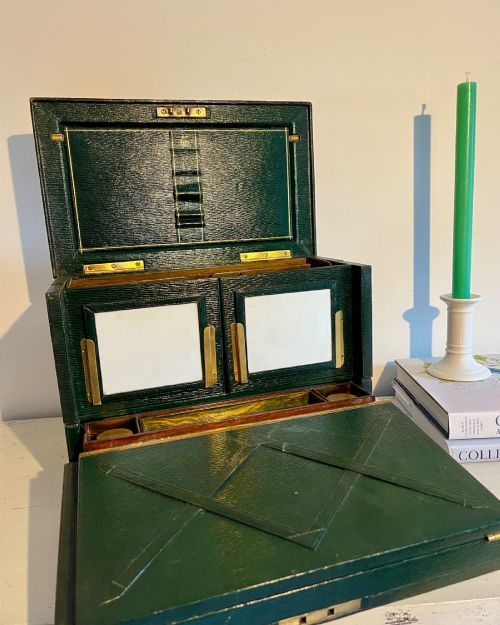
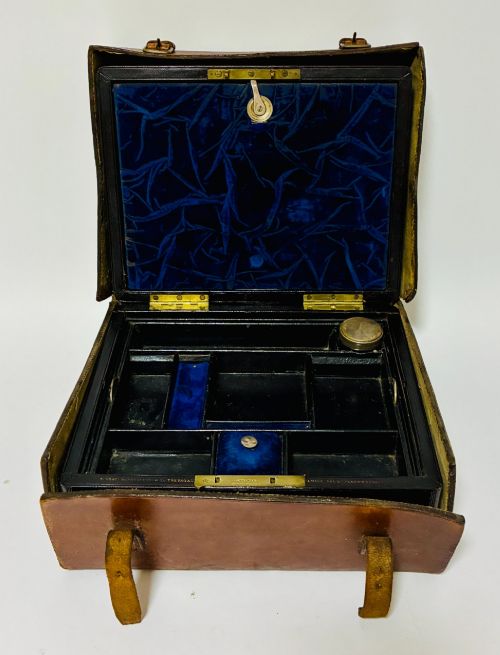
When you open a 19th century slope, you enter a private world of fitted inkwells, secret drawers and folding leather writing surfaces made for a portable desk life.
19th Century Slope
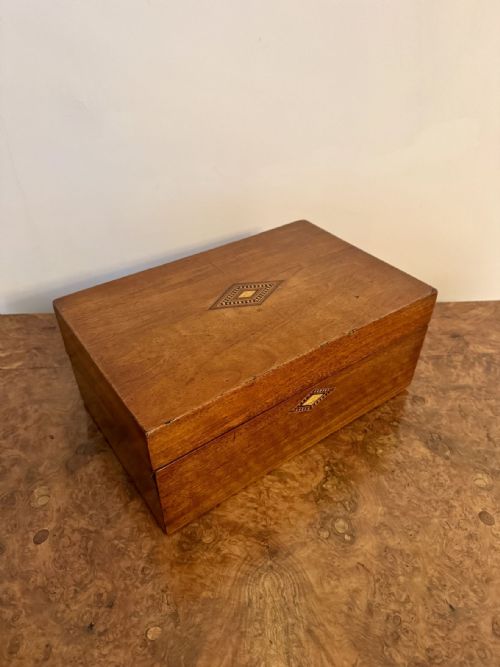
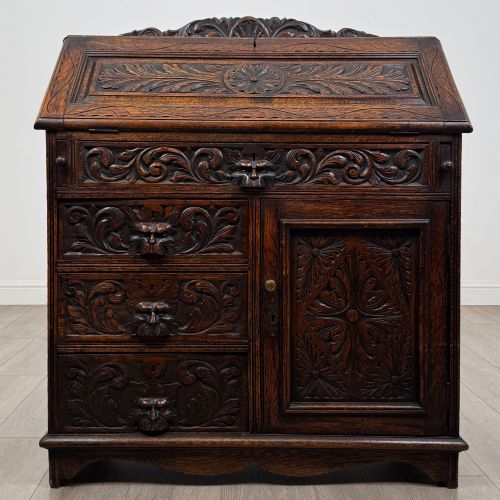
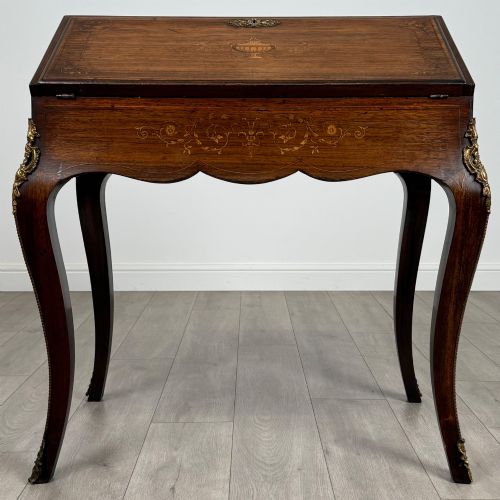
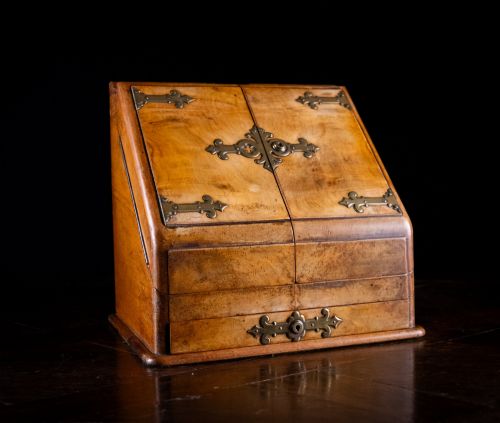
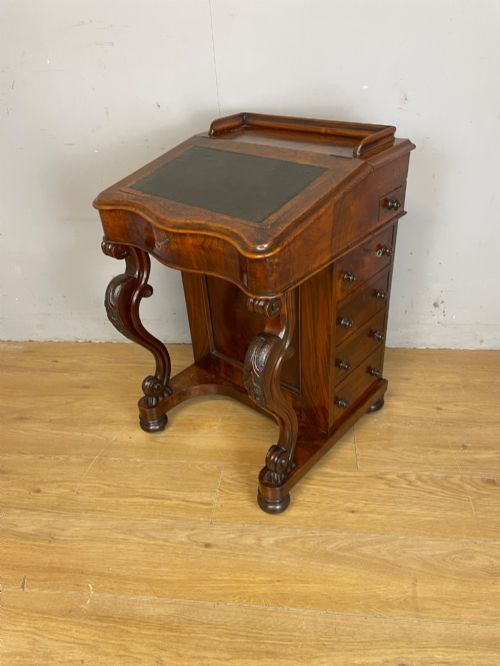
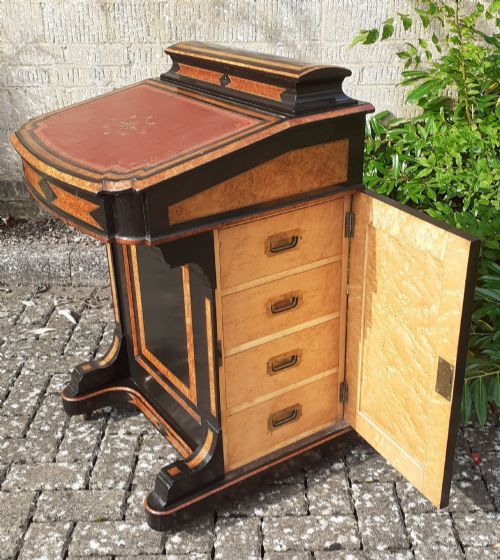
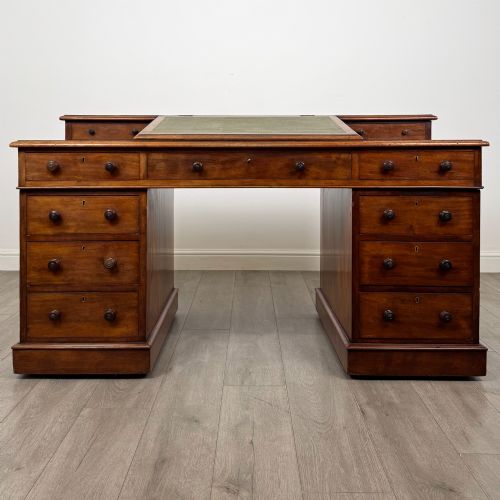
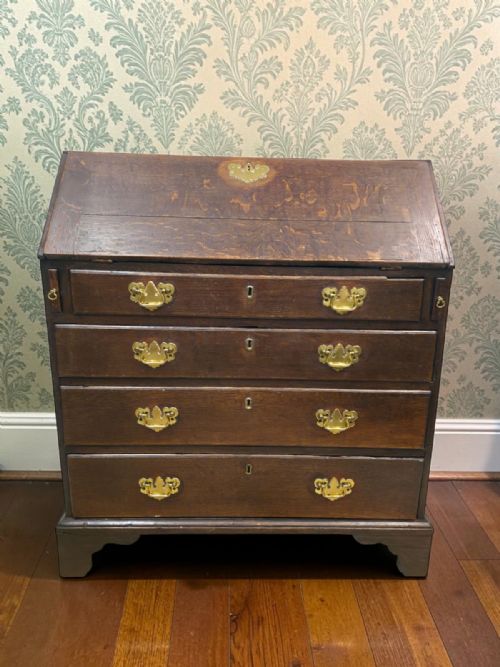
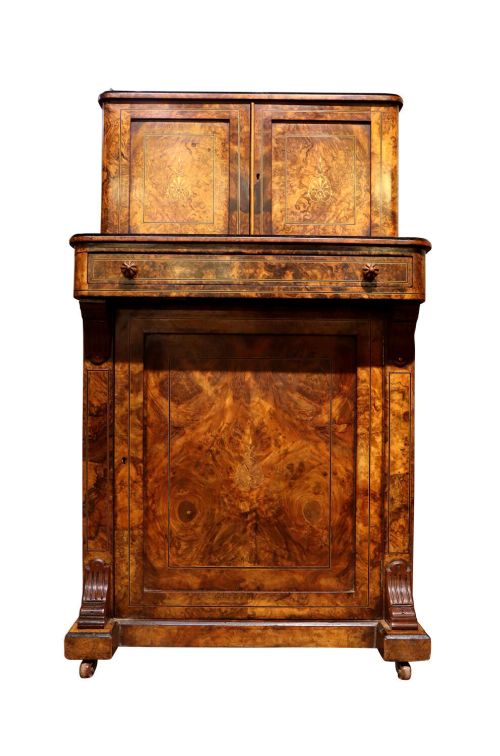
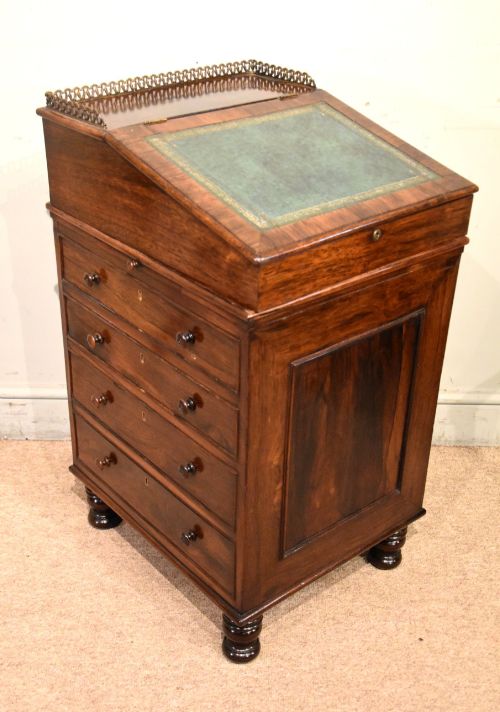
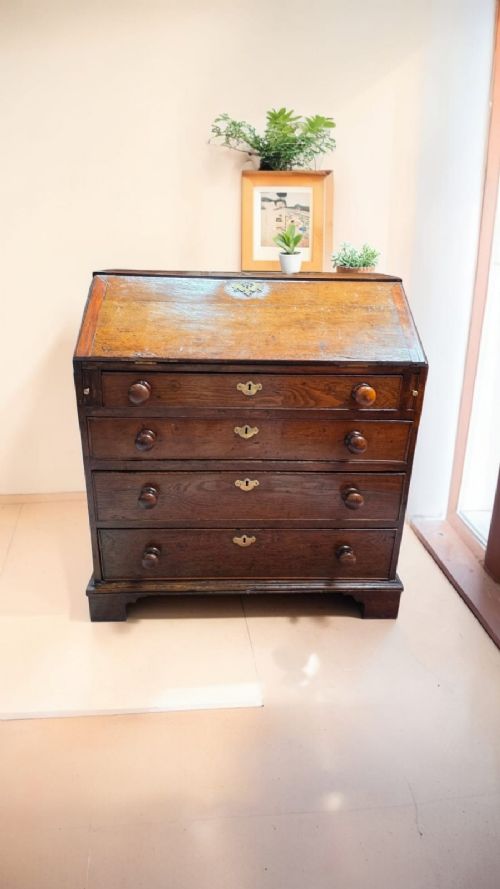
A 19th century slope encompasses portable writing boxes designed to fold open into an angled writing surface, alongside larger Davenport desks and bureau forms. These pieces originated to serve travellers, officers and domestic letter writers who required an organised, lockable repository for paper, pens and ink.
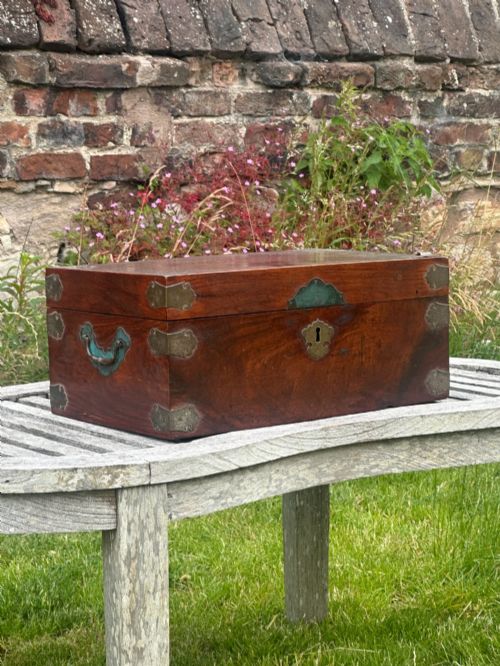
The versions most commonly met on this page are compact wooden table-top boxes finished in mahogany, rosewood or burr walnut, often reinforced with brass banding and corners. Alongside these portable examples appear standing Davenport desks and bureau bookcases from Victorian, Regency and Georgian periods.
How they were made
Cabinet makers constructed these objects from dense native and exotic timbers including mahogany, rosewood, coromandel, walnut and oak, frequently applying decorative veneers like burr walnut or satinwood to the primary surfaces. Interiors often conceal contrasting secondary woods, miniature drawers and pigeonholes designed to hold correspondence.
Many portable examples utilise brass inlay, corner brackets and flush-fitting campaign handles to withstand travel, while others feature intricate parquetry, Tunbridge Ware mosaic decoration or mother of pearl. Leather inserts provide a smooth writing plane when the hinged slope is opened flat.
The selection includes pieces spanning the Georgian, Regency, William IV and Victorian eras, alongside specialised campaign and Tunbridge Ware examples.
What varies in quality
The distinction between ordinary and superior pieces rests upon the choice of timber, the precision of the cabinet work and the complexity of the interior fittings. Dense, highly figured grains such as pollard oak, amboyna and coromandel indicate elevated production standards.
Superior examples display finely mitered joints, heavy brass hardware, complete internal stationary slots, functioning secret compartments and original leather writing surfaces. Simpler versions rely on plain mahogany or oak with minimal brasswork and straightforward partitions.
Wilkinson and Co·Gillow and Co·Maple and Co·F West
The 19th Century Slope Glossary
- Writing slope
- A portable box with a hinged lid that opens to form an inclined surface for writing. These boxes usually contain compartments for inkwells, pens and stationery.
- Davenport desk
- A compact pedestal desk featuring a small writing slope hinged on top, with drawers opening to one side. They gained popularity during the Regency and Victorian periods.
- Campaign style
- Furniture constructed for military travel, characterised by brass corners, flush handles and portability. Pieces often split into sections or fold away neatly.
- Tunbridge Ware
- Woodworking decorated with tiny mosaic tiles made from differently coloured natural woods to form geometric or pictorial scenes. It is frequently found on Victorian boxes.
- Secret drawers
- Concealed compartments hidden behind false partitions or released by secret spring mechanisms within a desk or writing box. They were used to secure valuables and private letters.
19th Century Slope: Frequently Asked Questions
How do you open the secret drawers?
Makers hid secret compartments behind false bottoms, removable partitions or dummy pen trays inside the writing box. Releasing them often requires sliding a specific divider or pressing a hidden wooden spring.
Searching along the inner linings for loose panels usually reveals the mechanism without forcing the wood.
Were these boxes used for travel?
Many writing boxes were built specifically for military officers, sailors and colonial administrators on the move. Brass binding and recessed handles protected the corners from the bumps of carriage and ship travel.
Heavier rosewood and coromandel versions with delicate Tunbridge Ware remained at home on stationary tables.
What is the difference between a slope and a Davenport?
A writing slope is a portable box designed to sit on top of a table or desk and be stored away when not in use. A Davenport is a fixed, standing pedestal desk with a sloping writing surface built directly over a set of drawers.
Both serve the same purpose of providing an angled writing plane but occupy different spaces in a room.
How do I care for the leather writing surface?
Original leather writing panels require gentle cleaning with a dry or barely damp cloth to avoid staining the aged hide. Modern leather balms should be used sparingly, as antique tooling and gold leaf can lift if over-moistened.
Keeping the box away from direct sunlight prevents the leather from drying and cracking.