
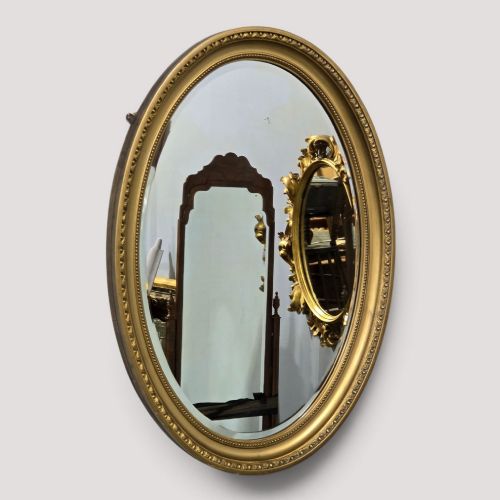
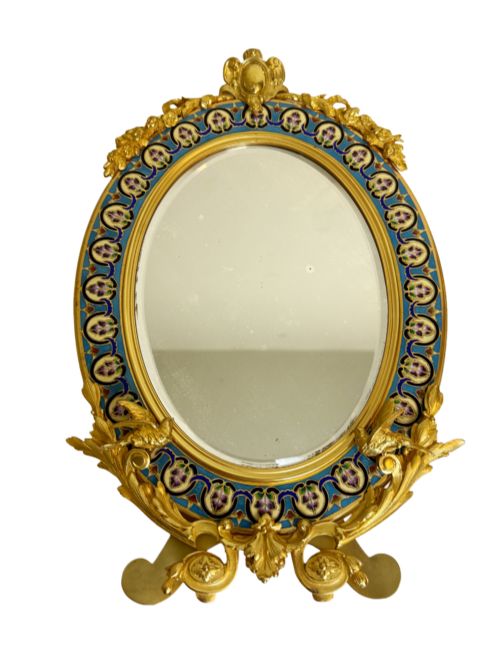
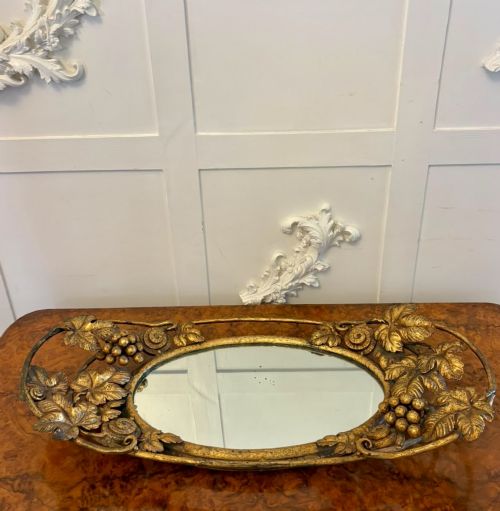
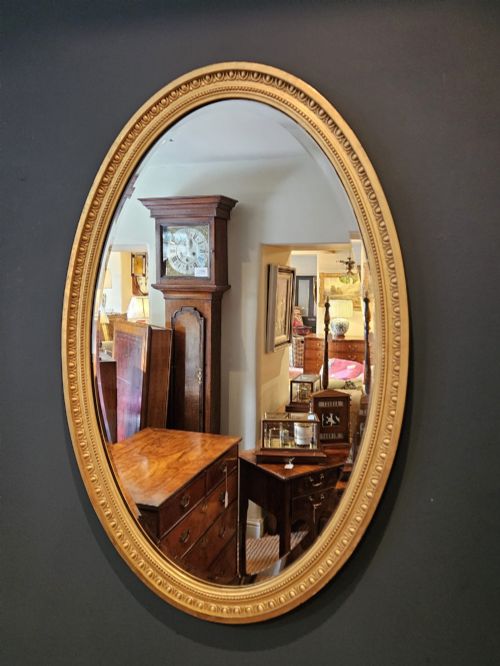
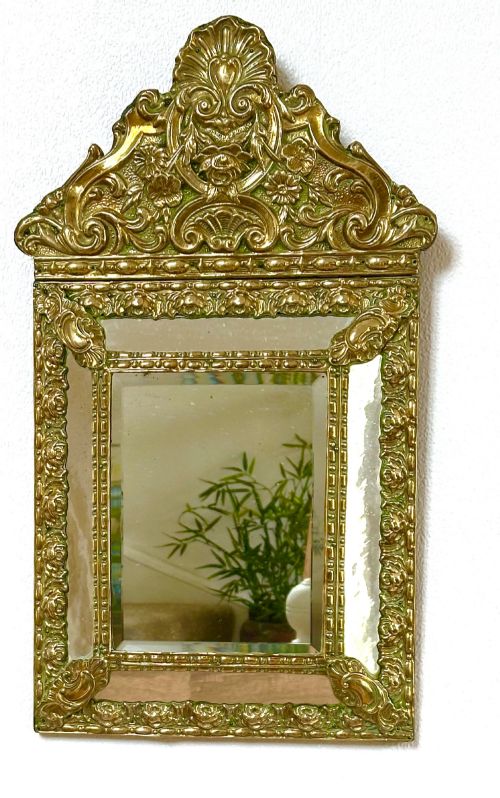
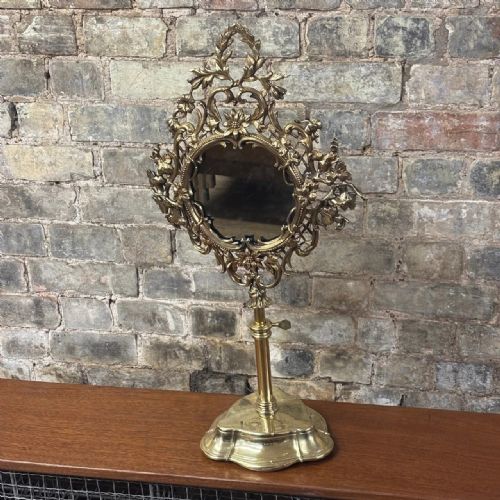
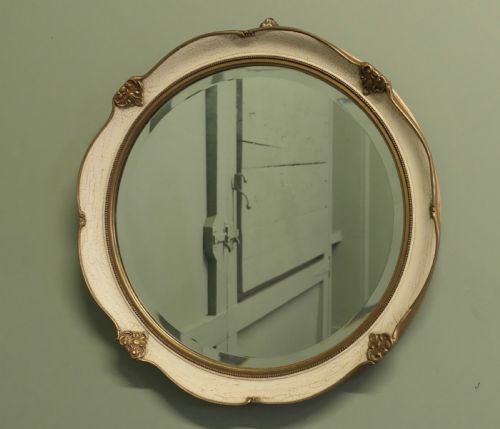
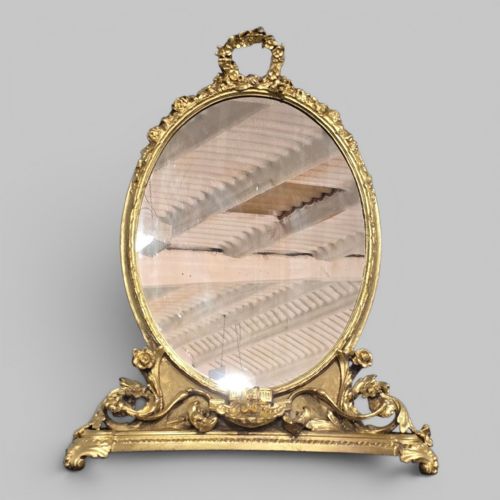


Gold Vanity Mirror
A gold vanity mirror brings a warm metallic gleam to a dressing table, combining practical reflection with ornate period decoration.
Gold Vanity Mirror
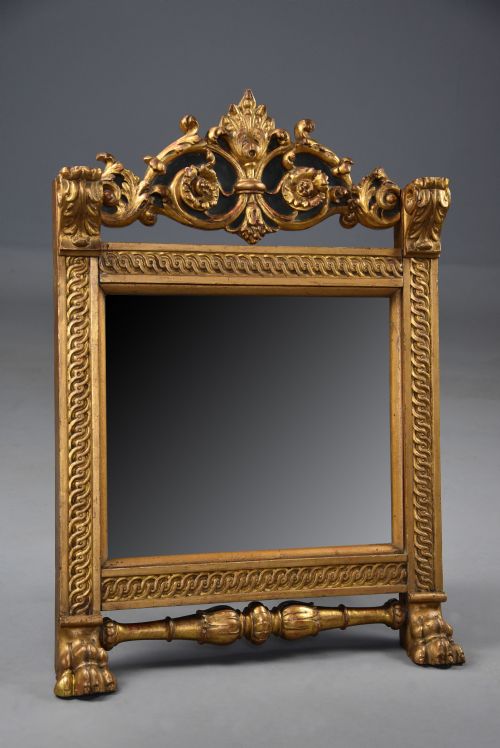
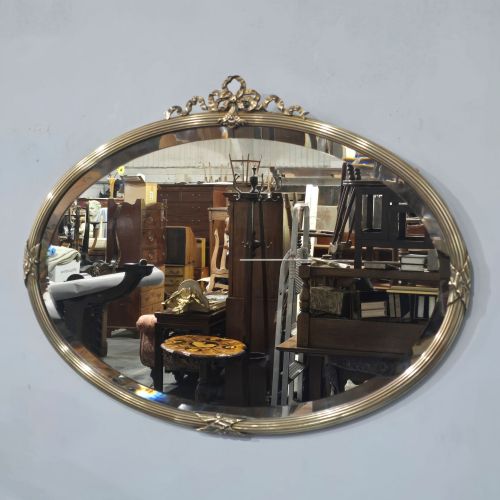
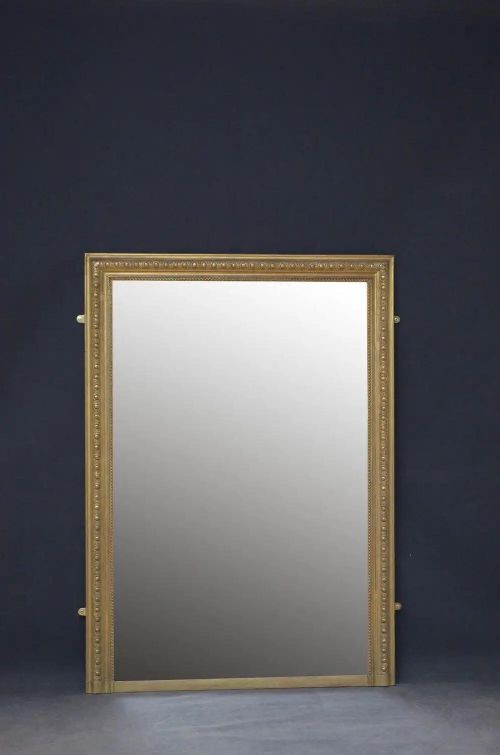
When searching for a gold vanity mirror, buyers encounter a selection of dressing table mirrors, toilet mirrors, and tabletop mirrors spanning the Victorian, Edwardian, and Art Deco eras.
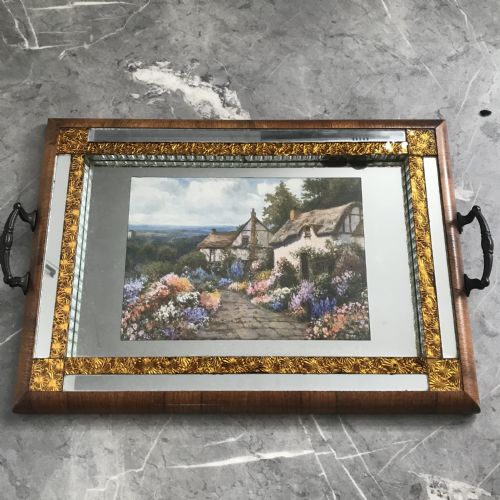
Most items sit on easel backs or swivel stands for tabletop use, alongside related forms such as mirrored trays and wall mirrors sharing the same metallic finishes.
How they were made
Frames take shape through carved wood, moulded gesso, or cast brass, utilising traditional joining and casting methods appropriate to the 19th and early 20th centuries.
Gilt finishes rely on applied gold leaf, giltwood, or metallic plating over base materials like wood and bronze to create a bright reflective surface.
Mirror glass is set into the frames with bevelled edges in many instances, supported by wooden backs or easel stands.
Listings feature periods ranging from the 18th century through the Victorian and Edwardian eras up to the 1930s Art Deco period.
What varies in quality
The depth and crispness of carved details in wood or cast metal separate finer examples from simpler production pieces.
The preservation of the original gilding and the clarity of the mirror plate determine the overall integrity of the piece.
The Gold Vanity Mirror Glossary
- Giltwood
- Wood that has been covered with a thin layer of gold leaf. This finish provides a bright metallic appearance characteristic of ornate frames.
- Gesso
- A plaster-like mixture applied to wood surfaces and carved before gilding. It allows for intricate decorative relief work on mirror frames.
- Champleve
- An enamelling technique where troughs are sunk in metal and filled with vitreous enamel. It appears on decorative frames and vanity accessories.
- Easel back
- A hinged prop attached to the reverse of a tabletop mirror. This allows the piece to stand upright on a dressing surface.
Gold Vanity Mirror: Frequently Asked Questions
How do I date a brass vanity mirror?
Dating depends on manufacturing methods, such as cast brass details and the presence of original bevelled mirror glass, which typify late 19th and early 20th-century pieces.
Stylistic cues like Rococo revival scrolls or Art Deco geometry also point to specific decades of production.
What is the difference between a toilet mirror and a vanity mirror?
Both terms generally describe mirrors designed for dressing tables, though toilet mirrors historically reference 18th and 19th-century versions with small drawer bases.
Vanity mirrors often encompass freestanding easel designs and pivoting table models from the Victorian and Edwardian periods.
Are these mirrors suitable for daily use?
Most tabletop and dressing mirrors function well for everyday routines, provided the swivel mechanism or easel support remains stable.
Original antique glass may show slight foxing or age spots, which adds character without hindering daily use.
How should I clean a giltwood frame?
Dust giltwood and gesso surfaces gently with a soft, dry brush to avoid damaging the delicate gold leaf or plaster relief.
Liquid cleaners should be kept away from antique metallic finishes to prevent stripping or discolouration.