

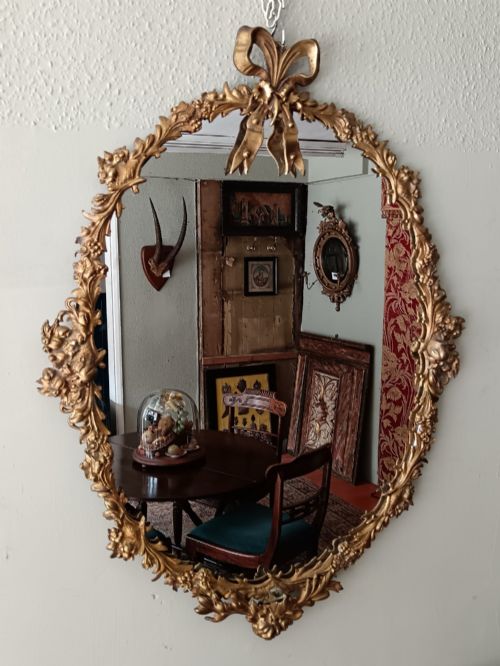


French Style Brass Mirror
A french style brass mirror brings warmth and decorative elegance to a room, offering the ornate metalwork and classic proportions collectors seek.
French Style Brass Mirror
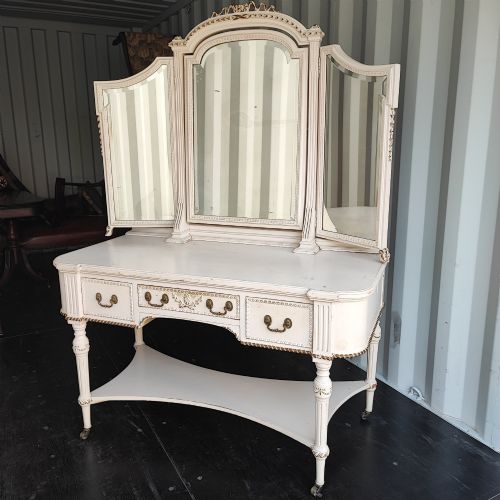
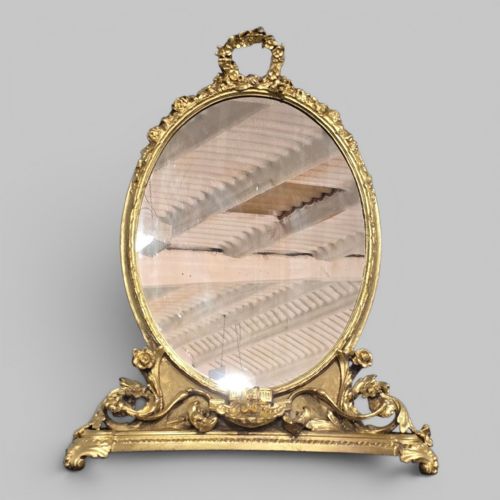
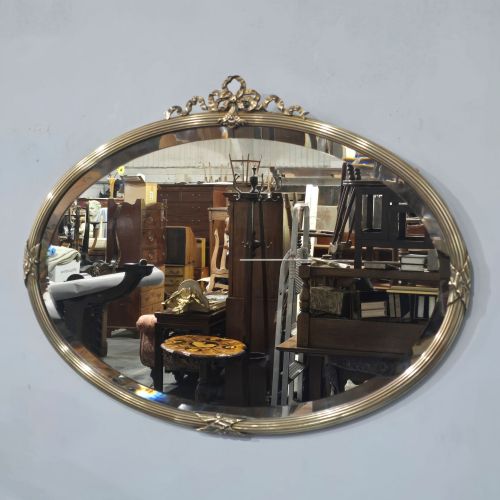
The version you are most likely to meet on this page is an oval or rectangular wall mirror in brass, gilt brass, or gilt bronze, often carrying the characteristic scrolling foliage or architectural mounts of the period. Alongside these wall-hanging pieces, you find dressing table mirrors and small table mirrors designed for surface placement.
The evidence shows production spreading from the Victorian era into the 1930s, encompassing mahogany and painted wood frames enriched with brass embellishments, alongside mirrors paired with sconces or girandoles. These objects reflect a continuous demand for Continental ornamentation in domestic interiors across different decades.
Materials and construction
Frames combine cast brass, gilt bronze, and gilt metal elements fixed to timber backings or structured entirely as self-supporting metal chassis. Makers utilised techniques such as casting, chasing, and gilding to achieve decorative surface detail on the metal components.
Wood elements frequently involve mahogany, painted wood, or flame mahogany veneers, serving as structural grounds for brass mounts, bezels, and decorative crests. Glass plates are fitted directly into the metal or wooden rebates, sometimes featuring bevelled edges suited to the period.
Materials recorded across the inventory include glass, brass, gilt brass, gilt metal, gilt bronze, giltwood, mahogany, and painted wood.
Judging quality in metal and glass
The standard of a piece rests upon the crispness of the cast brass or gilt bronze enrichment and the depth of hand-chasing on the metal surface. Finer examples display sharp definition in floral scrolls, ribbons, or figural mounts, whereas simpler items rely on smoother, mass-produced stampings.
The integration between the frame and the mirror plate indicates the level of craftsmanship, with superior pieces maintaining tight joints, robust backing structures, and original bevelled glass plates. The choice of primary timber, such as flame mahogany, or the quality of the original gilding and painted finishes further separates standard commercial items from exceptional works.
maples of London and Paris
The French Style Brass Mirror Glossary
- Gilt bronze
- An alloy of copper and zinc finished with a layer of gold applied by mercury amalgamation or electroplating. This finish appears on high-status nineteenth-century frames and decorative mounts.
- Girandole
- A branched wall mirror fitted with candle sconces to reflect and multiply candlelight. These pieces combine functional illumination with decorative metal or giltwood framing.
- Cheval mirror
- A full-length mirror suspended on a vertical swivelling frame between four legs. They stand independently on the floor and allow adjustable viewing angles.
- Rococo revival
- A nineteenth-century design movement mimicking the asymmetric scrolls, C-scrolls, and naturalistic plant motifs of the eighteenth-century French movement. Frames in this style show heavy organic curves.
- Bevelled glass
- A mirror plate with an angled, polished edge tapering down to the thickness of the glass. This technique creates a prismatic light effect around the perimeter of the reflection.
French Style Brass Mirror: Frequently Asked Questions
How do I date a brass mirror?
Dating relies on examining the construction of the frame, the fixings, and the composition of the glass plate. Nineteenth-century pieces often feature hand-cut screw threads, heavier cast brass mounts, and older silvering techniques on the mirror back.
Later pieces from the early twentieth century or the Art Deco period introduce machine-made components, distinct stylised motifs, and lighter gauge metals. Comparing the decorative style, such as Louis XVI revival against Art Deco, helps narrow down the decade of manufacture.
Were these mirrors meant for walls or tables?
The listings include both wall-hanging formats and portable table versions. Wall mirrors were designed for principal reception rooms, hallways, and bedrooms, often secured with hanging rings or heavy brackets.
Table and dressing table mirrors were built with pivoted stands or easel backs to sit upon chests of drawers and dressing tables. Sconces and girandoles were positioned near light sources to enhance illumination in dark rooms.
What is the difference between brass and gilt bronze?
Brass is an alloy composed primarily of copper and zinc, offering a natural golden-yellow metallic tone that can be polished or patinated. It forms the structural and decorative basis for many standard Victorian and Edwardian frames.
Gilt bronze, also known asormolu, involves a copper-tin alloy treated with a gold wash. It yields a richer, deeper lustre and typically appears on finer nineteenth-century pieces influenced by French design.
How should I clean an antique mirror frame?
Maintenance requires dry dusting with a soft, lint-free cloth to remove surface particles without disturbing the metal or wood finish. Avoid abrasive metal cleaners or harsh chemical solvents that can strip original gilding or patination from the brass.
Glass plates can be cleaned using a minimal amount of glass cleaner applied directly to the cloth rather than the mirror, preventing liquid from seeping behind the plate and damaging the silvered backing.