



Gold Satsuma Vase
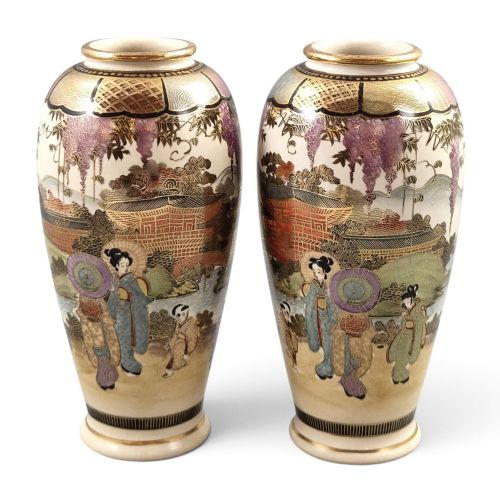
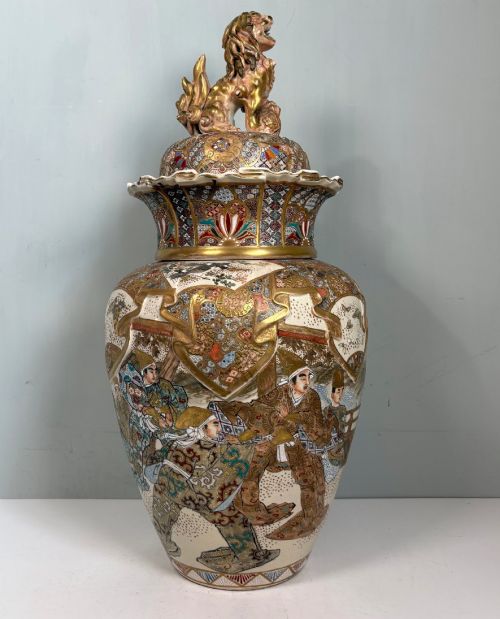
These gold satsuma vase examples bring intricate Japanese craftsmanship into a room through hand-painted scenes and heavy gilt detailing.
Gold Satsuma Vase
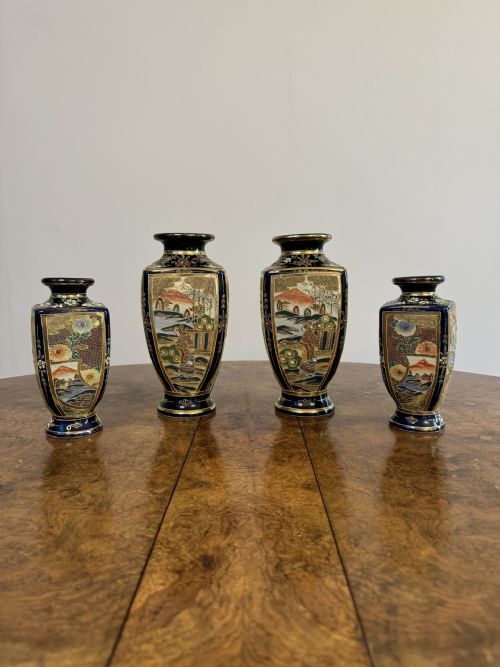
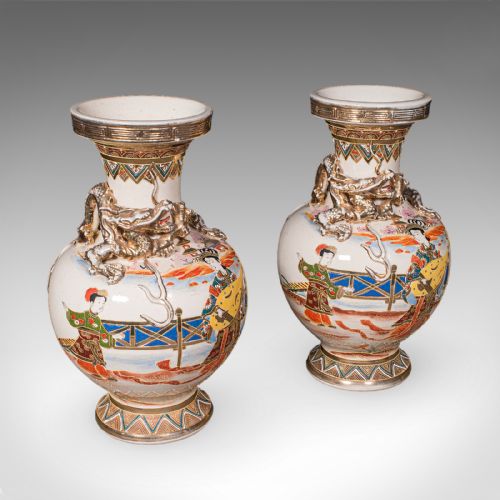
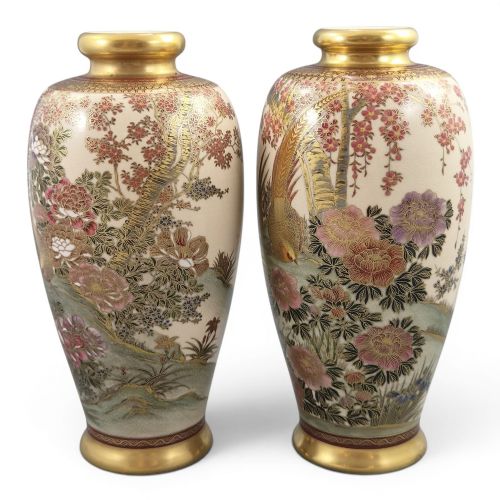
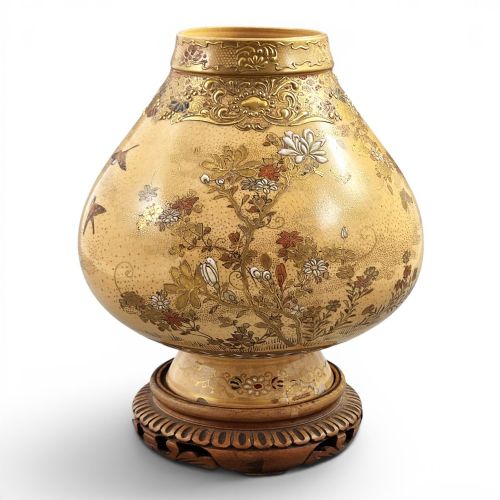
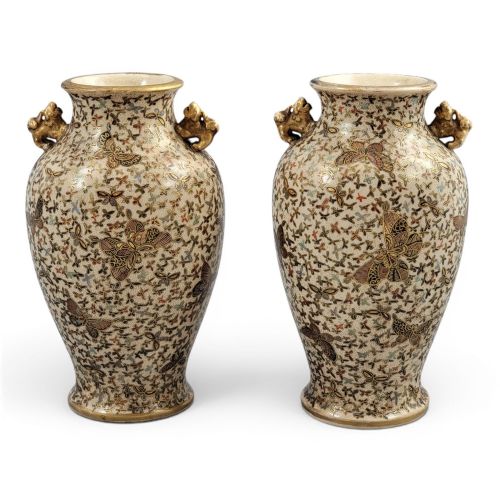
A gold satsuma vase typically presents a crackle-glazed earthenware body decorated with elaborate figural or landscape panels framed by dense gilt ornamentation. When collectors search for a gold satsuma vase, they encounter forms ranging from miniature cabinet pieces and globular vessels to monumental garnitures and table lamps.
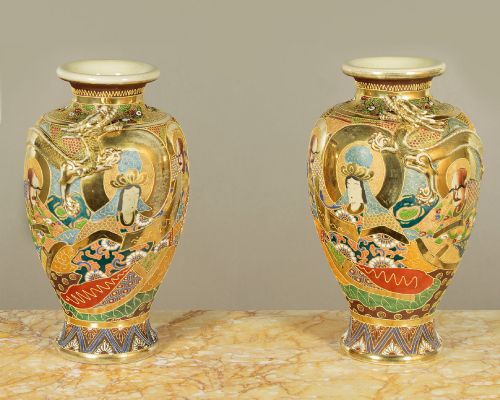
The majority of surviving examples originate from the Meiji period, spanning the late nineteenth and early twentieth centuries, with subsequent production extending into the Taisho and Showa periods. Makers utilised traditional ceramic bodies, often embellished with cobalt blue accents and raised enamel work depicting arhats, courtly scenes, and botanical motifs.
How they were made
Potters formed the vessels using earthenware clay, which was fired to create the characteristic porous body and ivory-toned crackle glaze. Artisans then applied detailed hand-painted pigments alongside extensive gold leaf, gilt, and enamel highlights.
Relief work, known as moriage, was built up using piped slip to produce textured borders and decorative elements that stand proud of the ceramic surface before final firing.
Certain miniature vases pack entire imperial court processions and gardens into spaces smaller than a teacup.
What varies in quality
The refinement of the hand-painted brushwork distinguishes standard production ware from pieces originating in premier workshops. Precision in the facial expressions of figures, the complexity of repeating geometric borders, and the density of the gold application dictate the standing of an individual vessel.
The weight and balance of the ceramic body, alongside clear artist or studio signatures from established Kyoto and Kobe centres, further separate ordinary examples from exhibition-quality works.
Shozan·Manpei·Kinkozan·Hotoda·Chosei·Nanzan·Hakusan·Hattori
The Gold Satsuma Vase Glossary
- Satsuma ware
- Japanese pottery originating from the Satsuma province, traditionally characterised by an ivory-coloured earthenware body covered in a fine network of crackled glaze.
- Moriage
- A decorative ceramic technique using piped clay slip to create raised, beaded, or textured patterns beneath or alongside enamel and gilt painting.
- Meiji period
- The era of Japanese history lasting from 1868 to 1912, noted for a surge in detailed decorative arts produced for export markets.
- Gilt
- A thin layer of gold leaf or gold paint applied to the surface of ceramics to accentuate panels, borders, and figural drapery.
- Garniture
- A set of matching vases, usually numbering three, four, or five pieces, designed to be displayed together on a mantelpiece or sideboard.
- Arhat
- A Buddhist holy figure frequently depicted in groups on nineteenth-century Japanese ceramics, often accompanied by dragons or attending attendants.
Gold Satsuma Vase: Frequently Asked Questions
How do I identify a Meiji period piece?
Meiji period vessels display dense hand-painted polychrome scenes combined with heavy gilt decoration on a crackle-glazed earthenware body. They frequently carry artist signatures or studio marks from prominent manufacturing centres like Kyoto.
These pieces reflect the artistic shift towards intricate export wares following the opening of Japan's trade ports during the late nineteenth century.
What is the Shimazu mon?
The Shimazu mon is a heraldic crest featuring a cross within a circle, representing the ruling clan of the Satsuma domain. Its presence on the base or body indicates a connection to the traditional producing region.
Many export workshops incorporated this crest as a mark of heritage rather than direct ownership by the clan itself.
Where should I display a large vase?
Large or monumental vessels suit prominent positions on sturdy tables, pedestals, or wide sideboard surfaces where their detailed panels can be viewed closely. Keeping them away from direct sunlight protects the delicate enamel and gold leaf from fading.
Pairing matching vessels at a distance creates symmetry within a traditional room setting.
Are miniature vases authentic?
Miniature vases measuring only a few inches high were produced in significant quantities by skilled workshops for the international export market. They feature the same meticulous hand-painted courtly scenes and raised gold work found on larger examples.
Signatures on the underside often attribute these small works to notable artists working in Kyoto and Kobe.