






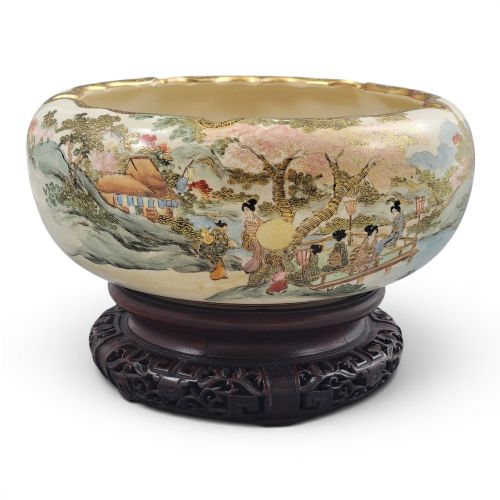


Gold Satsuma Earthenware
Gold satsuma earthenware encompasses intricately painted ceramics enriched with metallic leaf, traditionally shaped into vessels for display.
Gold Satsuma Earthenware
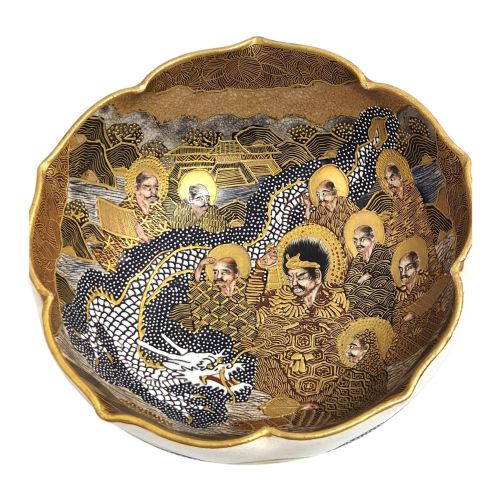
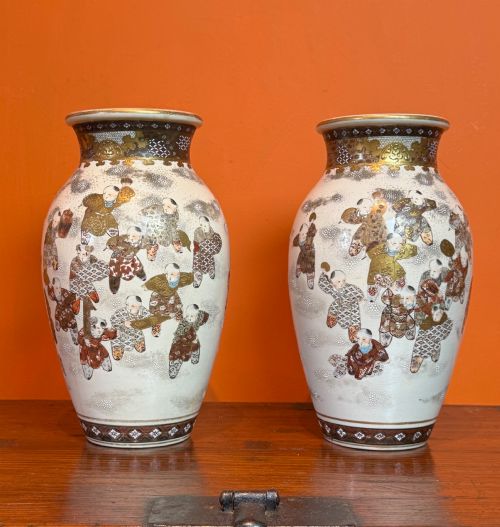
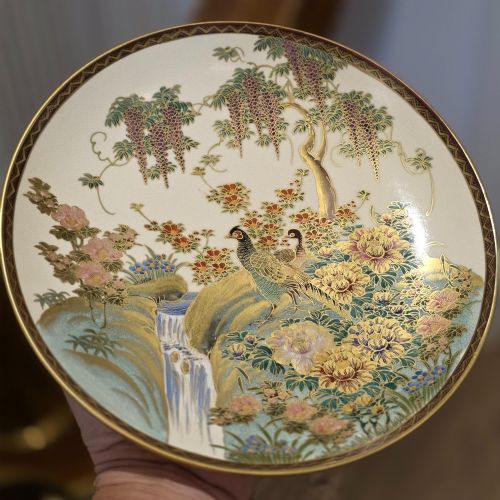
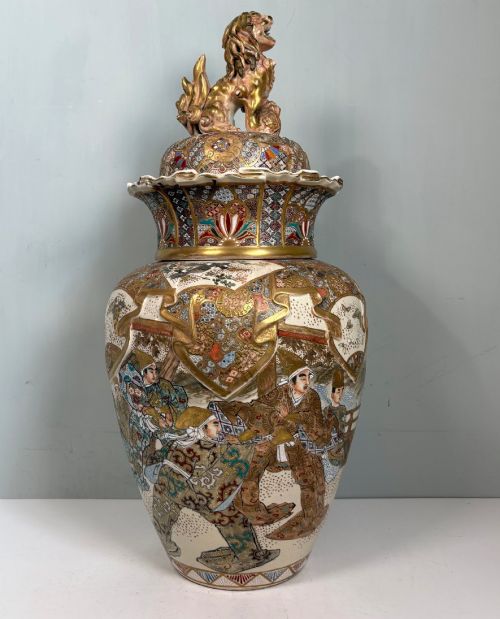
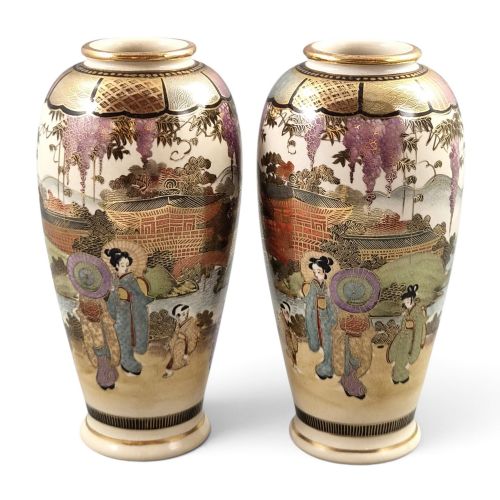
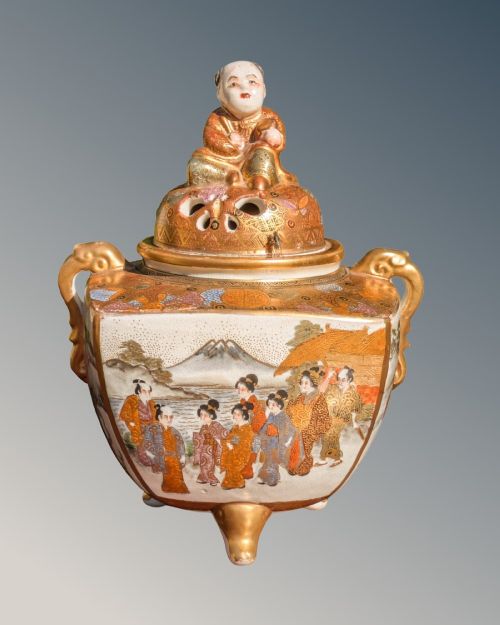
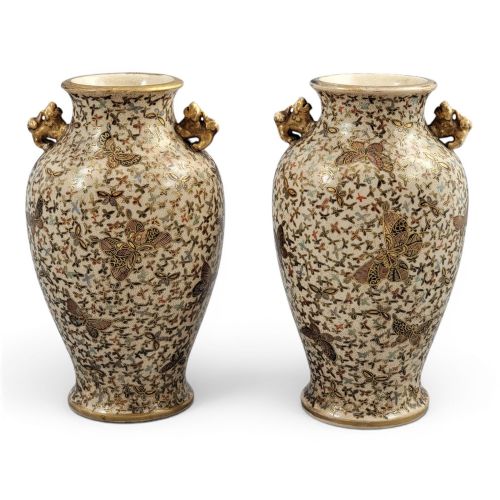
Buyers exploring gold satsuma earthenware encounter objects primarily rooted in the nineteenth century, with origins stretching from the Meiji period through to the early decades of the twentieth century. These items take many structural forms, ranging from monumental vases and balanced pairs of baluster vessels to delicate miniature items, incense burners, decorative bowls, and plates.
The aesthetic frequently incorporates Japanese design traditions, manifesting as elaborate scenes depicting figural processions, historical figures, or botanical subjects like wisteria and butterflies. Pieces emerge from notable production centres such as Kyoto and Yokohama, often carrying workshop signatures or clan crests.
Examples on this page span diverse stylistic periods, including Victorian and Edwardian dates alongside the Taisho and Showa eras. The most frequent encounters involve earthenware bodies decorated with meticulous painting and metallic highlighting.
Materials and production techniques
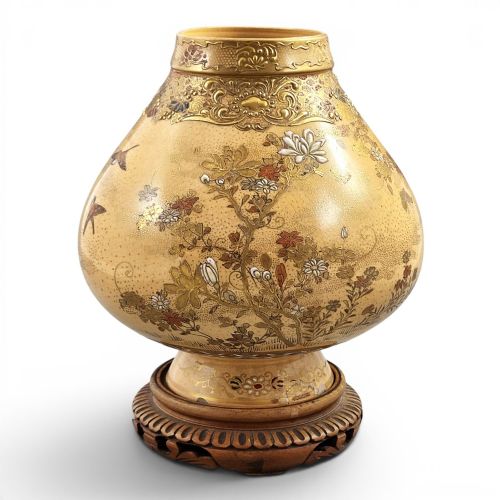
Makers utilised porous earthenware bodies as the foundation for these items, applying layered glazes before introducing detailed enamel painting. Artisans integrated gold leaf, heavy gilt, and gilding to accentuate specific areas of the design.
Techniques such as moriage built up raised slip patterns beneath the metallic applications to create textured surfaces. Painters combined cobalt blue pigments with rich gold embellishments to construct complex pictorial panels across vases, bowls, and boxes.
Gold Satsuma Earthenware Retail Price Guide 2026
Typical asking prices for gold satsuma earthenware among the pieces listed under this phrase on Sellingantiques today, from the lower quarter to the upper quarter. They describe what is for sale here now, not the wider market.
Listings feature earthenware vessels spanning the nineteenth century through the 1930s, incorporating enamel, gold leaf, and bronze elements.
Evaluating craftsmanship and execution
The hierarchy of quality rests upon the precision of the brushwork and the density of the metallic enrichment. Superior examples display tightly controlled figural painting, deeply detailed landscapes, and substantial application of gold leaf that remains crisp and bright.
Lesser items present broader, less disciplined brush strokes and thinner gilding that lacks dimension. The reputation of specific workshops and signed pieces also establishes distinction among these ceramic works.
Koshida·Shozan·Kozan·Kinkōzan·Hotoda·Shizan·Toshozan·Chosei·Nanzan·Seiko-en Chokei·Yasuda·Nikko·Kizan·Hakusan·Kotobuki-do·Tokyo Taizan
The Gold Satsuma Earthenware Glossary
- Earthenware
- A porous ceramic body fired at lower temperatures, serving as the physical base for Satsuma wares before glazing and enamel work.
- Moriage
- A decorative technique using raised clay slip beneath glazes and gilding to produce a tactile, three-dimensional surface effect on the ceramic body.
- Koro
- A traditional incense burner featuring a perforated lid, often produced in ceramic forms during the Meiji period.
- Mon
- A Japanese heraldic badge or crest used by families and clans, frequently found painted on Satsuma pottery alongside workshop signatures.
- Gilt
- A thin layer of gold or gold-coloured material applied to the surface of the earthenware to highlight painted details and panels.
Gold Satsuma Earthenware: Frequently Asked Questions
What is gold satsuma earthenware?
Gold satsuma earthenware comprises Japanese ceramic objects decorated with enamel and metallic gilding. These pieces were predominantly produced during the nineteenth and early twentieth centuries.
The category includes vessels like vases, koro burners, dishes, and decorative boxes. They are identified by their characteristic crackle-glaze backgrounds and detailed pictorial scenes.
How do I identify a Meiji period piece?
Meiji period items correspond to the late nineteenth and early twentieth centuries in Japan. They often feature complex narrative scenes, dense botanical motifs, and precise hand-painted details.
many of these ceramics carry artist signatures, workshop marks, or family crests on the base. The weight of the gilding and the fineness of the moriage work also point towards this era of production.
Where were these ceramics made?
Production centred primarily in Japanese manufacturing regions, with Kyoto emerging as a major hub for high-quality Satsuma ware. Workshops in Yokohama and Tokyo also contributed significant quantities of export pottery.
Specific studios exported these decorated earthenware items internationally, tailoring the scale and imagery for foreign markets while retaining traditional Japanese motifs.
How should I display these items?
These decorative ceramics require stable surfaces away from direct sunlight to preserve the integrity of the enamel and gold leaf. Vases and bowls function well as standalone display pieces.
Handling should remain minimal to protect the raised moriage and delicate gilding from abrasion. Enclosed shelving offers protection from dust accumulation on textured surfaces.