
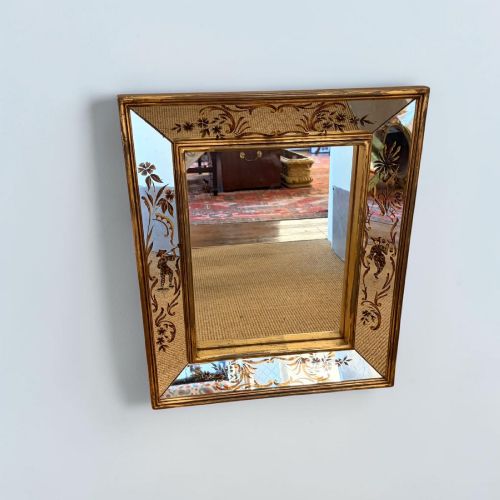
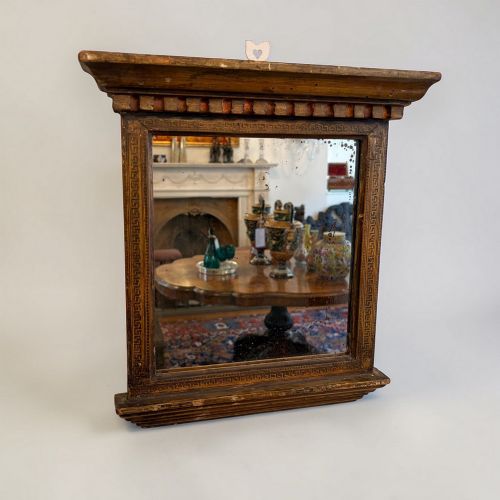
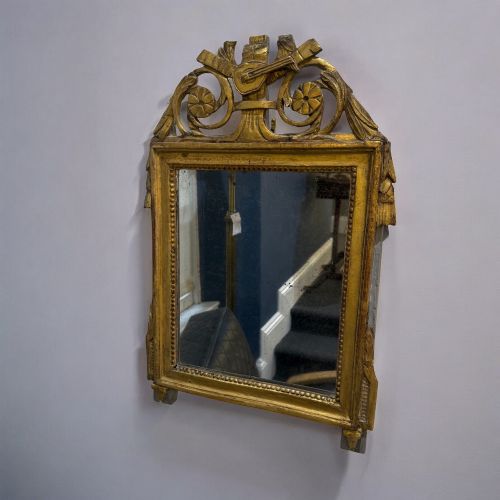
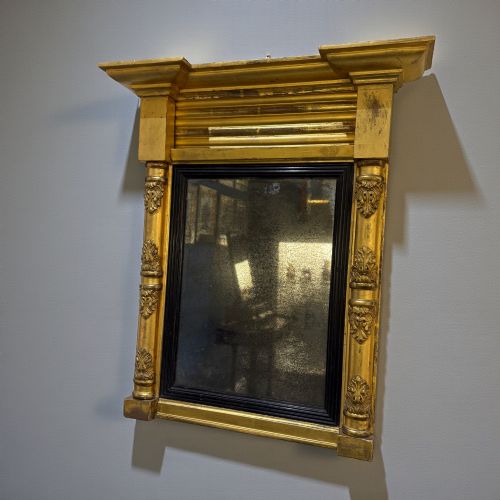
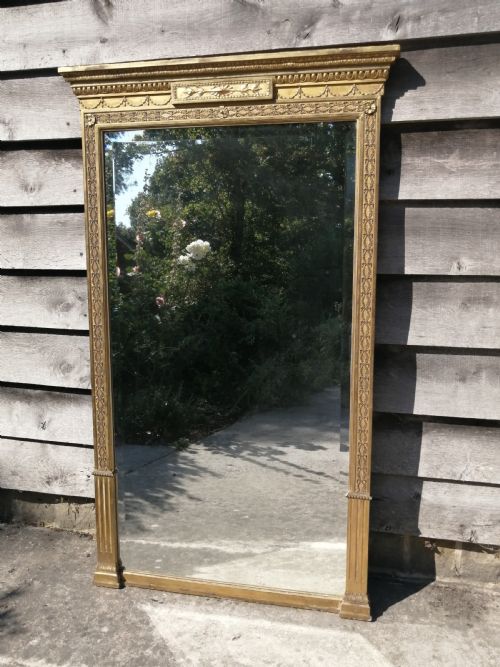
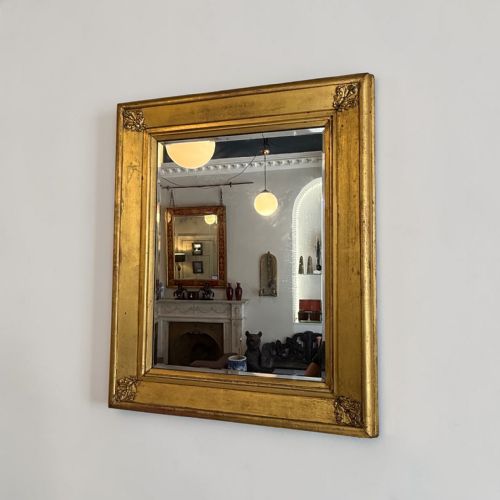
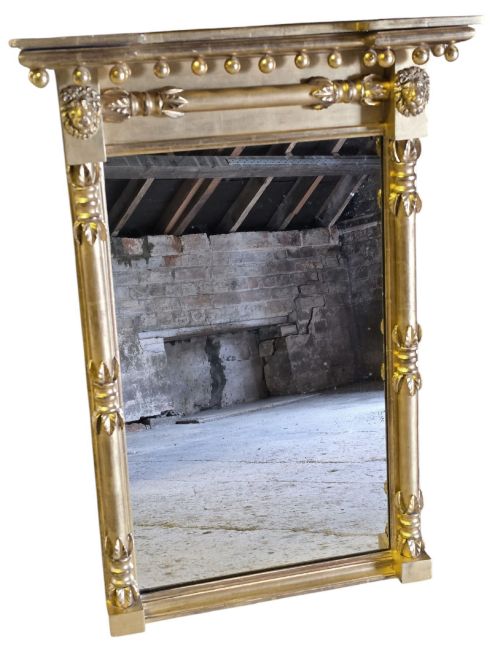
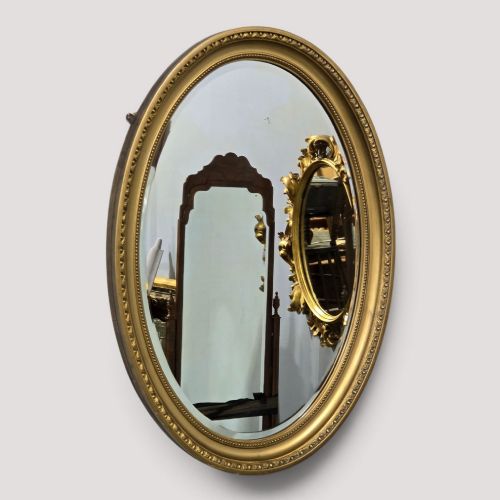
Gold Regency Wall Mirror
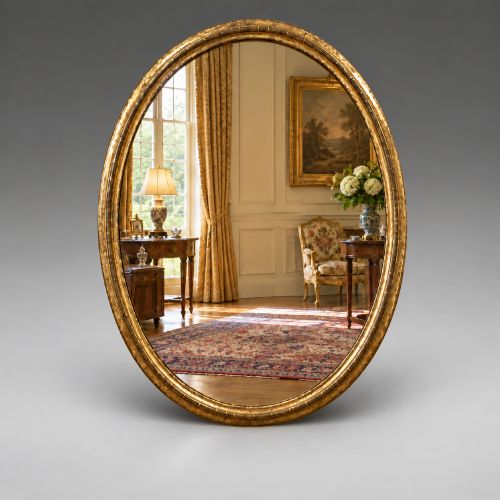
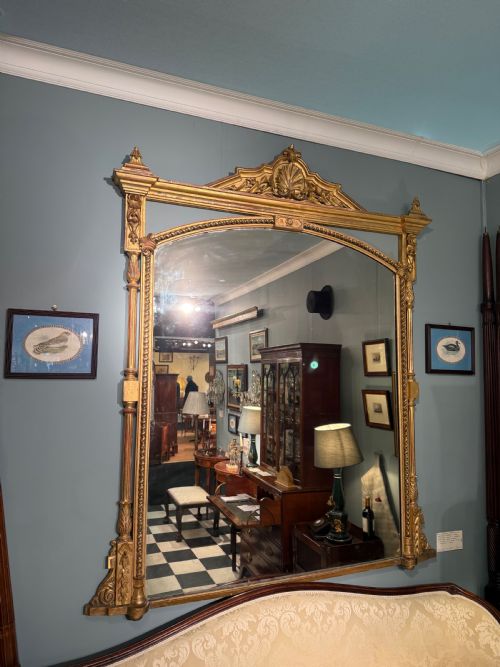
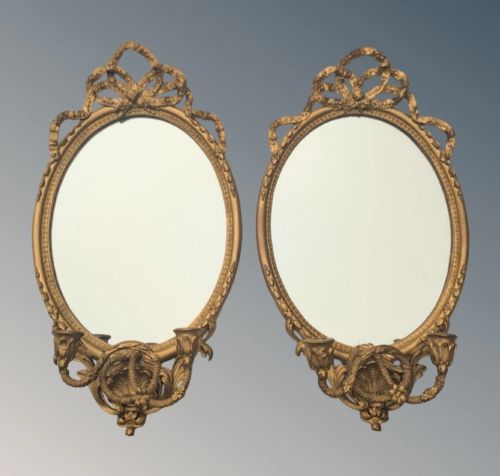
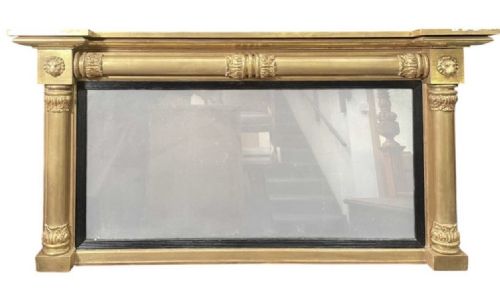
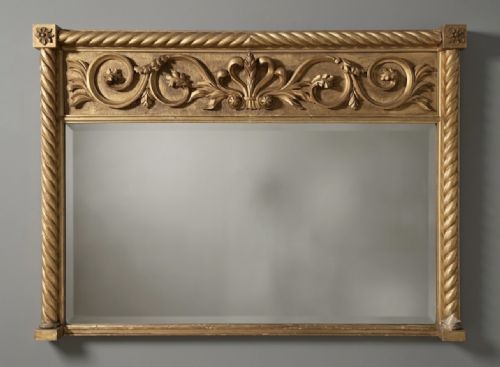
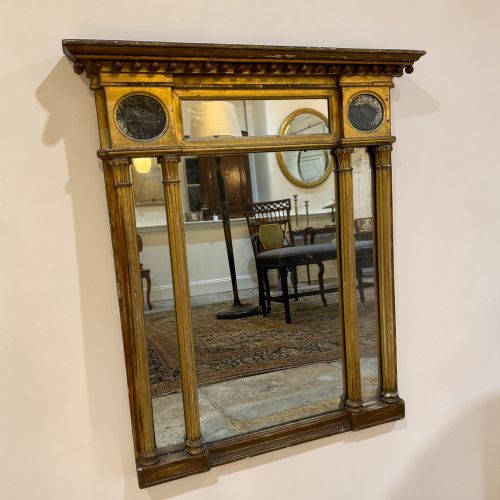
A gold regency wall mirror brings a commanding classical presence to a room, cast in gleaming gesso and giltwood.
Gold Regency Wall Mirror
A gold regency wall mirror is a prominent fixture designed to catch and multiply light within an interior. These pieces emerge primarily from nineteenth-century workshops, spanning the regency, georgian, and victorian periods.
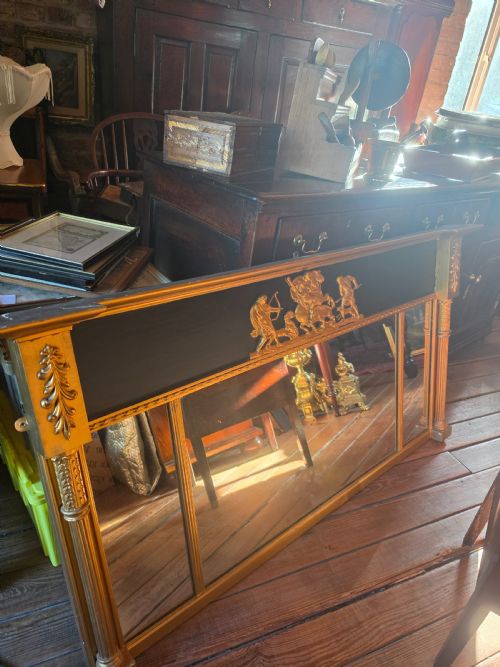
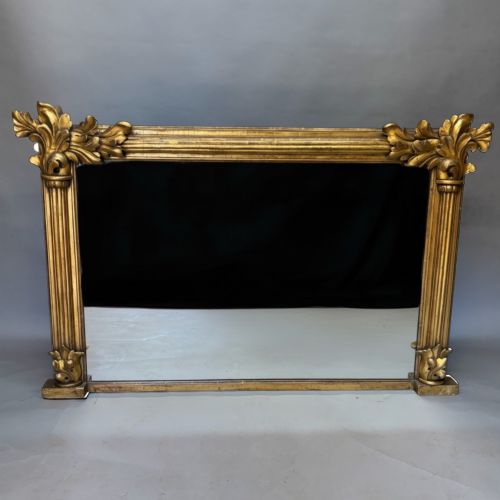
The primary forms found here include large overmantle mirrors, vertical pier mirrors, and circular convex glasses. Many incorporate classical motifs such as lion masks, rope twists, and eagle crests.
Convex variants, often termed butler's mirrors, distort the interior view into a wide spherical sweep. Pier glasses and overmantle versions sit lower, anchored above mantelpieces or between windows.
Materials and construction
Carved wood and moulded composition provide the structural relief for these frames, coated in layers of gesso to smooth the surface before gilding. Artisans applied thin sheets of gold leaf or oil gilt directly over the prepared foundation.
Mirror plates of the period frequently exhibit foxing and imperfections, held within frames that occasionally combine ebonised wood or verre eglomise panels. Joinery relies on traditional pegged and mitred corners designed to bear the weight of heavy glass.
Assessing craftsmanship and condition
The crispness of the carved or moulded ornament dictates the visual strength of the frame. Sharp details on eagle crests, column capitals, and rope twists separate high workshop output from softer secondary casting.
Originality of the mirror plate and gilding surface governs the historical integrity of the piece. Retaining the original silvered glass and untouched gold leaf distinguishes surviving examples from heavily restored alternatives.
The Gold Regency Wall Mirror Glossary
- Gesso
- A plaster-like mixture applied to wood frames to provide a smooth ground for gilding. It allows craftsmen to carve intricate relief details before applying gold leaf.
- Verre eglomise
- A technique involving gilding and painting on the reverse side of glass panels. It appears frequently in the upper sections of pier mirrors.
- Convex mirror
- A round mirror with an outward-curving glass surface that bends reflections to capture a wide field of view. These often feature eagle surmounts.
- Pier glass
- A tall, narrow mirror manufactured specifically to hang on the wall space between two windows. They often sit above matching console tables.
Gold Regency Wall Mirror: Frequently Asked Questions
Where should I hang an overmantle mirror?
These large horizontal mirrors anchor naturally above a fireplace mantelpiece, reflecting the hearth and light across the room.
Ensure the wall fixings are secured directly into studs or masonry to support the substantial combined weight of the wood, gesso, and glass.
How do I identify a genuine nineteenth-century piece?
Look for hand-carved wooden elements beneath the gesso, traditional joinery at the corners, and subtle distortions or foxing within the old mirror plate.
Period pieces display natural ageing of the gold leaf rather than the uniform finish found in modern reproductions.
What is the purpose of a convex mirror?
Convex mirrors were historically placed in entertaining rooms to allow hosts to monitor guests across a large space from a single vantage point.
The curved glass shrinks the reflection to pack a wide panoramic view into a compact circular frame.
How do I care for antique giltwood?
Dust the carved surfaces very gently with a dry, soft brush to avoid disturbing fragile gesso and gold leaf.
Keep these mirrors away from direct sunlight and damp environments to prevent the wooden frames from warping and the gilt from flaking.