







Gold Lacquered Tea Tray
A gold lacquered tea tray brings rich dark surfaces and metallic detail to an interior, combining practical serving ware with decorative landscape art.
Gold Lacquered Tea Tray
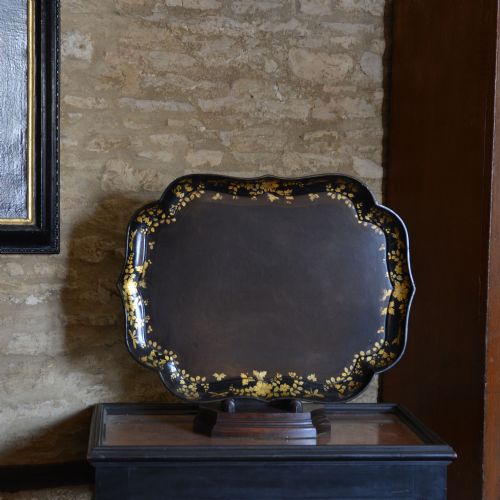
A gold lacquered tea tray is a surface for serving or display, constructed primarily from papier-mâché or timber and finished with deep dark varnish and metallic painting. The selection on this page centres on 19th-century examples, ranging from early Regency and Georgian productions to Victorian Chinoiserie and Edwardian pieces.
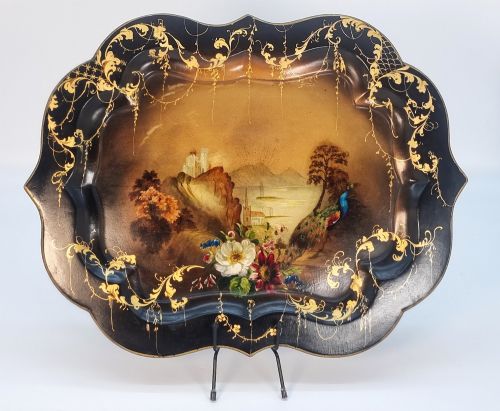
Most items take the form of serving trays, decorative trays, or larger pieces mounted on stands to function as coffee tables and occasional tables. Buyers encounter rectangular and oval shapes, alongside circular formats decorated with painted landscapes, hunting scenes, and oriental motifs.
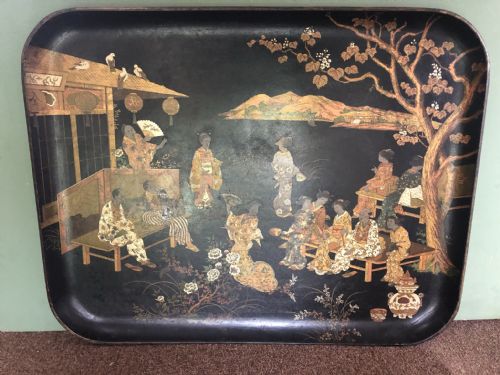
Origins span English workshops of the Georgian and Victorian eras, alongside Japanese export items created during the Edo and Meiji periods. These pieces demonstrate how traditional oriental lacquer techniques influenced British makers throughout the nineteenth century.
Materials and construction
Makers constructed the foundation of these trays using heavy pressed papier-mâché or solid timber panels, building a rigid core capable of supporting weight. Workers then applied multiple layers of dark lacquer, sanding and polishing the surface to create a smooth, glossy base.
Decoration relied on gold leaf and fine hand-painted pigments applied directly onto the dark lacquer ground. Artisans frequently added brass mounts, handles, or later wooden stands to elevate flat serving trays into functional tables.
Gold Lacquered Tea Tray Retail Price Guide 2026
Typical asking prices for gold lacquered tea tray among the pieces listed under this phrase on Sellingantiques today, from the lower quarter to the upper quarter. They describe what is for sale here now, not the wider market.
Several trays preserve hand-painted landscape hunting scenes where tiny figures chase invisible foxes across dark lacquer horizons.
Distinctions in quality
Quality rests in the precision of the hand-painted detail and the depth of the lacquer finish. Pieces bearing maker signatures from notable workshops display superior artistry in their landscapes and figural scenes compared to unmarked commercial output.
The integrity of the papier-mâché or timber substrate dictates durability, while the crispness of the gilt work separates standard decorative items from exceptional examples.
Jennens & Bettridge·Clay
The Gold Lacquered Tea Tray Glossary
- Papier-mâché
- A composite material made from paper pulp or layers of paper pasted together, pressed under heat, and coated with varnish to form a hard, lightweight base for lacquer. It allowed makers to mould smooth rims and deep tray walls.
- Chinoiserie
- A European artistic style reflecting Chinese motifs and decorative techniques, popular in British furniture and lacquerware during the Georgian and Victorian periods. This style heavily influences the painted scenes found on these trays.
- Japaning
- A European imitation of East Asian lacquerwork, created by applying layers of dark varnish and finishing with metallic dust or gold paint. It provided a durable, glossy black surface for domestic items.
- Gilt
- Covered thinly with gold leaf or gold paint. This technique highlights borders, motifs, and landscape details against the dark background of the tray.
- Export ware
- Items manufactured in Asia specifically for Western markets, combining traditional local craftsmanship with European forms and preferences.
Gold Lacquered Tea Tray: Frequently Asked Questions
Can I use a tray table for daily serving?
These trays possess sturdy papier-mâché or timber structures intended for domestic use. Many are mounted on later stands to serve safely as coffee tables.
Care should be taken to protect the historic lacquer and gold leaf surface from moisture and heat during regular use.
How do I identify a Regency period tray?
Regency examples typically date from the early nineteenth century and feature clean classical proportions, often executed in papier-mâché. They frequently display refined gilt decoration or maker stamps from prominent firms.
Later Victorian pieces often incorporate bolder Chinoiserie landscapes or Japanese export designs.
What is the difference between papier-mâché and wood trays?
Papier-mâché trays utilise compressed paper layers that create a smooth, seamless surface well suited to detailed painting and curved raised edges. Wooden trays rely on solid timber construction for structural rigidity.
Both materials received the same dark lacquer and gold leaf finishing processes.
How do I clean a lacquered tray?
Dusting gently with a soft, dry cloth is the safest method to maintain the gloss of the lacquer. Moisture and chemical cleaning agents can damage the delicate gold leaf and aged varnish.
Keeping the piece away from direct sunlight preserves the painted pigments.