


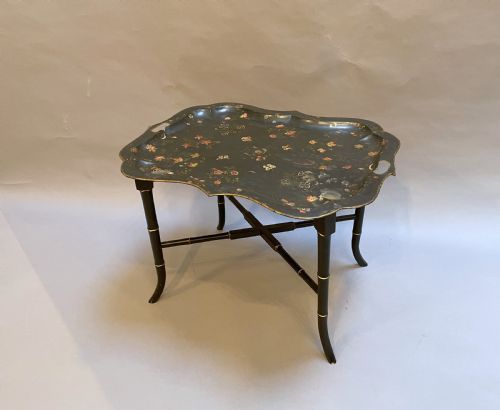


Antique Scalloped Tea Tray
An antique scalloped tea tray brings rich texture and polished timber to a room, offering both a functional surface and a decorative centrepiece.
Antique Scalloped Tea Tray
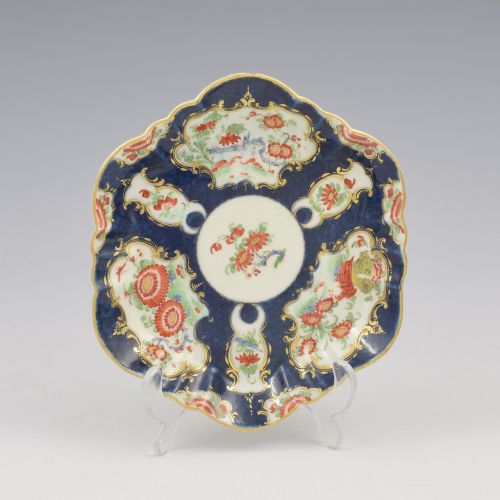
When you search for an antique scalloped tea tray, you encounter a variety of serving surfaces, side tables, and occasional furniture shaped with characteristic wavy or scalloped edges. These items date from the Georgian, Regency, and Victorian eras through to the Edwardian period and the early twentieth century.
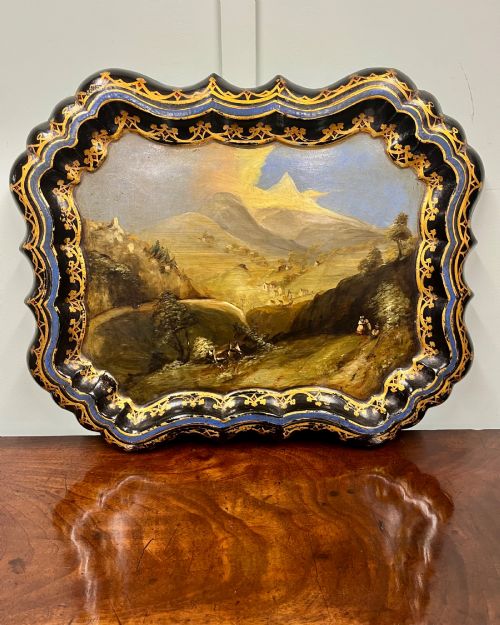
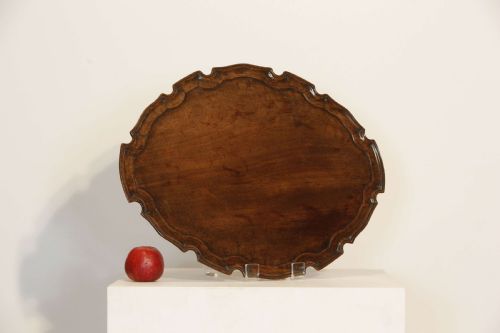
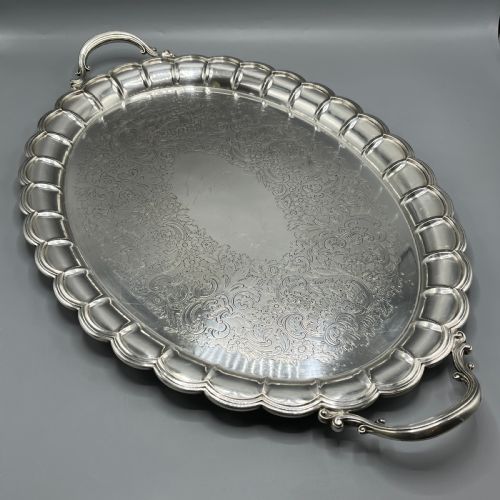
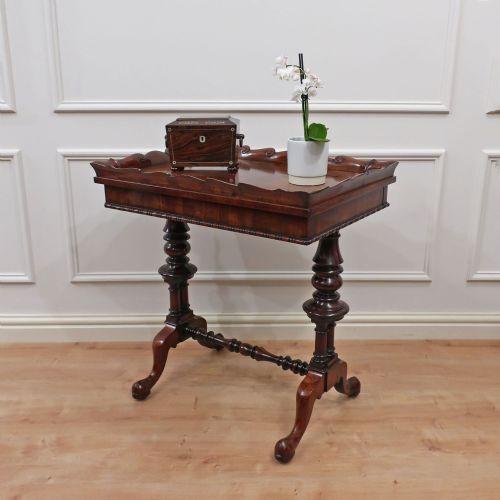
The most common forms on this page include mahogany serving trays with inlaid details, lightweight papier-mâché trays often mounted on later stands as coffee tables, and gleaming silver-plated gallery trays. Many examples showcase craftsmanship from distinct periods, ranging from George III mahogany to Chinoiserie lacquered designs.
Beyond traditional serving use, many of these trays are now adapted as coffee tables or decorative display surfaces. The mix of materials reflects how households across different centuries prized both utility and visual elegance in domestic metalwork and woodwork.
How they were made
Makers utilised timber such as mahogany, walnut, and satinwood, frequently employing fine inlay, oyster veneering, or marquetry to decorate the surfaces. Trays of this calibre often feature carefully carved wooden borders or raised gallery edges shaped into distinct scalloped contours.
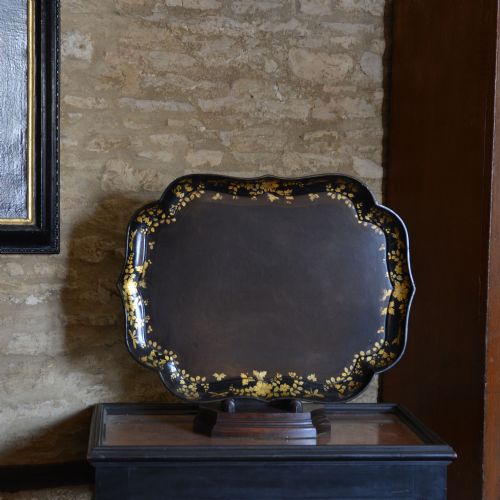
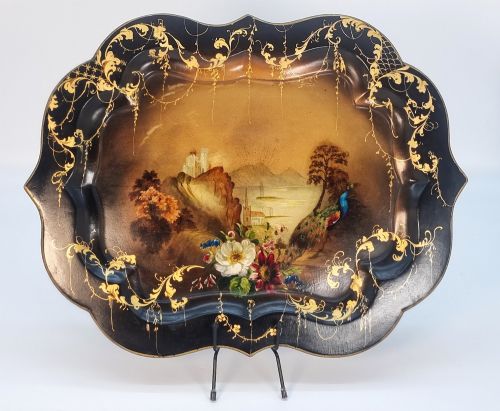
Metal versions rely on silver plating over base metals, copper, brass, and toleware, sometimes enhanced with gold leaf or mixed metal embellishments. Papier-mâché pieces required layers of paper and binder built up to create a robust core, which was then painted, lacquered, or adorned with Chinoiserie and hunting scenes.
Antique Scalloped Tea Tray Retail Price Guide 2026
Typical asking prices for scalloped tea tray among the pieces listed under this phrase on Sellingantiques today, from the lower quarter to the upper quarter. They describe what is for sale here now, not the wider market.
Listings feature mahogany, walnut, satinwood, papier-mâché, silver plate, brass, and copper across periods from the eighteenth century to the twentieth century.
What varies in quality
Quality rests upon the crispness of the scalloped carving, the precision of the wood inlay, and the depth of the lacquer or silver plating. Finer pieces demonstrate superior joinery, balanced proportions, and careful hand-finishing on both the primary surface and the reverse.
The distinction between standard domestic items and superior examples often lies in the choice of timber and the artistry of the painted or gilded decoration. Trays bearing the marks of established makers or retaining their original stands tend to exhibit a higher grade of overall execution.
Gillows·Walker & Hall·James Dixon & Sons·Jennens and Bettridge·Whytock and Reid
The Antique Scalloped Tea Tray Glossary
- Papier-mâché
- A composite material made from paper pulp or layers of paper mixed with glue and oil, pressed and dried into a rigid form. It was widely used for lightweight trays and later painted or japanned.
- Toleware
- Painted or lacquered metalware, typically tinplate or iron, decorated with colourful pigments and varnishes. These items often feature dark backgrounds accented with gilt or floral motifs.
- Gallery tray
- A tray featuring a raised border or pierced metal gallery around the edge to prevent items from sliding off during service. They appear in both silver plate and timber formats.
- Oyster veneering
- A decorative woodworking technique where branches or small stems are cut transversely to produce circular or oval veneer patterns resembling oyster shells. This method creates distinctive rippled grain visuals on walnut and other timbers.
- Chinoiserie
- European decorative art influenced by Chinese artistic styles, characteristically featuring painted scenes of figures, pavilions, and landscapes. This technique appears frequently on lacquered papier-mâché items.
Antique Scalloped Tea Tray: Frequently Asked Questions
What is a scalloped tea tray?
A scalloped tea tray is a serving plate or display surface featuring a distinctive wavy rim shaped into curves or lobes. These pieces range from eighteenth-century wooden serving trays to silver-plated gallery designs and papier-mâché items.
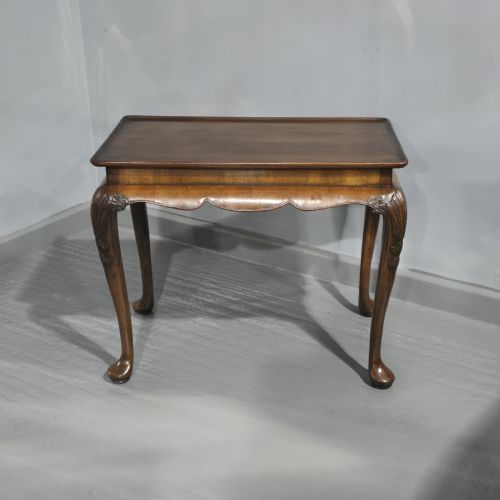
Many of these trays have transitioned from dining service to living spaces, often placed on iron or wooden stands to function as coffee tables and occasional tables.
How do I use an antique tray today?
These trays serve well as coffee table surfaces, cocktail trays, or decorative table tops for holding glassware and ceramics. Their sturdy construction makes them practical for everyday display.
When mounted on a stand, a papier-mâché or wooden tray operates as a low side table, bringing historical character and a functional surface into a modern room.
Are these trays water resistant?
Most antique trays feature traditional finishes such as lacquer, polish, or silver plating that withstand light use but require care around standing moisture. Papier-mâché and lacquered surfaces benefit from dry dusting and gentle cleaning.
Avoiding harsh chemical cleaners helps preserve the original painted scenes, gilding, and delicate wood veneers found on Georgian and Victorian pieces.
How can I tell the period of a tray?
Dating relies on observing the materials, construction methods, and decorative styles typical of eras like Georgian, Regency, or Edwardian design. Mahogany and satinwood inlay often indicate eighteenth or nineteenth-century cabinetmaking traditions.
Silver-plated examples frequently carry hallmarks or maker stamps that narrow down the date of production, while papier-mâché construction points toward nineteenth-century manufacturing techniques.