





Large Victorian Tea Tray
A large victorian tea tray serves as a substantial centrepiece for hospitality, combining practical scale with decorative presence.
Large Victorian Tea Tray
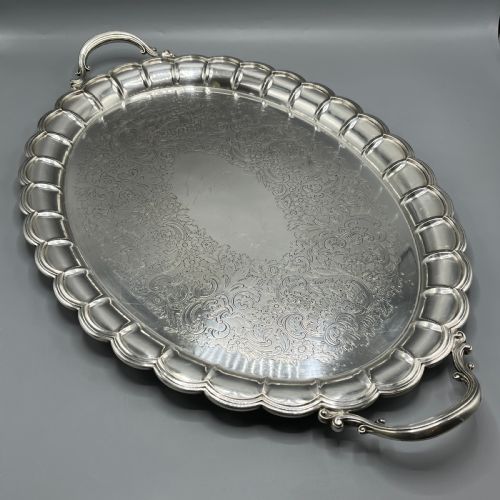
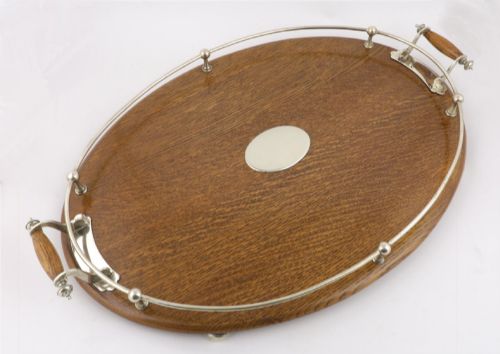
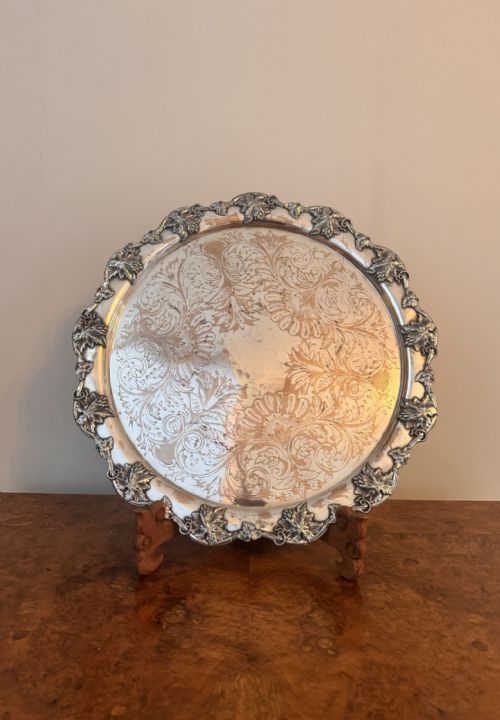
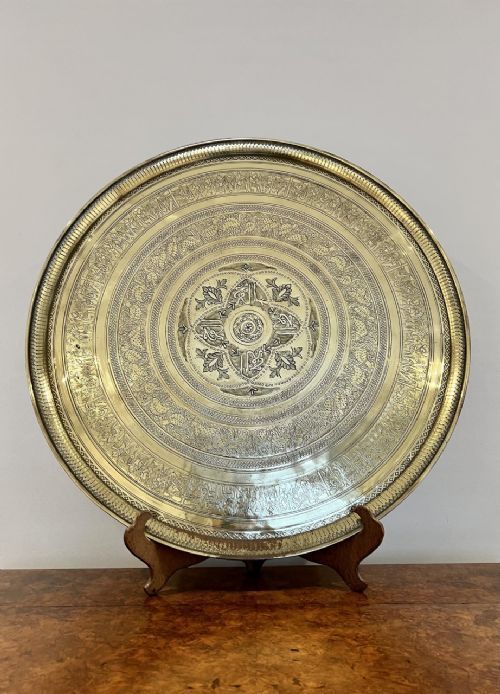
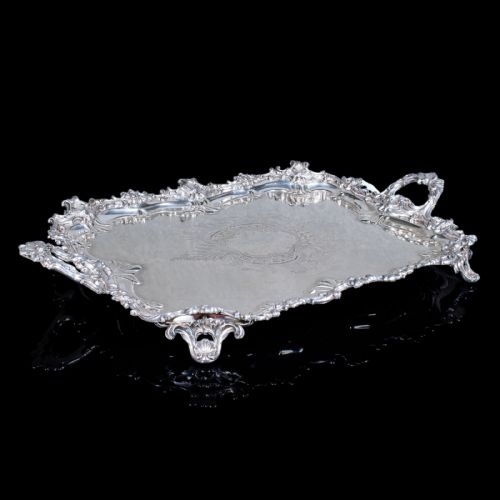
A large victorian tea tray encompasses diverse serving vessels designed for domestic display and hospitality during the nineteenth century. These pieces appear in circular, oval, and kidney shapes, often fitted with handles or elevated galleries.
The selection ranges from heavy silver plated metalwork to moulded papier-mâché and wood, reflecting the varied social rituals of the period. Makers from England, Scotland, France, Germany, and beyond contributed distinct regional interpretations to the form.
Buyers seeking a large victorian tea tray will encounter pieces intended for formal presentation, afternoon tea service, and butler's use. The survivals demonstrate both robust utility and ornamental refinement across different decades of the nineteenth century.
Materials and construction methods
Metal trays rely on silver plate, nickel silver, copper, brass, and EPNS applied over base metal foundations, sometimes utilising Sheffield plate techniques. Smiths and manufacturers added engraved decoration, reticulated borders, and pierced galleries to the solid metal structures.
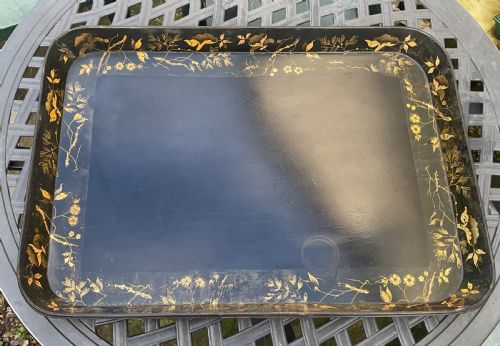
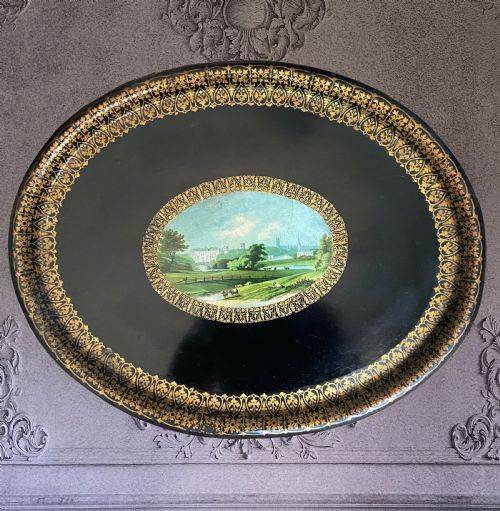
Papier-mâché examples employ layered paper pulp pressed and treated with heat, then finished with lacquer, gold leaf, and painted or gilded borders. Wooden pieces incorporate mahogany, cedar, and other timbers, frequently featuring inlaid details or raised wooden galleries.
Large Victorian Tea Tray Retail Price Guide 2026
Typical asking prices for large victorian tea tray among the pieces listed under this phrase on Sellingantiques today, from the lower quarter to the upper quarter. They describe what is for sale here now, not the wider market.
Distinctions in quality and execution
Quality reveals itself in the crispness of chased or engraved enrichment and the structural integrity of applied galleries and handles. Substantial weight and balanced proportions distinguish finer metalwork from lighter commercial output.
In papier-mâché and lacquer pieces, the smoothness of the surface and the preservation of the original gilding dictate the standing of the tray. Maker marks from established firms indicate higher standards of workshop production.
Elkington & Co.·Jennens and Bettridge·Lee & Wigfull·J.H. Potter·Fenton Russel·Peters Hamburg
The Large Victorian Tea Tray Glossary
- Silver plate
- A layer of silver fused or electroplated onto a base metal core such as copper or nickel silver. This technique offered the visual appeal of solid silver at a more accessible cost.
- Papier-mâché
- A composite material made from paper pulp or layered paper mixed with glue and resin, pressed into moulds and dried. It provides a lightweight yet durable base for lacquered and gilded decoration.
- Gallery tray
- A serving tray featuring an elevated pierced or solid border around its perimeter. This design prevents items from sliding off during transit.
- Sheffield plate
- An early method of fusing a thin sheet of silver to a thicker copper ingot before rolling them together into sheets. Pieces made this way often show subtle copper undertones where wear occurs.
- Reticulated
- Describes metalwork decorated with an openwork pattern of pierced geometric or organic shapes. This technique lightened the visual weight of large serving pieces.
Large Victorian Tea Tray: Frequently Asked Questions
How were large Victorian tea trays used?
These trays transported tea services, decanters, and glassware from the kitchen or pantry to the drawing room or parlour. They also functioned as decorative centrepieces on side tables when not in active service.
In larger households, staff utilised robust butler's trays for heavy lifting, while presentation trays remained in public view for formal occasions.
What materials are common for these trays?
The listings feature silver plate, nickel silver, copper, brass, and base metals alongside organic and composite materials like papier-mâché and mahogany.
Some examples incorporate gold leaf and specialised lacquer finishes, reflecting the diverse manufacturing techniques of nineteenth-century workshops.
How do I care for a silver plated tray?
Regular dusting with a soft cloth prevents surface grime from accumulating in engraved crevices. Avoid harsh chemical dips that strip the underlying plating.
Store the tray in a dry environment away from direct sunlight to minimise tarnishing of the silver surface.
How can I tell a papier-mâché tray from wood?
Papier-mâché feels surprisingly light yet rigid, with a smooth, lacquered surface that often displays fine crazing over time. Wooden trays show natural grain patterns and heavier structural joinery.
Tap the surface gently; papier-mâché yields a duller sound compared to the resonant ring or solid thud of timber.