
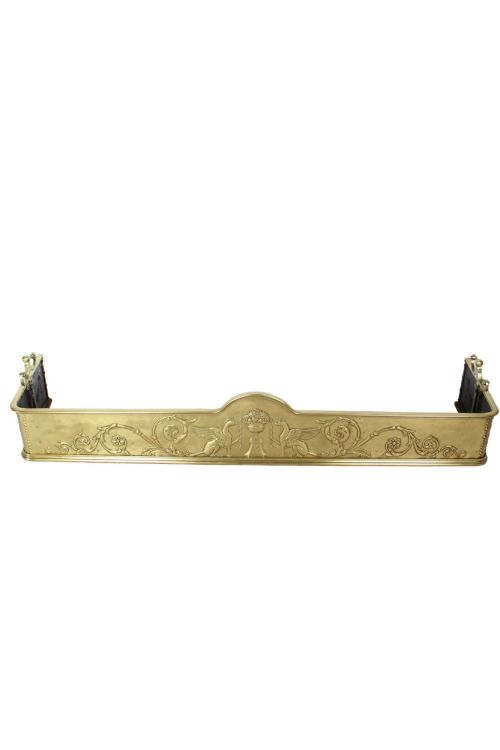
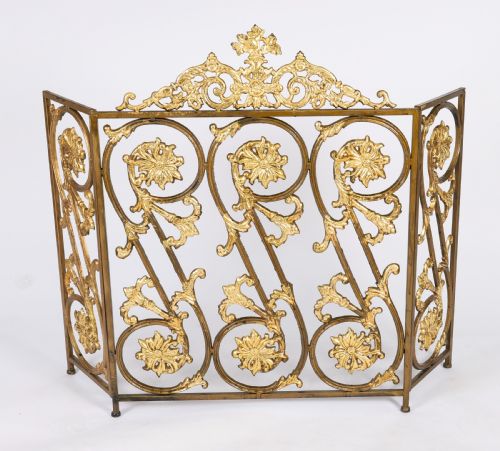
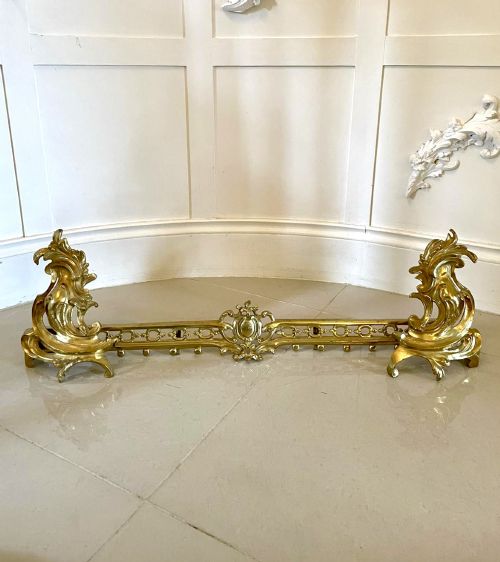
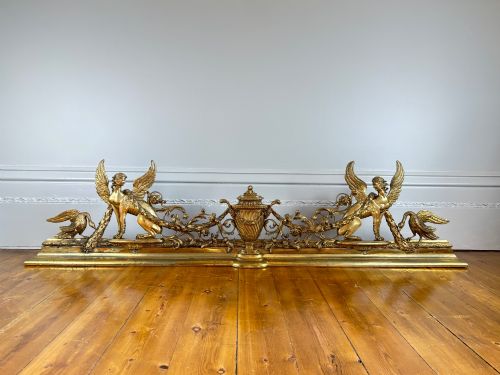

Gold Hearth Guard
A gold hearth guard shields the room from stray embers while adding a metallic gleam to the fireplace.
Gold Hearth Guard
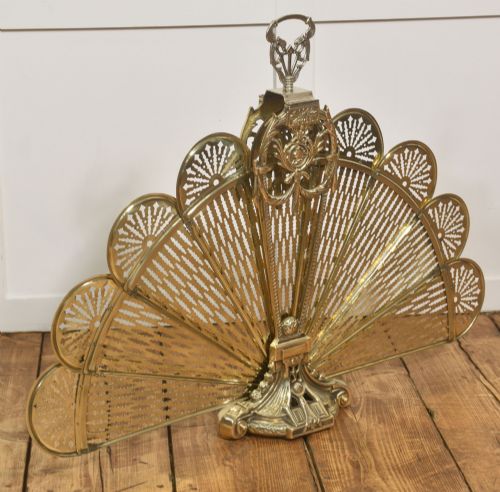
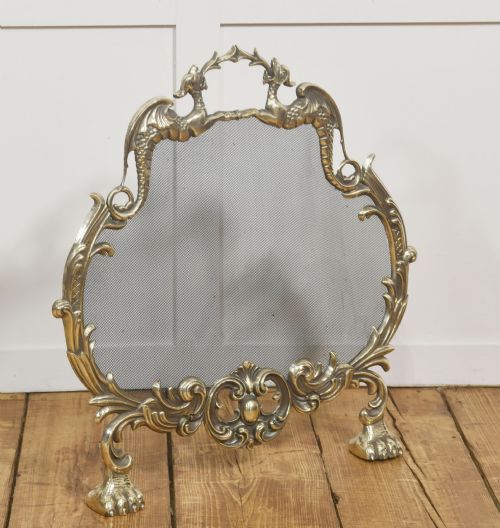
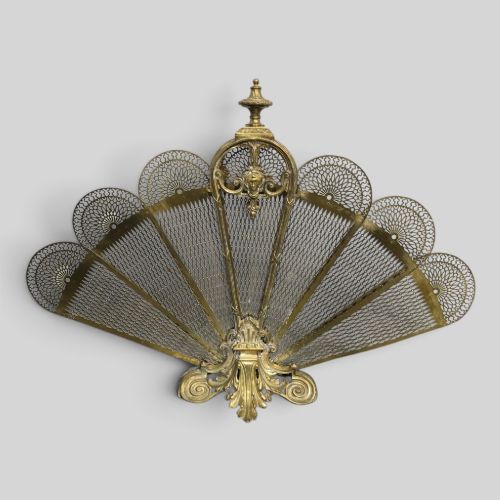
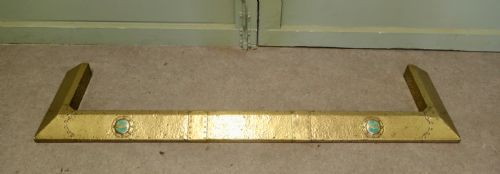
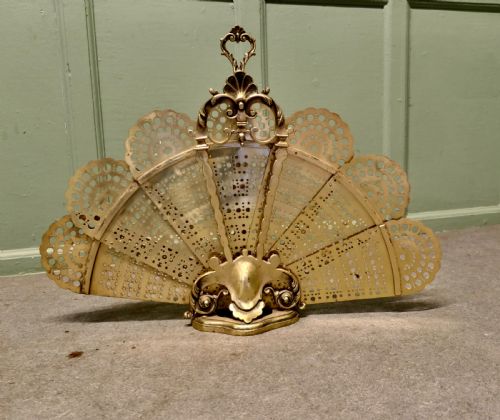
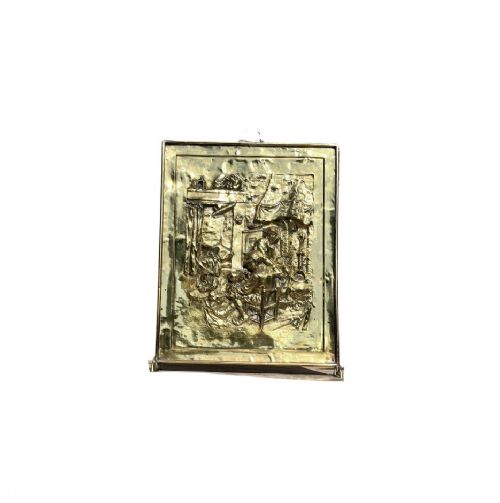
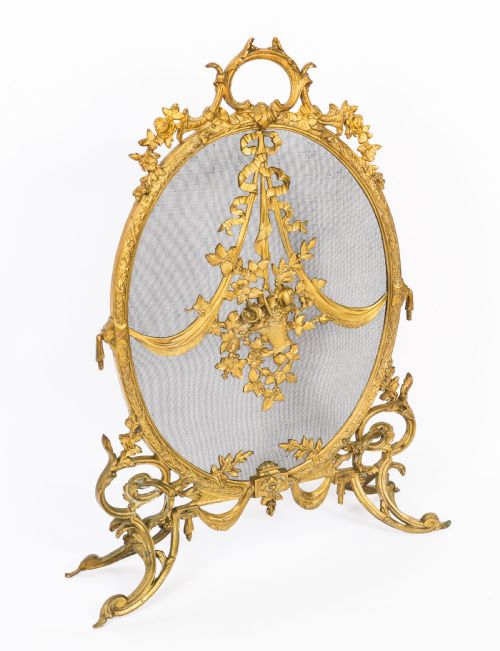
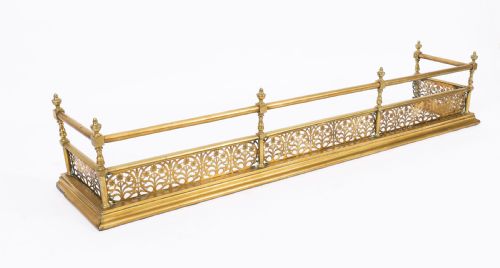
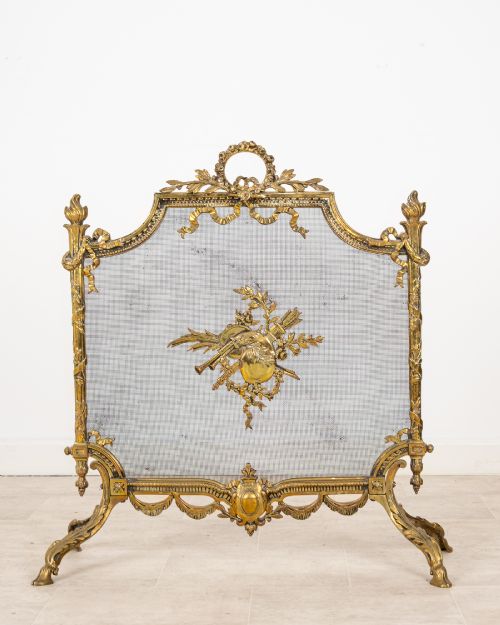
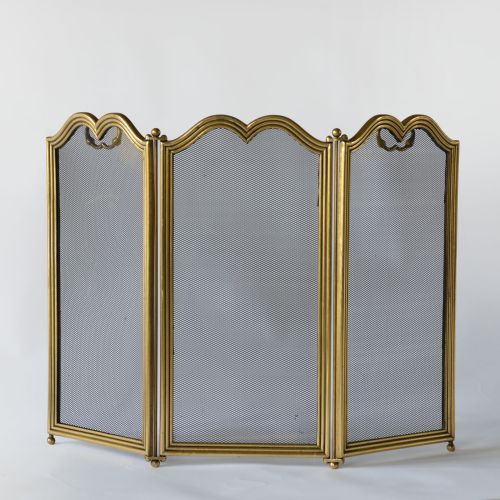
A gold hearth guard encompasses items known as fire screens, fire guards, and fireplace fenders, typically rendered in bright metallic tones. When searching for a gold hearth guard, buyers encounter folding spark guards, protective mesh panels, and solid decorative kerbs. These pieces originate from the Victorian and Edwardian eras, alongside French revival periods.
Most examples date from the nineteenth century into the early twentieth century, spanning Georgian through to Art Deco production. The forms range from low kerbs placed around the hearth floor to upright standing screens designed to block radiant heat.
Materials and construction
Metalworkers utilised brass, cast brass, and iron as the primary structural skeletons for these guards. Gilt bronze, ormolu, and gilt brass provided the golden surface finishes that define the appearance.
Fine wire mesh and articulated folding blades formed the protective barriers against flying sparks. Rivets, hinges, and pierced fretwork allowed rigid frames to fold or extend to fit varying fireplace widths.
Markers of quality
Weight and casting depth separate standard utilitarian guards from superior decorative examples. Heavier gauges of brass and deeply chased gilt bronze display sharper relief in floral and musical trophies.
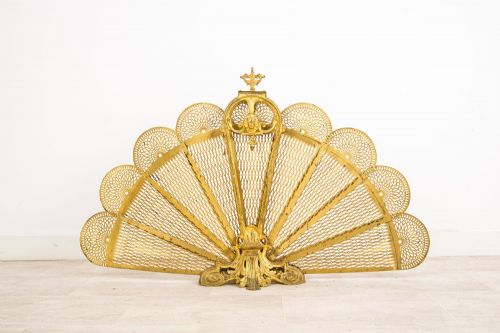
The complexity of the mechanism dictates the standard of manufacture, seen in smoothly operating folding fan leaves and robust extending fender joints. Pierced brass work shows precision in the regularity of the pierced apertures.
E F Caldwell New York
The Gold Hearth Guard Glossary
- Ormolu
- Finely chopped high-zinc brass applied as a gilt surface finish to bronze mounts. This technique creates the rich golden lustre seen on French revival pieces.
- Fender
- A low metal kerb placed around the hearth to contain ash and rolling logs. These frequently incorporate pierced brass or extending frames.
- Spark guard
- A protective mesh or folding screen placed before an active fire to catch burning embers. Tripartite versions fold in three sections for stability.
- Peacock fan
- A folding screen formed of overlapping metal blades that open into a semicircular fan shape resembling a tail. They fold flat when not in use.
- Rococo revival
- A nineteenth-century design style reviving the asymmetrical scrolls, shell motifs, and floral asymmetry of the French eighteenth century.
Gold Hearth Guard: Frequently Asked Questions
How do I measure for a hearth guard?
Measure the width of your fireplace opening and the hearth stone before selecting a fender or standing screen. Ensure folding guards leave sufficient clearance around the basket.
Account for extending mechanisms if you require a precise fit between the brick jambs.
Can these guards be used with a working fire?
Most of these brass and wire mesh screens were built to contain sparks and ash from coal or wood fires. Solid mesh panels and folding spark guards offer practical protection.
Verify that the hinges and mesh remain stable under high heat before regular use.
How do I clean gilt brass and ormolu?
Dust the metal gently with a soft dry cloth to remove surface grime without disturbing the gilt surface. Avoid harsh chemical polishes that strip thin gold layers from the brass.
Professional care is recommended for valuable ormolu pieces showing tarnishing.
What is the difference between a fender and a screen?
A fender sits flat on the floor around the hearth perimeter to contain logs and ash. A screen stands vertically to block radiant heat and flying embers.
Some large designs combine both functions into unified fireplace furnishings.