


French Brass Fire Screen
A french brass fire screen brings nineteenth-century hearth elegance and decorative metalwork directly to the living room.
French Brass Fire Screen
A french brass fire screen stands before the hearth to shield the room from stray embers while adding sculptural presence to the fireplace. These pieces emerge predominantly in nineteenth-century styles, drawing on revival periods that range from Rococo to Empire and Louis XVI.
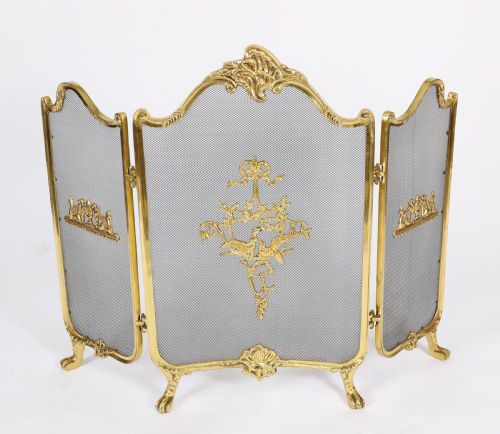
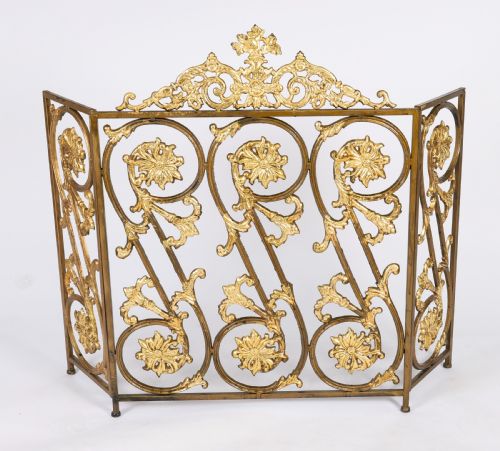
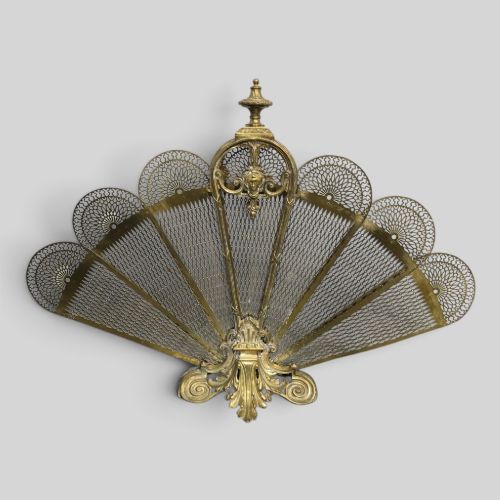
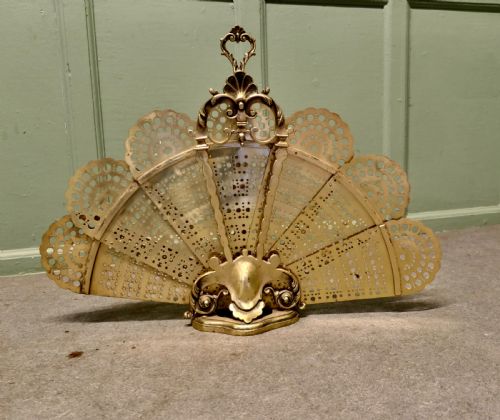
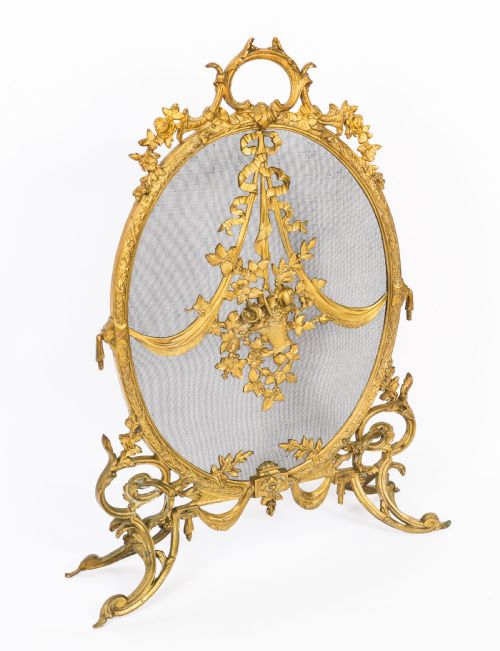
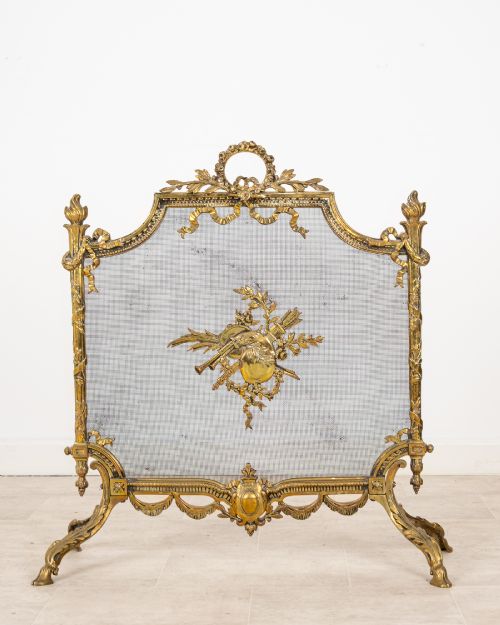
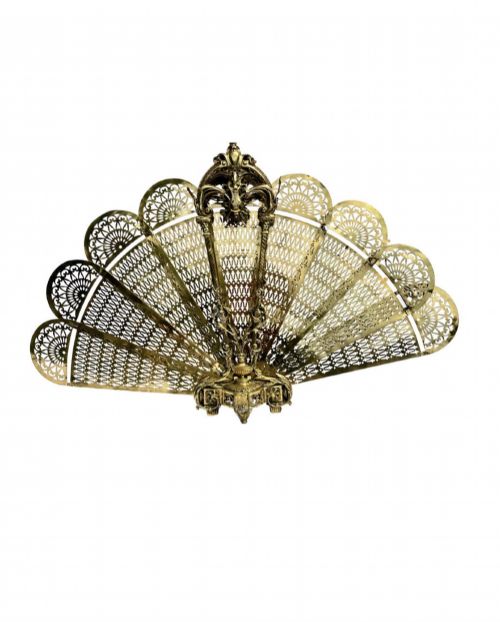
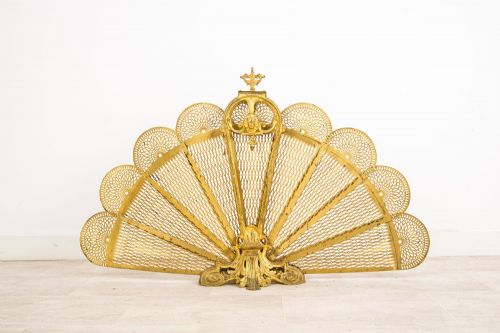
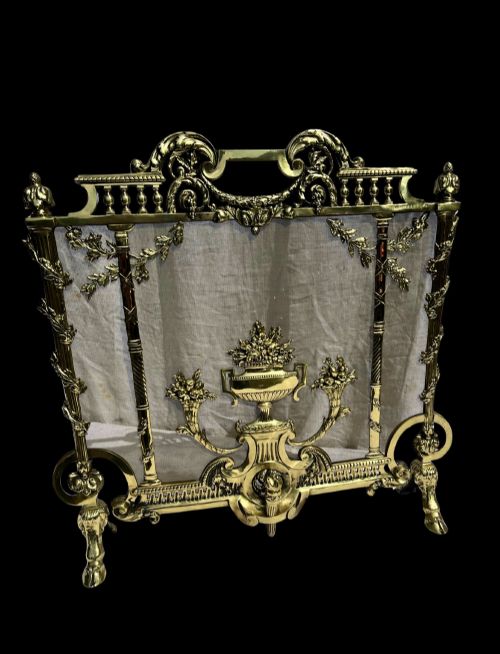
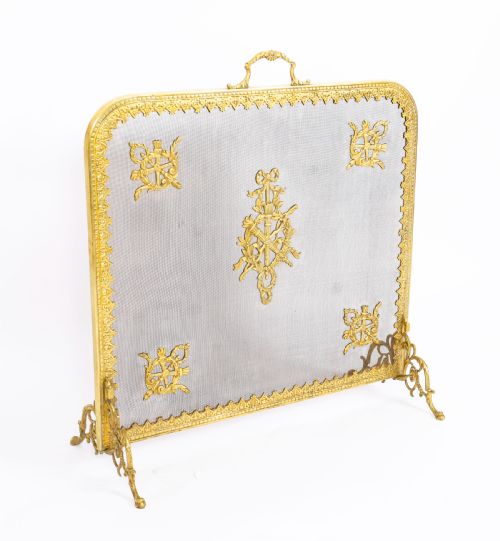
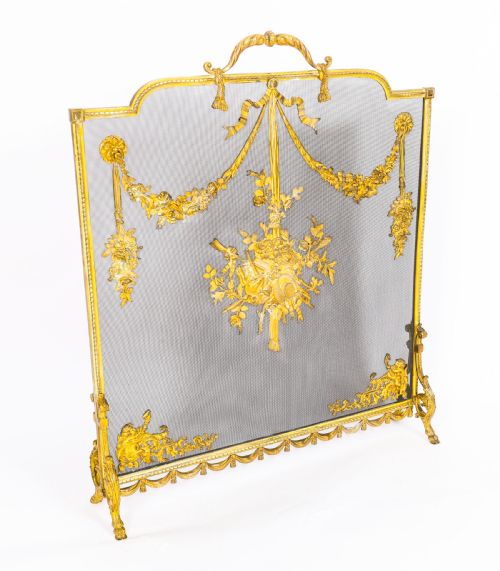
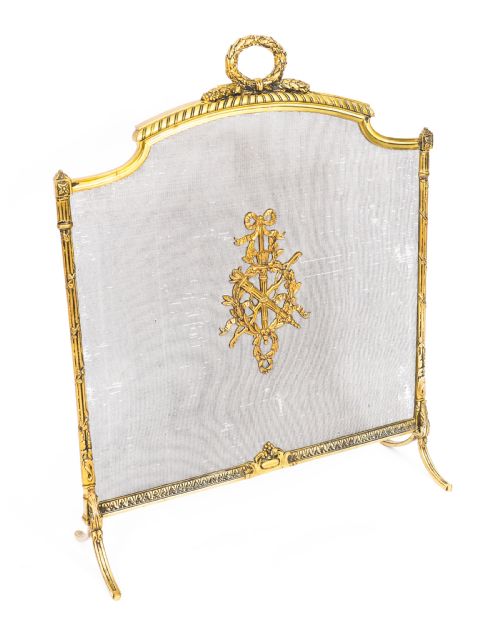
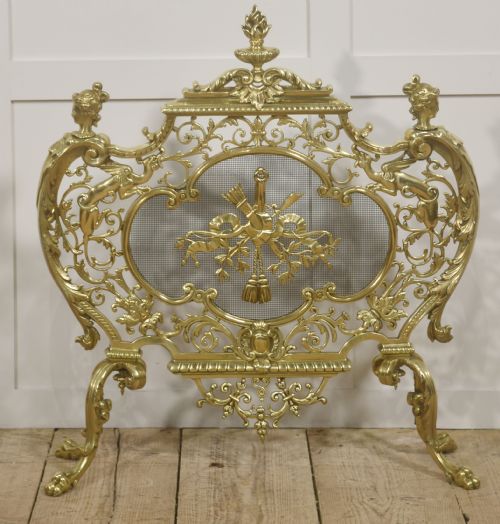
The most common forms on this page include solid folding fan designs, known as peacock screens, alongside framed panels featuring wire or steel mesh. Makers utilised cast brass, gilt bronze, and ormolu to shape ornate frames decorated with floral trophies, musical instruments, and classical motifs.
How they were made
Artisans constructed these screens primarily from cast and sheet brass, frequently applying a gilt finish or ormolu to create a rich, gilded surface. Many examples incorporate fine wire mesh or steel mesh panels to catch sparks while maintaining visibility of the hearth fire.
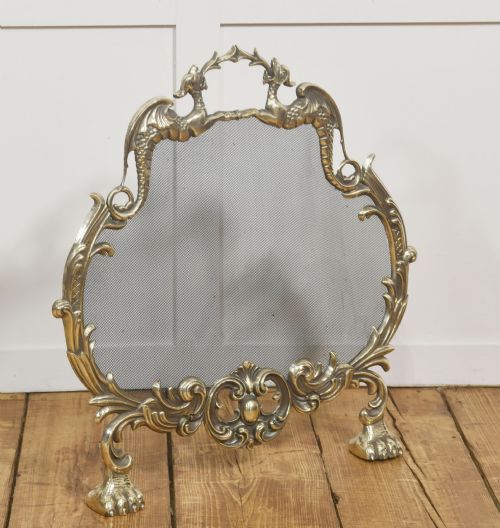
Casting allowed workshops to produce elaborate pierced frames, asymmetric scrollwork, and dimensional motifs such as flaming torches, dolphins, and griffins. Folding variants required precise hinge mechanisms to let the radiating fan blades expand and contract smoothly.
What varies in quality
The distinction between standard production and the finest work lies in the crispness of the casting and the depth of the chased detail on the metal surface. Superior examples display sharply defined motifs, such as floral garlands or classical trophies, with hand-chasing that accentuates every contour.
Weight and structural stability also set pieces apart, as heavier gauge brass and substantial gilt bronze mountings provide greater durability for folding fans and multi-panel screens. The quality of the original gilding and the integrity of the mesh panels further determine the standing of each piece.
The French Brass Fire Screen Glossary
- Ormolu
- Gilded bronze applied to ornamental metalwork and decorative objects. This technique creates a rich golden finish characteristic of nineteenth-century French pieces.
- Peacock screen
- A folding fan fire screen with radiating metal blades resembling a tail. These expand to cover the fireplace opening and fold flat when not in use.
- Rococo Revival
- A nineteenth-century design style emulating eighteenth-century French asymmetry, scrolls, and naturalistic shell motifs. It dominates the ornamentation found on these brass frames.
- Gilt brass
- Brass treated with a gold-coloured wash or leaf to simulate solid gold or ormolu. It provides a bright reflective surface for hearth accessories.
- Fire guard
- An alternative term for a screen placed before an active fireplace to contain sparks. These often feature robust mesh panels combined with decorative cast frames.
French Brass Fire Screen: Frequently Asked Questions
How do I use a folding fan screen?
A folding fan screen expands outward from a central pivot to cover the hearth opening when the fire is unlit or dying down.
The hinged blades collapse inward to sit compactly against the fireplace surround when you need to tend the fire.
Are these screens safe for open fires?
Many examples incorporate steel or wire mesh panels specifically designed to catch sparks and embers while allowing radiant heat to pass through into the room.
Solid brass or bronze panel screens serve primarily as decorative heat shields or summer hearth screens when the fireplace is not in active use.
How do I identify a Rococo Revival screen?
Rococo Revival pieces feature asymmetrical scrollwork, C-scrolls, floral garlands, and naturalistic motifs derived from eighteenth-century French design.
Cast brass and gilt bronze frames showcase these flowing, organic curves rather than strict geometric symmetry.
How do I care for antique brass and gilt surfaces?
Dust the metal gently with a soft, dry cloth to prevent the accumulation of soot and debris in the intricate cast crevices.
Avoid abrasive metal polishes on gilt bronze or ormolu surfaces, as harsh cleaners can strip the historical finish.