



Peacock Fire Screen
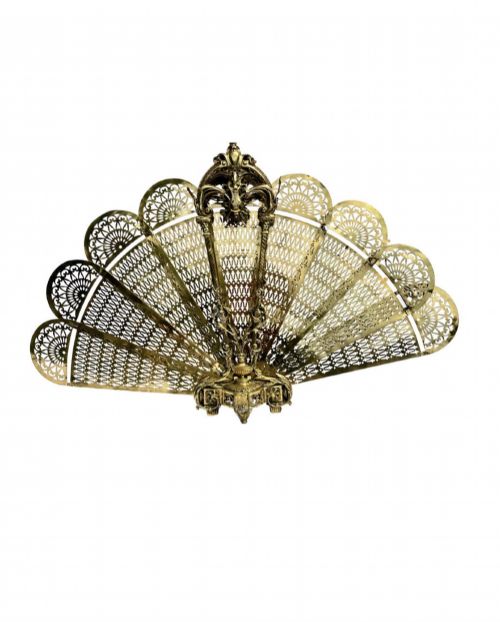
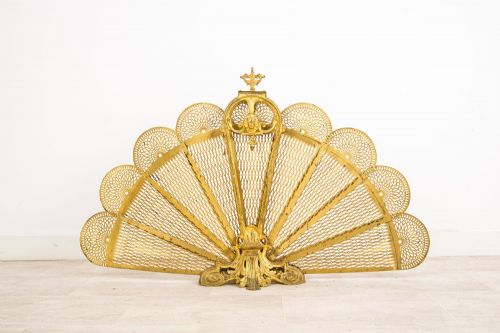
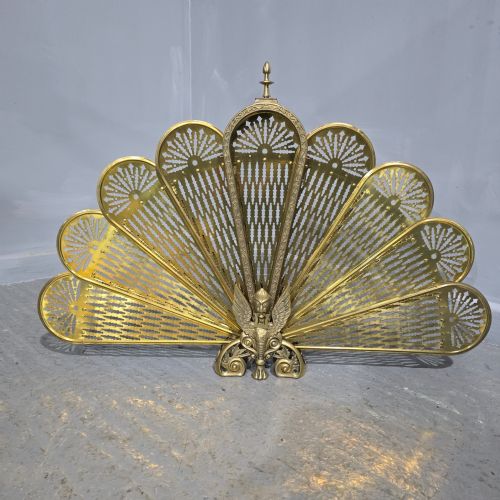
A peacock fire screen opens into a fan of metal slats when the hearth goes cold, bringing symmetry and shine to a room.
Peacock Fire Screen
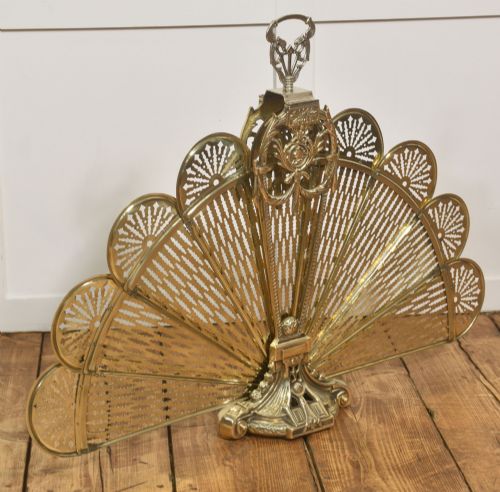
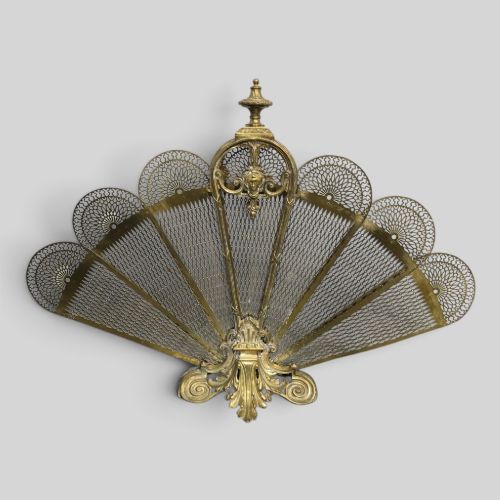
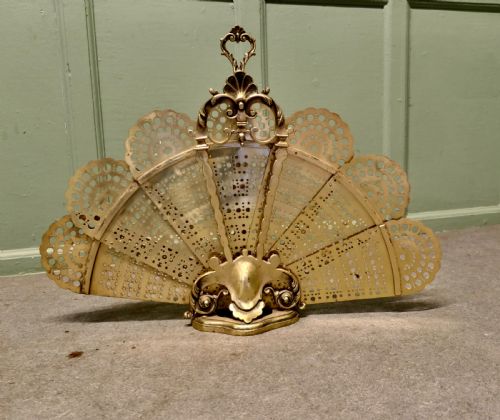
A peacock fire screen takes the form of an expanding fan designed to guard the fireplace opening during summer months. The pieces listed span periods from the nineteenth century into the nineteen-twenties, showing how hearth furniture evolved across decades.
Most examples found here utilise brass or cast brass configured into articulated blades that fold together when not in use. Styles range from Victorian and French Rococo Revival to Arts and Crafts and Anglo-Indian variants.
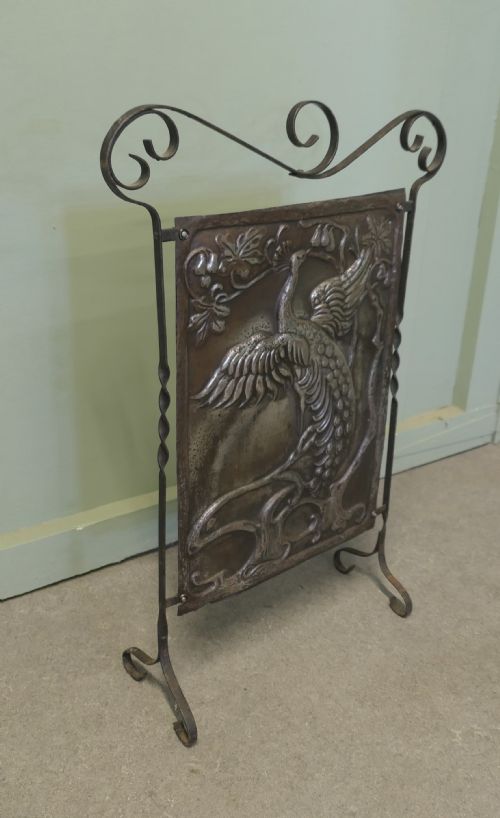
Alternative forms include polished iron screens and folk art dummy boards rather than the typical folding metal fan. These objects combine practical hearth protection with decorative metalwork suited to period interiors.
Materials and construction methods
Makers shaped sheet brass, cast brass, and wrought iron into individual folding segments that pivot from a central base. Gilt bronze and ormolu appear on French examples, adding a refined surface finish to the metalwork.
Arts and Crafts makers favoured polished iron with hand-finished details, contrasting with the bright metallic sheen of Victorian and Edwardian brass fans. Some pieces incorporate textile elements, such as embroidered panels framed by metal structures.
Dummy board fire screens sometimes depict silent maids or family pets standing permanent guard by the grate.
What distinguishes finer pieces
Quality rests in the precision of the folding mechanism and the gauge of the metal used for the individual slats. Thicker brass resists bending and maintains alignment as the fan opens and closes across the hearth.
Decoration on the base and the terminal finial marks the difference between standard production and finer workshop output. Cast ornament with sharp definition and secure pivoting pins indicates superior craftsmanship.
The Peacock Fire Screen Glossary
- Fan screen
- A folding fireplace guard composed of overlapping metal blades that spread outward like a peacock tail. This design covers the empty grate completely when the fire is unlit.
- Dummy board
- A flat wooden figure painted to represent a person, animal, or object placed near the hearth. These decorative boards served as novelty fire screens in period rooms.
- Ormolu
- Gilt bronze mounted onto decorative objects and hearth furniture. The technique creates a rich gold-coloured surface finish on cast metal elements.
- Arts and Crafts
- A design movement prioritising visible construction and simple hand-worked materials. Objects from this style emphasise honest craft over mass-produced ornamentation.
- Rococo Revival
- A decorative style characterised by curved asymmetrical scrolls and naturalistic shell motifs. Fire screens in this manner display elaborate cast brass frames.
Peacock Fire Screen: Frequently Asked Questions
How do peacock fire screens work?
The metal blades pivot on a pin at the base, allowing the entire fan to collapse into a narrow bundle or expand across the grate. Users slide the segments outward to fill the fireplace opening.
This mechanism protects the room from soot and drafts while hiding an empty hearth during warmer months.
Where were these screens placed?
They stood directly on the floor in front of the fireplace opening when the grate was not in use. The weighted base kept the expanded fan stable against the masonry.
Homeowners moved them aside once autumn arrived and fires were lit again.
How do I clean brass fire screens?
Dust accumulates between the overlapping metal slats over time, requiring gentle brushing with a soft bristle tool. Avoid harsh chemical polishes that strip historical patina from the brass surfaces.
A dry microfiber cloth preserves the aged finish while removing surface grime from the decorative blades.
How can I tell Victorian from later pieces?
Victorian examples often feature heavier cast brass bases with ornate scrollwork and Rococo Revival detailing. Pieces from nineteen-ten and nineteen-twenty tend toward simpler lines or alternative materials like polished iron.
Examining the casting quality and style markers helps place a screen within its production era.