




French Brass Fireguard
These french brass fireguard examples combine decorative metalwork with domestic protection, offering a practical centrepiece for a period hearth.
French Brass Fireguard
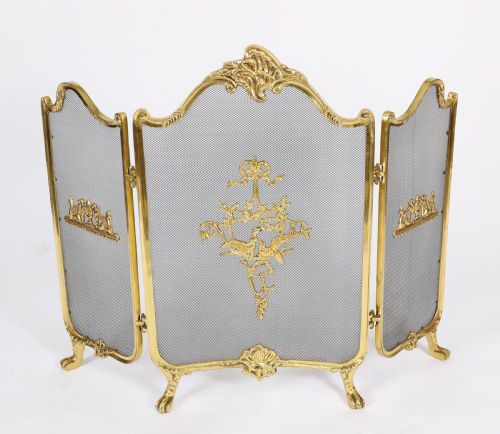
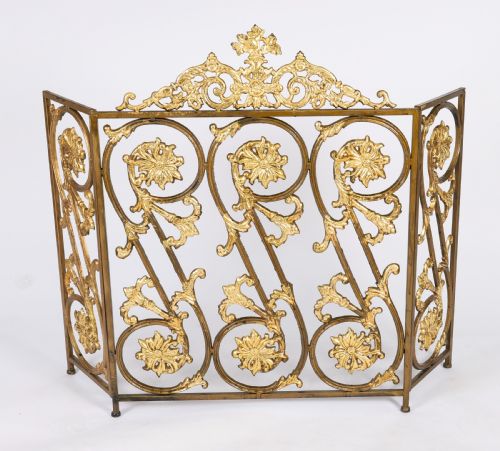
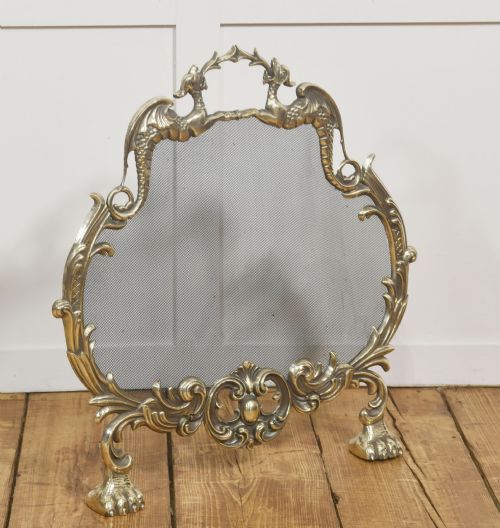
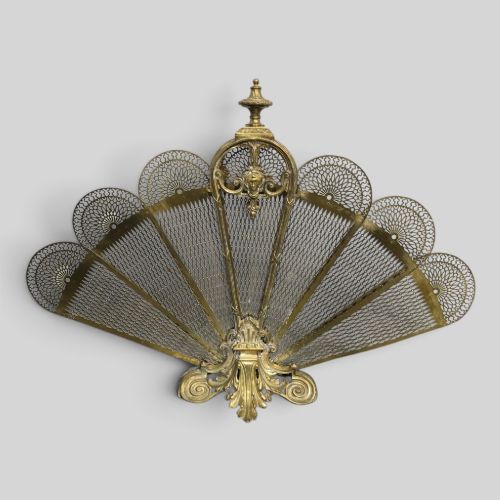
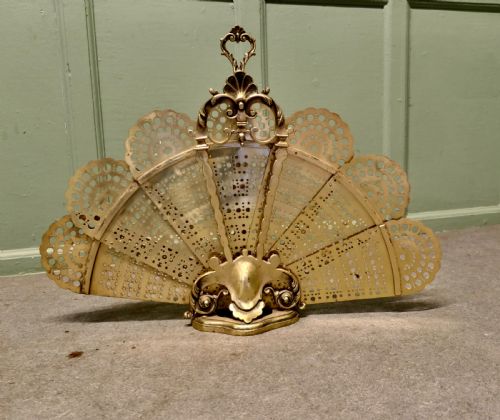
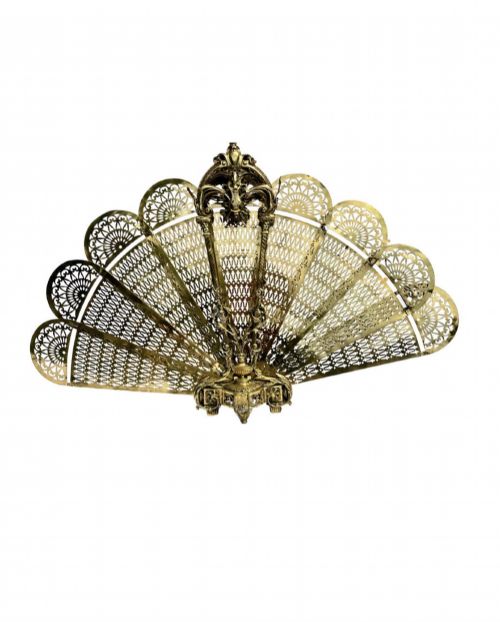
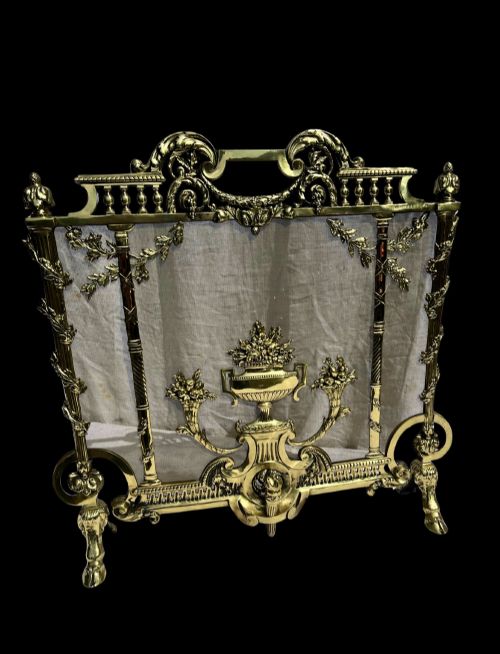
A french brass fireguard serves as both a protective barrier against sparks and a decorative accessory for the fireplace. These pieces range from folding peacock screens to rigid frames with wire mesh panels.
The selections encountered here typically date from the nineteenth century through the early twentieth century. Examples span various revival movements including Rococo and Louis XVI styles.
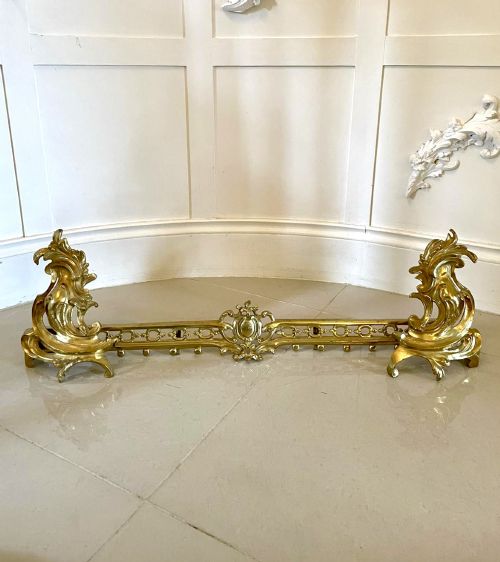
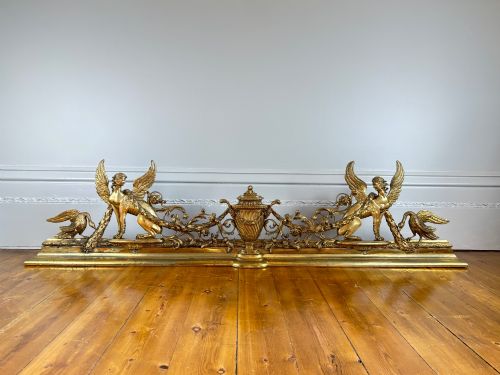
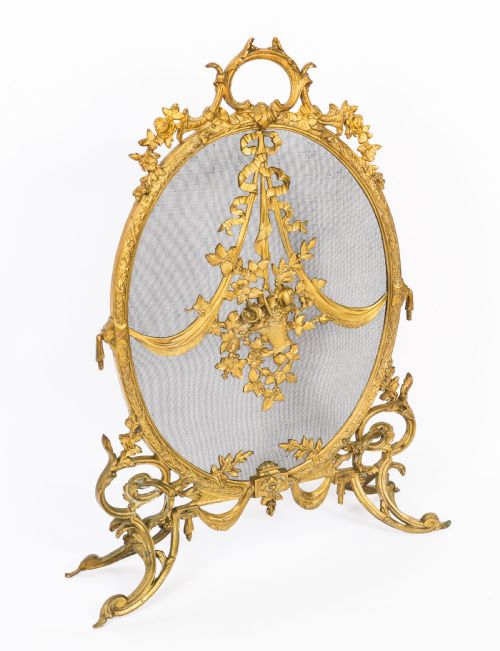
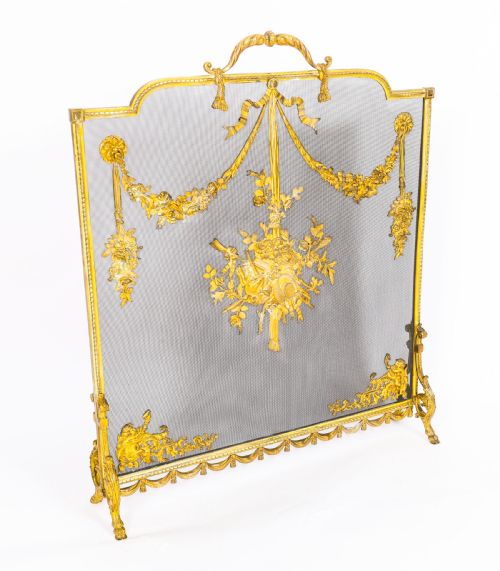
Makers and workshops produced these items in forms such as fire screens, extending fenders, and spark screens. The construction frequently incorporates cast brass, gilt bronze, and ormolu.
How they were made
Makers utilised brass and bronze, shaping the metal through casting, piercing, and hammering. Gilt bronze and ormolu finishes provided a bright, reflective surface suited to formal reception rooms.
Wire mesh and fine metal webbing formed the central protective panels of many screens. These meshes allowed heat to radiate while stopping sparks from escaping the hearth.
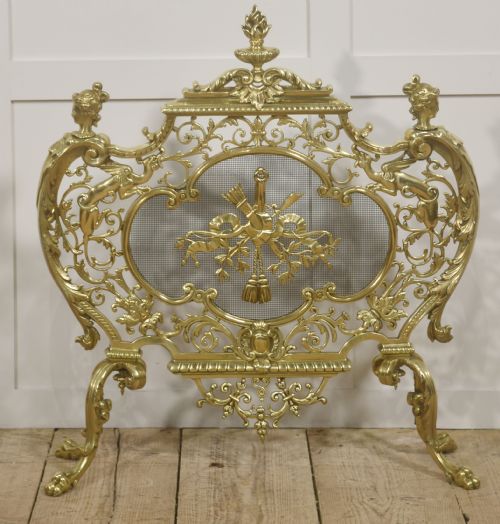
Hinges and folding mechanisms allowed certain designs, particularly the peacock tail configurations, to expand or contract. Cast frames incorporated detailed scrolls, musical trophies, and floral motifs.
Dolphins swim across the mesh of at least one nineteenth-century screen, proving that even sparks need marine escort.
What varies in quality
The crispness of the casting defines the distinction between standard production and superior examples. Finer screens exhibit deeply chased details in the gilt bronze or brass, with sharply rendered motifs.
The weight and stability of the frame indicate the standard of manufacture. Thicker gauge brass and secure, integrated mesh panels provide durability that lighter stamped alternatives lack.
E F Caldwell New York
The French Brass Fireguard Glossary
- Ormolu
- Gilded bronze, where a layer of gold amalgam is applied to a bronze base. This technique creates a rich, durable golden finish characteristic of fine French metalwork.
- Rococo Revival
- A nineteenth-century stylistic movement reviving the asymmetric scrolls, curves, and naturalistic ornamentation of the eighteenth-century French style. It dominates many fire screen designs.
- Fire screen
- A decorative panel placed in front of a fireplace opening when the hearth is not in use. They block drafts and conceal the empty grate.
- Gilt bronze
- Copper alloy coated with a thin layer of gold. It provides a lustrous appearance that resists tarnishing.
French Brass Fireguard: Frequently Asked Questions
How do I use a french brass fireguard?
Place the guard directly in front of the fireplace opening to catch flying sparks when a fire burns in the grate.
Folding or expanding versions adjust easily to fit different hearth widths and fold away when the fireplace is active.
What periods do these fireguards come from?
The pieces originate primarily from the nineteenth century, extending into the early twentieth century.
Designs reflect historical revivals such as Rococo, Louis XIV, and Louis XVI styles popular during those eras.
How do I clean a brass fire screen?
Dust the metal gently with a soft dry cloth to prevent the accumulation of soot and grime.
Avoid harsh commercial metal cleaners that might strip historic gilding or patination from the brass and bronze surfaces.