
Gold Hall Table
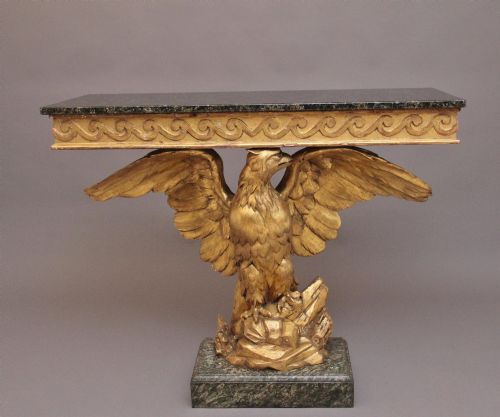
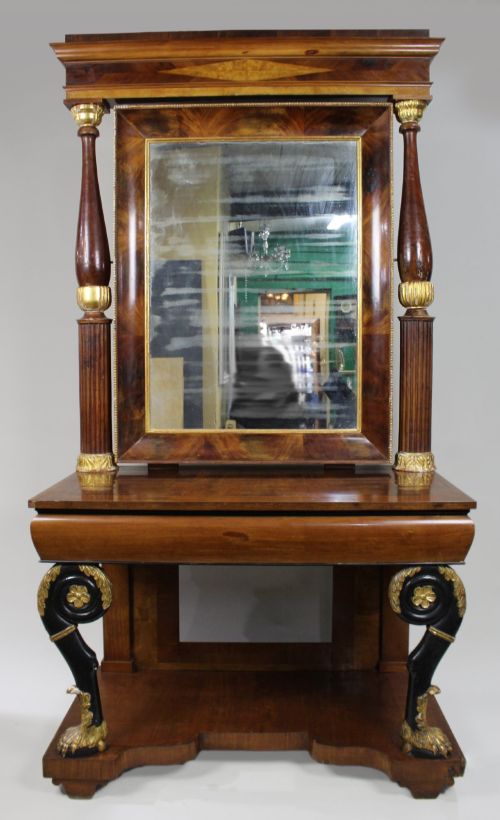
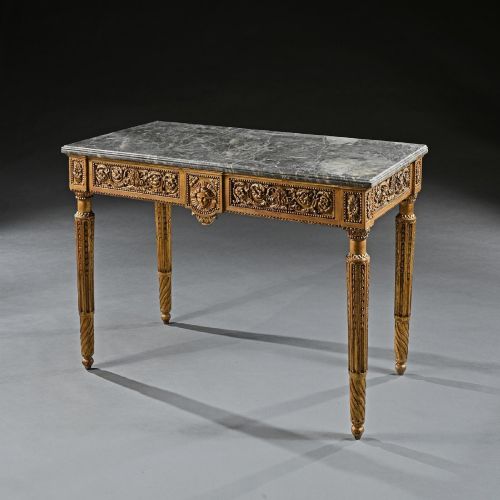
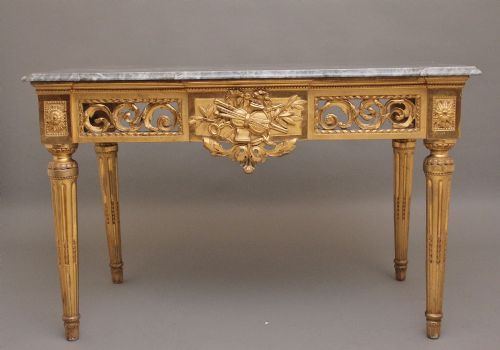
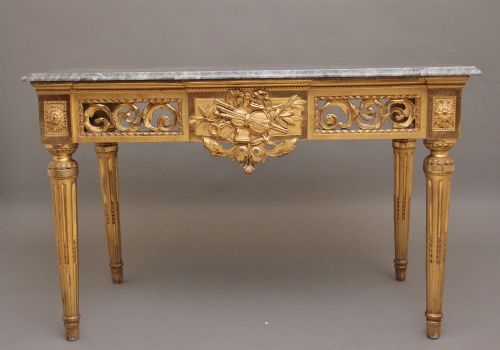
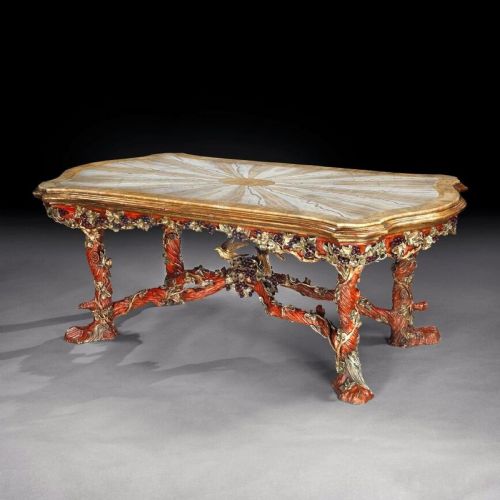
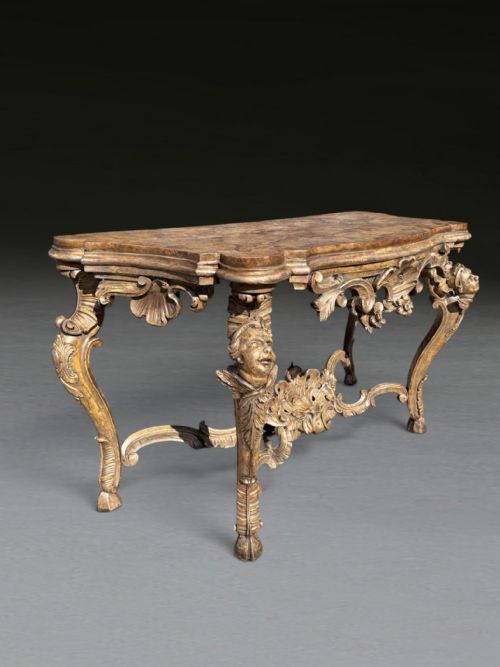
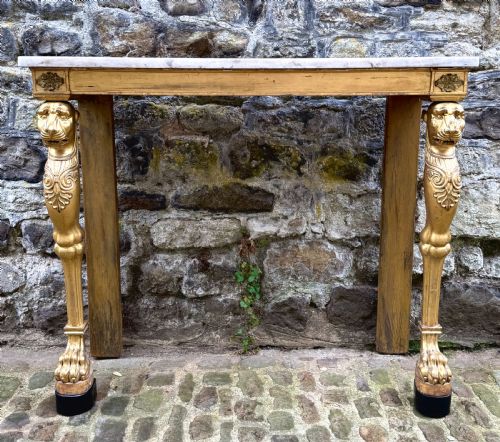
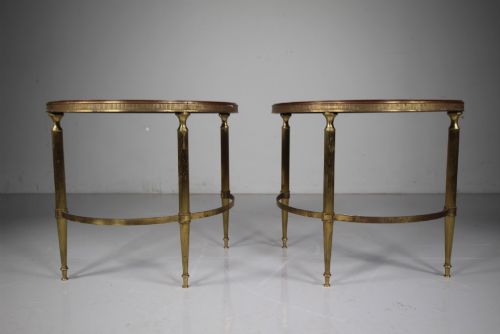
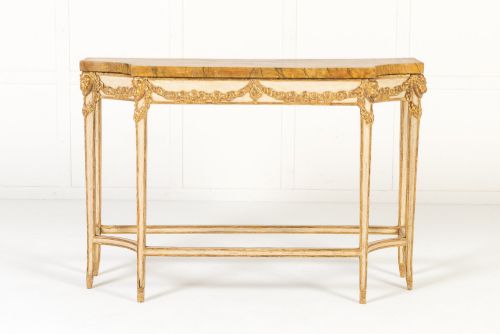
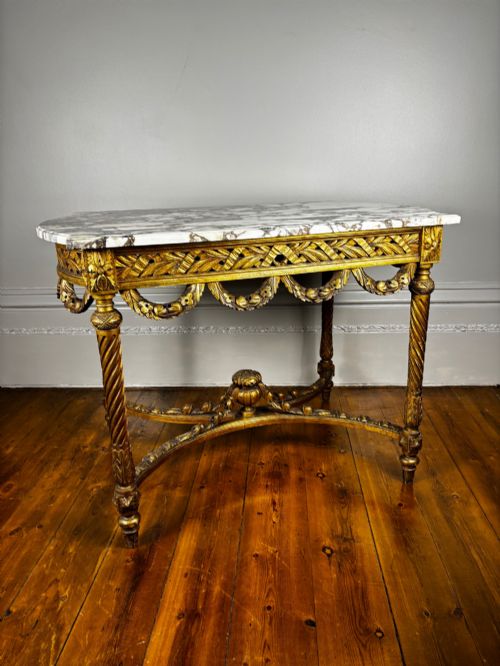
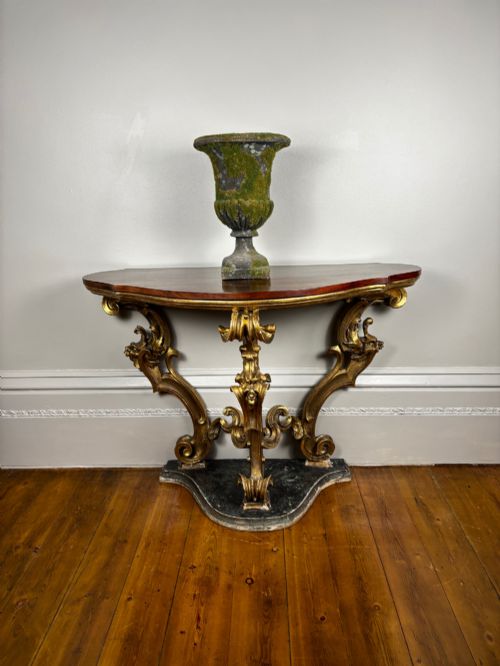
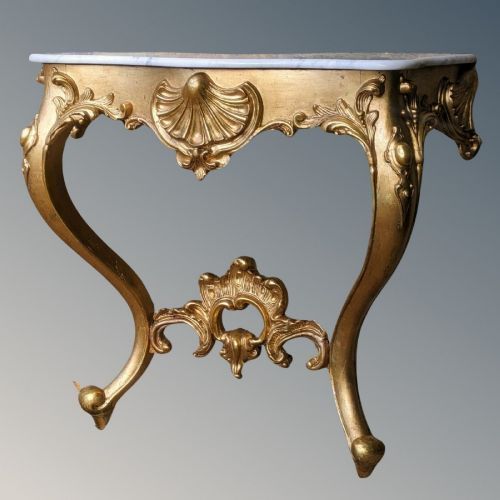
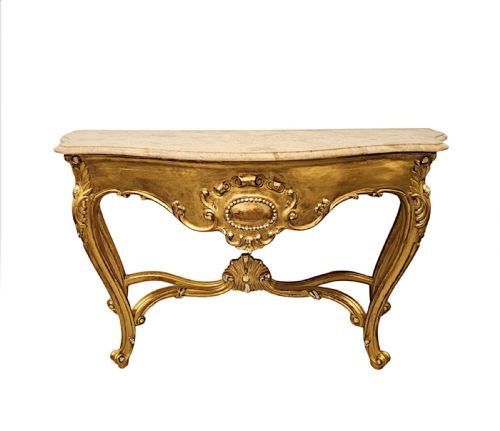
When you search for a gold hall table, you are looking at substantial giltwood and marble console tables designed for grand entryways.
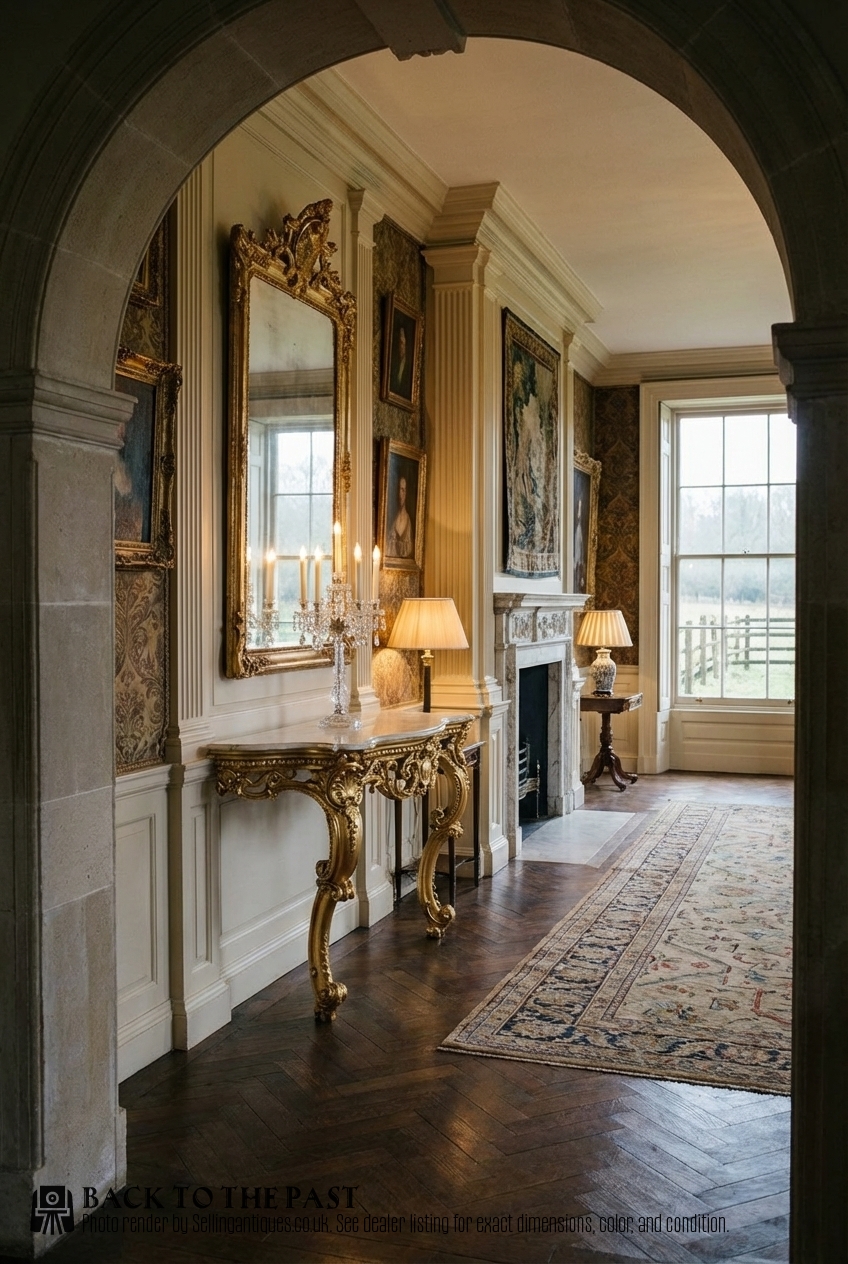
Gold Hall Table
A gold hall table typically takes the form of a console table, centre table, or side table designed to anchor an entrance space. The versions you meet most frequently on this page belong to the eighteenth and nineteenth centuries, alongside early twentieth-century interpretations.
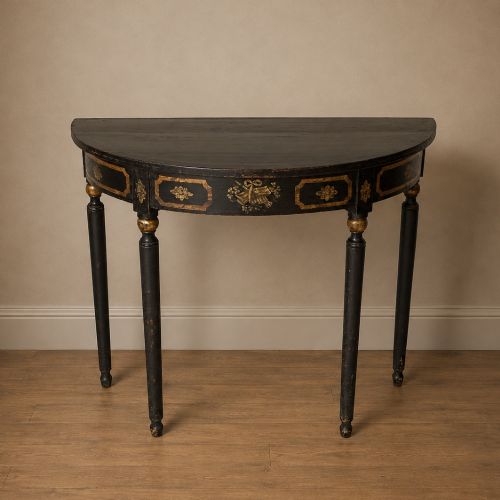
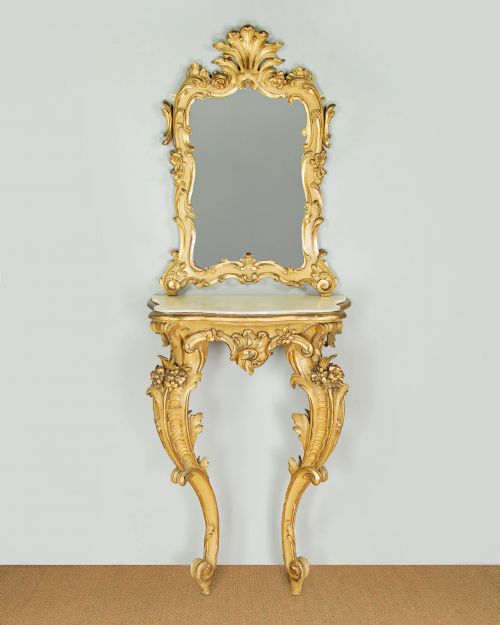
Many examples are paired with matching pier mirrors, extending the visual reach of the hallway. Forms range from straight-fronted Italian baroque tables to demi-lune shapes and serpentine outlines.
Origins stretch across Italy, France, Sweden, and England, bringing varied regional interpretations to classical and revivalist designs.
How they were made
Carved gesso and timber form the structural base for extensive application of gold leaf, silver gilt, or liquid paint finishes. Artisans built up intricate relief work on giltwood frames to catch the light in dimly lit corridors.
Tops consist predominantly of heavy slab marble, including white Carrara, breccia, onyx, and rouge varieties, fitted precisely to the wooden framework. Certain pieces employ mahogany, oak, or ebonised wood combined with parcel-gilt details.
Listings feature eighteenth and nineteenth century giltwood alongside early twentieth century marble top tables.
What varies in quality
The depth and crispness of the hand-carved wooden ornament dictate the primary tier of craftsmanship. Deeply undercut foliage, animal supports, and sculptural figures separate ambitious artisanal work from simpler production.
The choice of stone top and the integrity of the original gilding surface determine the overall standing of an individual table. Weighty breccia and figured marble slabs reflect higher original cost than standard secondary timber replacements.
Amleto Bertoni·Harry Atkin
The Gold Hall Table Glossary
- Giltwood
- Wood that has been coated with gold leaf or gold paint. This technique creates a luminous surface finish characteristic of neoclassical and baroque furniture.
- Console table
- A table designed to stand against a wall, frequently fixed with brackets. These pieces provide a narrow surface suitable for entrance halls and reception rooms.
- Demi-lune
- A half-moon shape used for tables and sideboards. This curved profile allows the furniture to fit snugly against a flat wall while occupying minimal floor depth.
- Parcel gilt
- A decoration method where only specific portions of an object are gilded while the rest shows painted or natural wood. It highlights particular carved details like mouldings and feet.
- Breccia marble
- A type of marble composed of broken rock fragments embedded in a fine-grained matrix. It provides a highly patterned, multicoloured surface to table tops.
Gold Hall Table: Frequently Asked Questions
Where did people place these tables?
These tables stood primarily in grand entrance halls, vestibules, and long galleries against interior walls. Their narrow profiles allowed them to sit in passage spaces without obstructing movement.
Often positioned beneath a matching wall mirror, they served as a surface for calling cards, lighting, and decorative ornaments upon entering a residence.
How do I distinguish eighteenth-century pieces from later revivals?
Examination of the timber framing, tool marks, and the composition of the gesso layer reveals the age of the construction. Eighteenth-century examples show hand- chiselled joints and organic wear patterns distinct from later nineteenth-century revival pieces.
Stylistic proportions also shift, with revival items frequently adopting heavier, more theatrical baroque or rococo ornamentation than their earlier counterparts.
Are marble tops original to the tables?
Most antique console tables were paired with stone tops from the outset, particularly Italian and French specimens designed to carry heavy marble slabs. The thickness and edge profiling usually match the period of the base frame.
Replacements occur due to the fragile nature of stone, so inspecting the seating joint between the marble and the upper gesso moulding is helpful.
How do I care for a giltwood surface?
Giltwood requires dry dusting with a very soft brush to prevent microscopic abrasion to the delicate gold leaf layer. Moisture and chemical cleaners damage the historic surface permanently.
Keeping the table away from direct sunlight and rapid temperature shifts protects the underlying gesso and wood from cracking or lifting.