
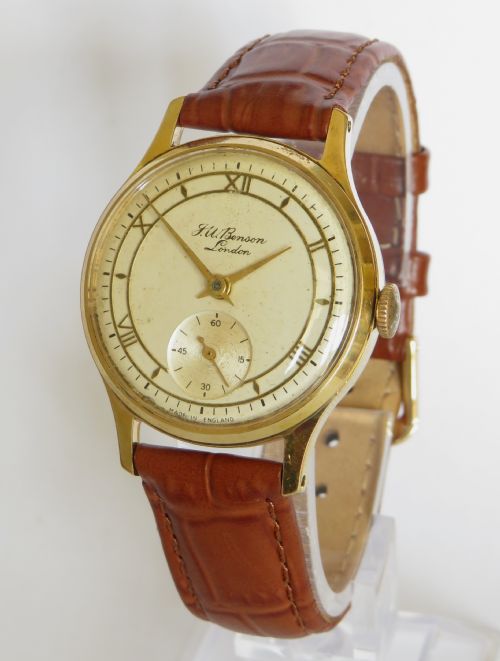
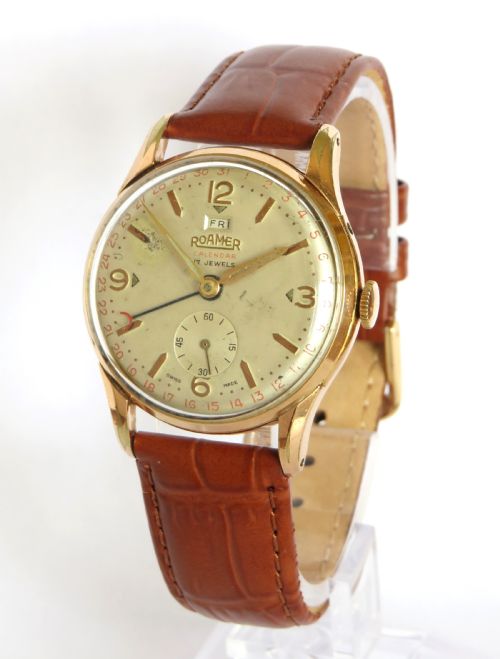
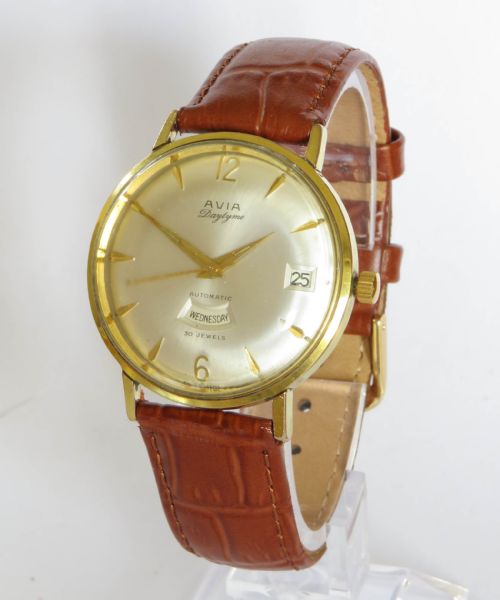
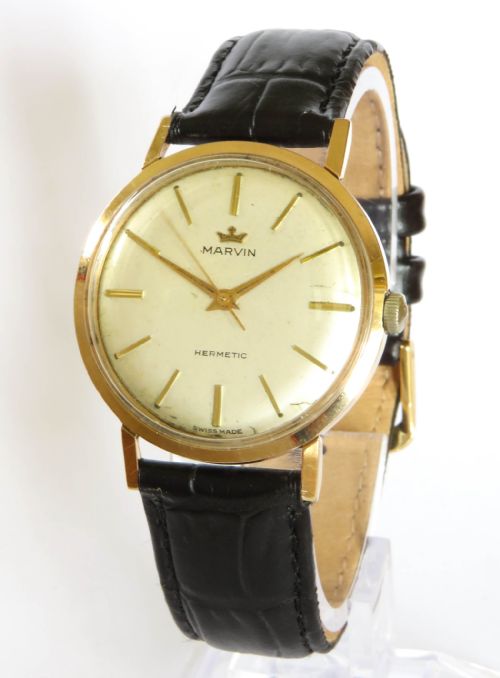
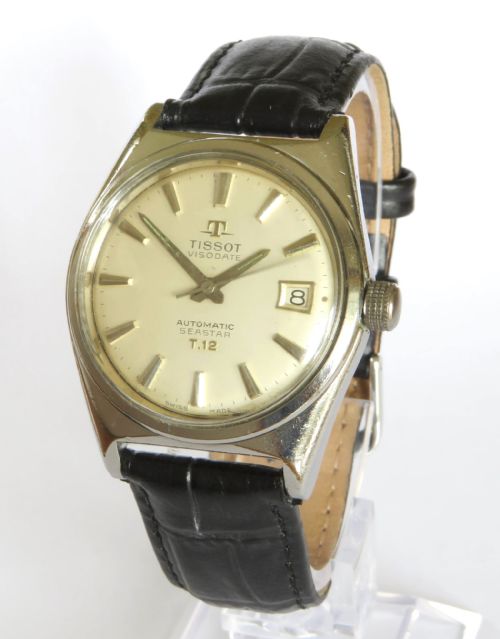
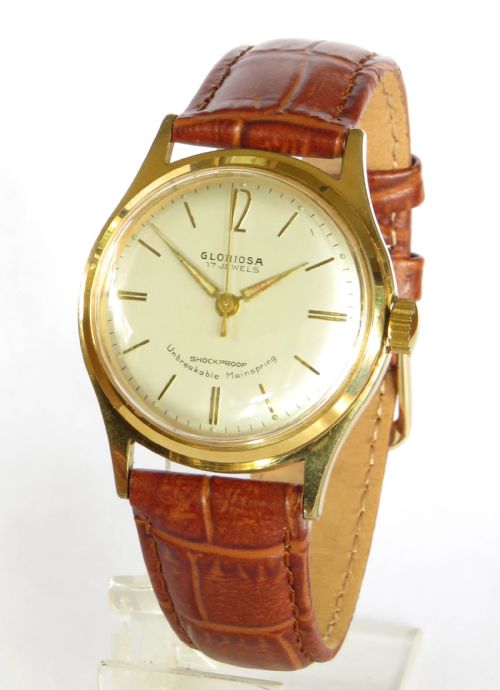
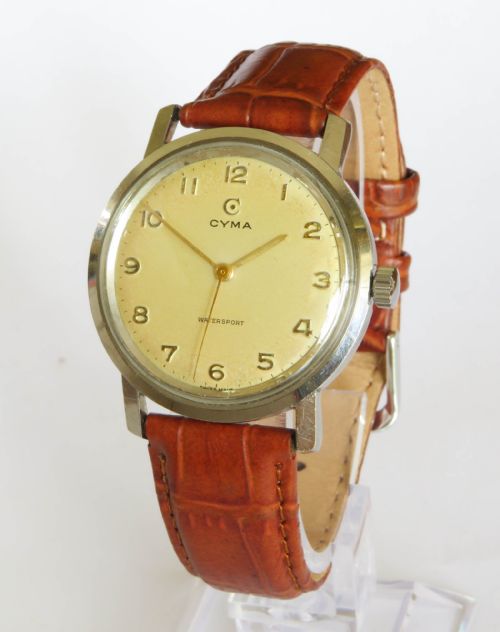
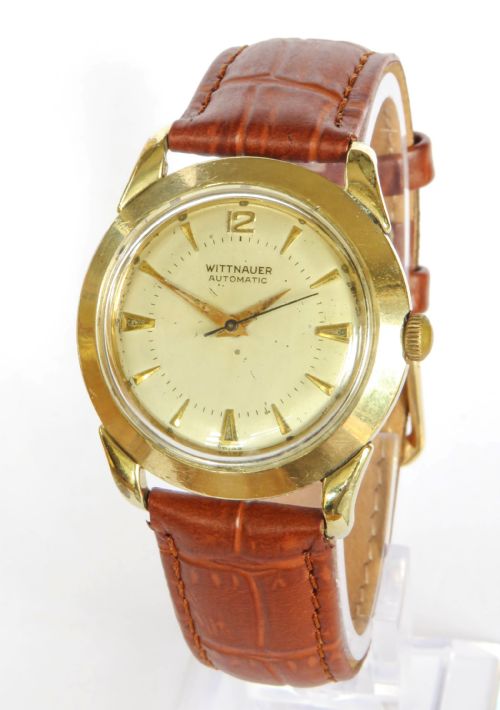
Gold Gents Wristwatch
A gold gents wristwatch brings mid-century proportion and mechanical honesty to the wrist.
Gold Gents Wristwatch
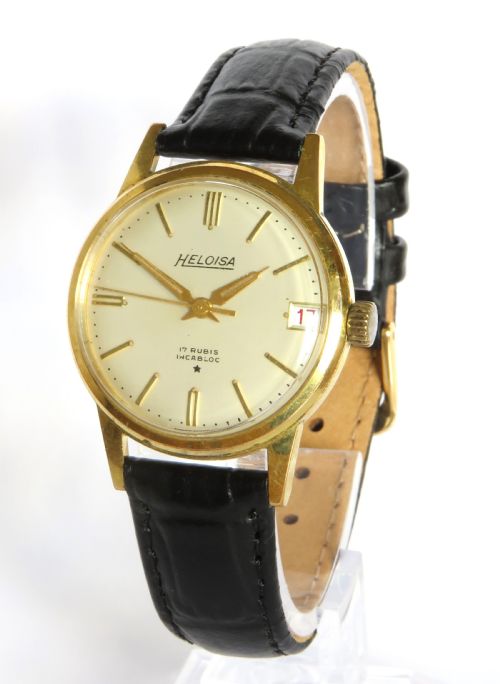
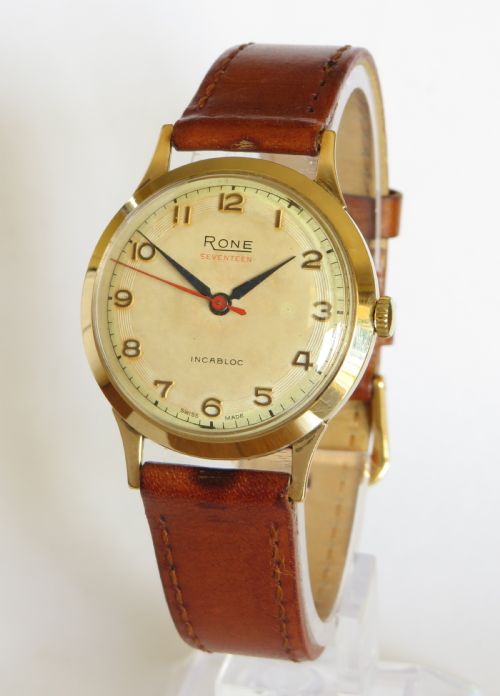
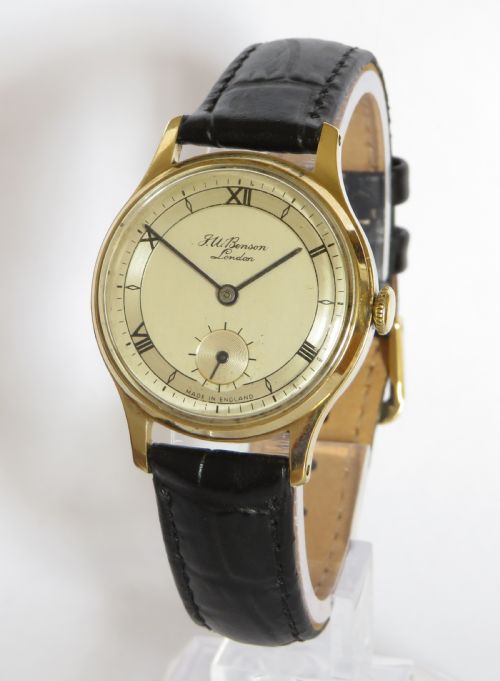
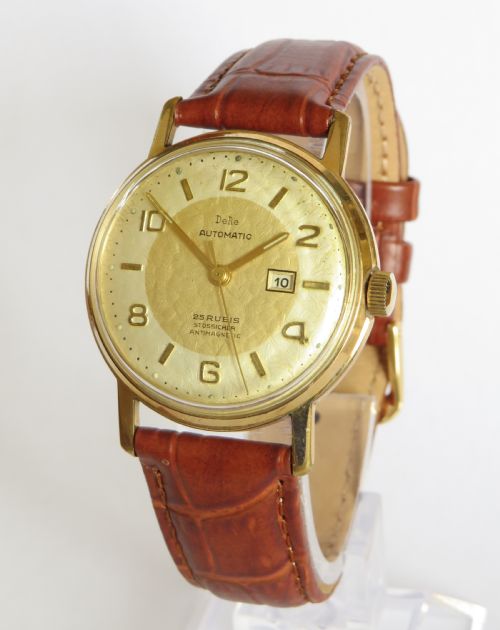
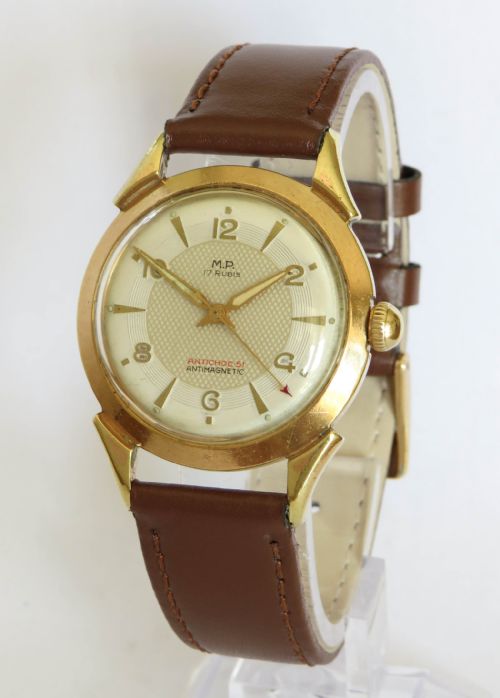
When you search for a gold gents wristwatch, you encounter decades of horological design spanning the Art Deco period through to the mid-century modern era. These items encompass mechanical and automatic timepieces produced by Swiss, English, and American makers during the 1930s, 1940s, 1950s, and 1960s. The selection on this page relies heavily upon mid-century classics and 1940s dress models housed in precious or plated metal cases.
The prevailing forms range from round waterproof types with central sweep seconds to rectangular and tonneau shapes influenced by Art Deco aesthetics. Many carry signed dials from historic retailers or established manufactures, reflecting a time when watches were built for longevity and personal repair. You find pieces paired with original leather straps or later replacements, maintaining the traditional proportions typical of vintage menswear.
Materials and construction
Cases are formed from solid 9ct, 14ct, or 18ct gold, alongside rolled gold, gold filled, and gold plated metal over base metals like stainless steel. Dial protection relies on glass or acrylic crystals, while the straps utilise leather secured by traditional pin buckles.
Movements are mechanical, requiring manual winding, or automatic with weighted rotors, containing jewelled pivots made of synthetic ruby. These internal calibres drive hour, minute, and sometimes subsidiary second hands or calendar functions within sealed metal housings.
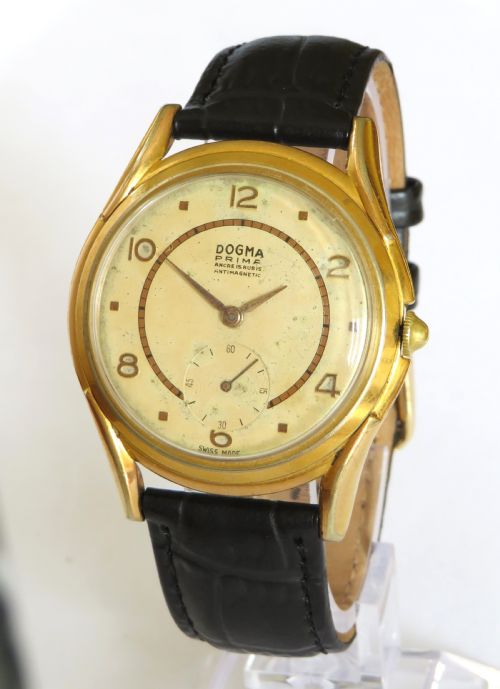
Some of these vintage dials have aged with a warm, freckled patina that looks remarkably like powdered cinnamon.
Differentiating quality in vintage timepieces
The calibre of a movement and the complexity of its internal mechanics set the baseline for value, with high-jewel count automatic mechanisms sitting above basic manual-wind assemblies. Solid gold cases command greater regard than plated or filled alternatives due to the intrinsic value and durability of the precious metal.
Originality of the dial and the sharpness of the case geometry preserve the integrity of the piece over time. Unpolished cases with defined edges and untouched dials demonstrate superior preservation compared to those altered by heavy restoration or environmental wear.
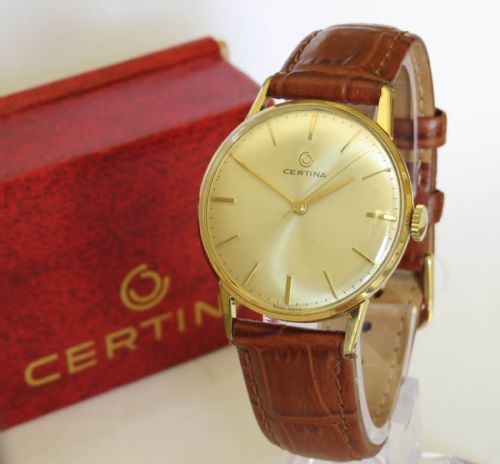
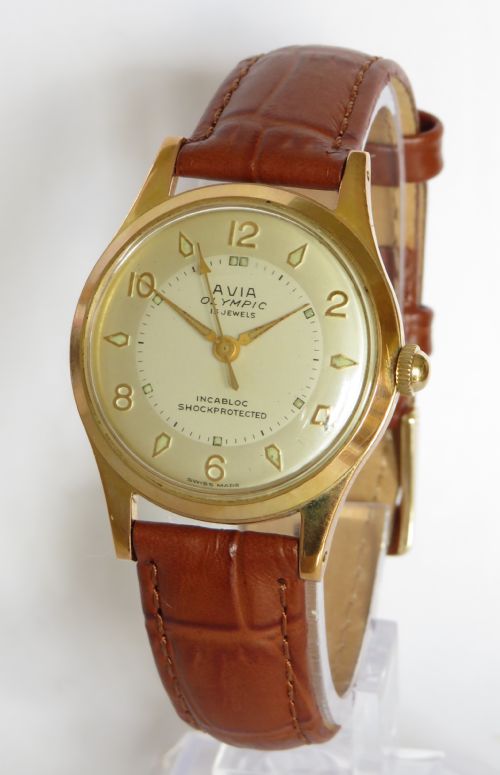
Heloisa·Rone·Smiths·DeRe·Roamer·Avia·Marvin·Tissot·Gloriosa·Cyma·Wittnauer·Dogma Prima·Certina·Zenith·Baume·Ensign·Lanco·Eterna-Matic·Garrard·Omega·Felca·Mappin·Consul·Longines·Aster
The Gold Gents Wristwatch Glossary
- Calibre
- The internal movement or mechanism of a watch, designated by the manufacturer by a specific number or name.
- Gold Filled
- A thick layer of gold mechanically bonded to a base metal core, offering greater durability than standard plating.
- Automatic
- A self-winding mechanical movement that uses the natural motion of the wearer's wrist to power the mainspring.
- Art Deco
- A design style popular from the 1920s to the 1940s characterised by geometric shapes, clean lines, and stylised motifs.
- Jewels
- Synthetic rubies or sapphires used as low-friction bearings for the pivots of the gear train in a watch movement.
Gold Gents Wristwatch: Frequently Asked Questions
How do I wind a vintage watch?
Turn the crown clockwise between your thumb and forefinger until you feel gentle resistance. Stop immediately to avoid damaging the mainspring.
Perform this action at roughly the same time each day to maintain consistent tension and accurate timekeeping.
Are these vintage watches waterproof?
Early wristwatches lacked modern gaskets and screw-down crowns, making them vulnerable to moisture ingress. Treat even hermetic or water-resistant historic models as splash-proof at best.
Avoid wearing them while swimming, showering, or washing hands to protect the movement and dial from humidity.
What is the difference between rolled gold and solid gold?
Solid gold cases consist entirely of precious metal alloy throughout their thickness. Rolled gold and gold filled cases bond a sheet of solid gold to a base metal substrate using heat and pressure.
Rolled gold provides the visual appearance of solid gold with a thicker layer than standard electroplating, though it can wear through at sharp edges over decades of use.
How accurate are mechanical wristwatches from this era?
Vintage mechanical movements generally gain or lose a minute or two per day depending on their condition and regulation. They do not match the quartz precision of modern timekeeping.
Regular servicing by a watchmaker helps keep the internal lubricants fresh and maintains the best possible timekeeping performance.
Can I wear a vintage watch every day?
Many people wear mid-century timepieces daily, provided they are treated with care and kept away from strong magnetic fields and water. Rotation with other pieces reduces daily wear on vintage components.
Leather straps are easily replaced, allowing you to match the watch to different outfits while preserving the original case and dial.