




Gold Framed Bird Print
A gold framed bird print brings centuries of natural history study into a room through hand-coloured plates and watercolours housed in gilt wood.
Gold Framed Bird Print
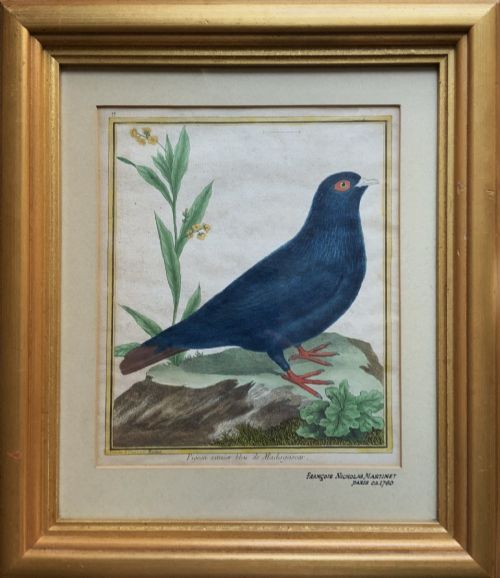
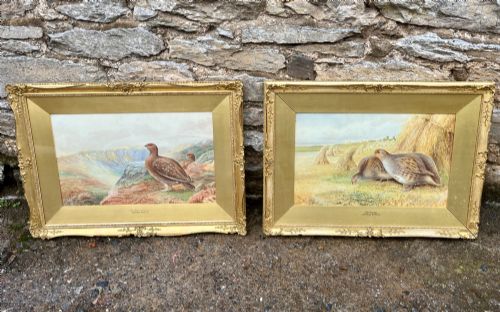
A gold framed bird print brings together ornithological illustration and period framing, presenting subjects from pigeons to parrots in gilt surrounds. These works range from hand-coloured copperplate engravings produced in the eighteenth century to nineteenth-century lithographs and watercolours.
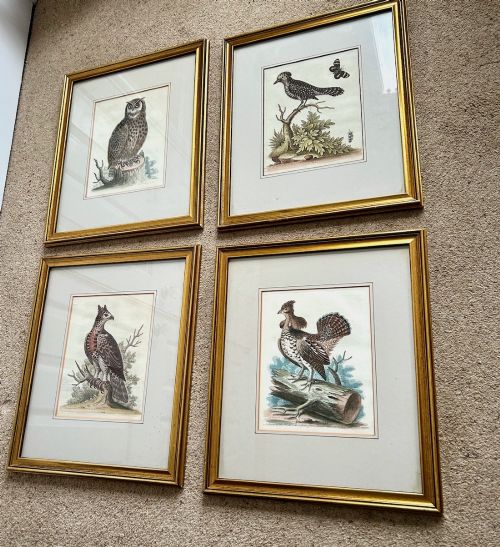
Buyers encounter various formats spanning single sheets, pairs, and larger sets originating from Georgian, Regency, and Victorian periods. The framing typically utilises giltwood, gesso, or gold leaf to complement the fine line work of natural history plates.
Materials and construction
The primary visual elements rely on paper supports carrying engravings, lithographs, or original watercolours enhanced by hand-colouring. Printers used copperplates or lithographic stones before artists applied pigment by hand to delineate plumage and botanical details.
Frames are constructed from wood finished with gilt, gold leaf, or giltwood mouldings designed to protect the fragile paper beneath glass. These mounts often include sight mats or slips that separate the delicate engraving from the glazing.
Assessing visual quality and preservation
Quality rests heavily on the crispness of the original plate impression and the fidelity of the hand-colouring, which should remain vibrant without fading or chemical alteration of the paper. Early impressions from makers such as George Edwards or François-Nicolas Martinet show superior line definition compared to later reprints.
The integrity of the frame also dictates overall standing, with original period giltwood mouldings holding greater weight than later replacements. Preservation of the paper sheet, free from heavy foxing or damp damage, preserves the scholarly and aesthetic value of the piece.
François-Nicolas Martinet·George Rankin·George Edwards·Arthur Wardle·William Swainson·Edward Lear
The Gold Framed Bird Print Glossary
- Engraving
- A printmaking technique where an artist cuts lines into a metal plate to hold ink. This method produces the fine, precise detail seen in early ornithological plates.
- Lithograph
- A planographic printing process using stone or metal plates to reproduce images. Coloured versions often received subsequent hand-tinting to enhance the bird's feathers.
- Giltwood
- Wood that has been coated with gold leaf, gold dust, or a metallic substitute. It provides the traditional reflective border characteristic of these frames.
Gold Framed Bird Print: Frequently Asked Questions
How do I date a bird print?
Dating relies on the printing technique, paper characteristics, and stylistic conventions of the period. Engravings from the eighteenth century differ noticeably in plate mark and paper texture from nineteenth-century lithographs.
Typography, margins, and watermarks embedded within the paper further assist in narrowing the timeframe of production.
Are these prints hand coloured?
Many historical ornithological plates feature monochrome printing that was subsequently finished by hand with watercolour or gouache. Artists applied these pigments meticulously to accurately render the plumage of species such as parrots and tragopans.
Close inspection under magnification often reveals brushstrokes over the printed lines, confirming the manual application of colour.
How should I hang framed bird prints?
These works require placement away from direct sunlight to prevent the fading of delicate watercolours and tinted paper. Stable indoor humidity protects both the paper substrate and the integrity of the giltwood frame.
Grouping sets symmetrically or hanging them in pairs maintains the balance traditional to natural history displays.
What is the difference between an engraving and a lithograph?
An engraving is created by cutting lines into a hard surface like copper, resulting in sharp, raised ink lines on the paper. A lithograph uses a chemical process on stone or metal, producing smoother tonal gradations.
Engravings typically display a distinct plate indentation around the image border, whereas lithographs lack this deep impression.