
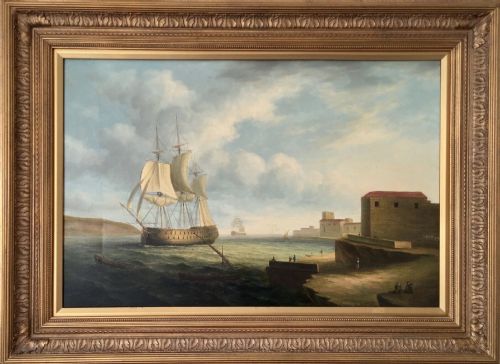



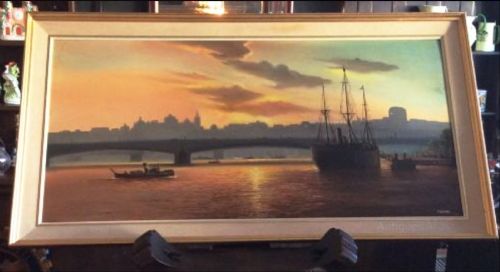


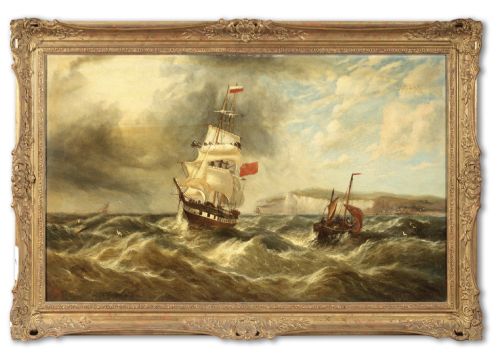

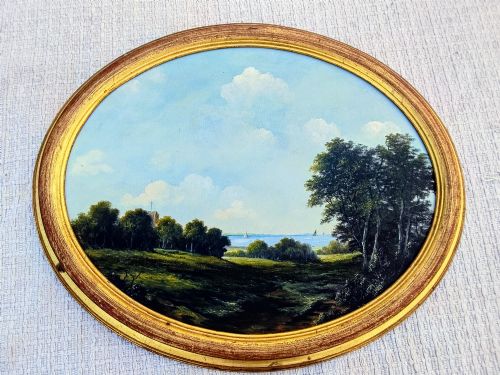
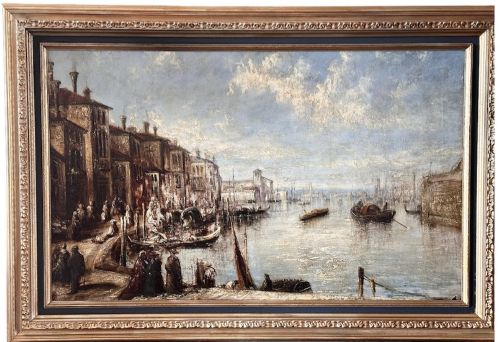

Gold Frame Seascape
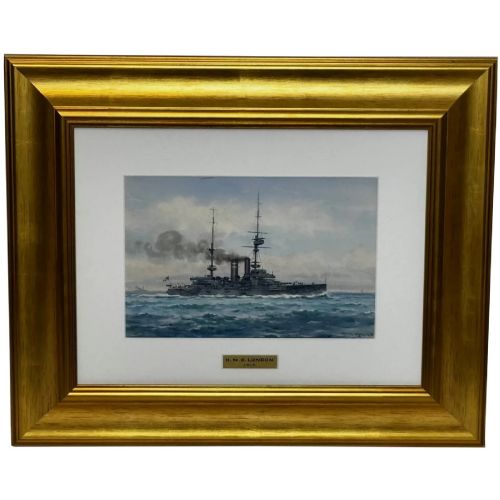
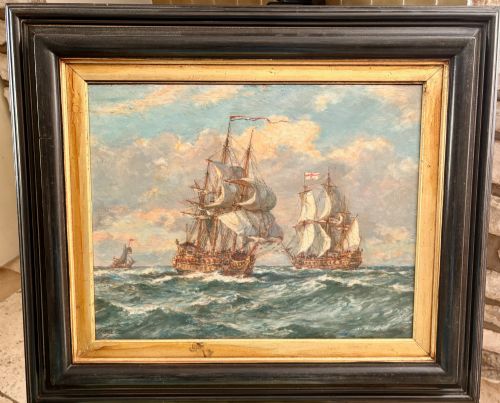
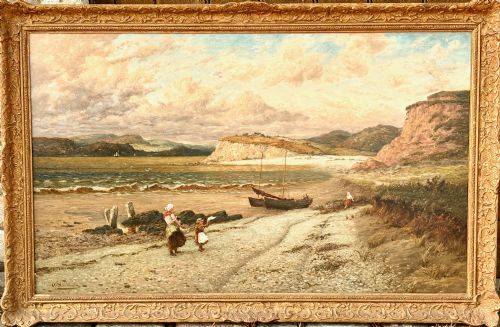
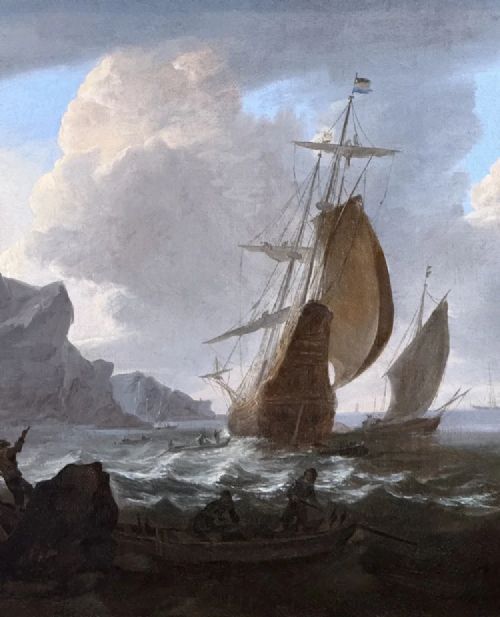
A gold frame seascape captures coastal waters, harbours and ships within gilt surrounds.
Gold Frame Seascape
A gold frame seascape centres on maritime subjects, coastal views and harbour scenes framed in gilt wood or gold leaf. Buyers exploring a gold frame seascape will encounter oil paintings, watercolours and oil on canvas works produced across the nineteenth and twentieth centuries.
The selections span Victorian marine art, Edwardian coastal depictions and post-impressionist interpretations of the sea. Many examples record specific locations such as Venice, St Ives, Valletta Harbour and the Thames at Waterloo Bridge alongside anonymous views of rough seas and merchant shipping.
Works on this page range from small oval oil views to huge nineteenth-century canvases and French trumeau mirrors inset with oil paintings of galleons. The common thread uniting these pieces is the combination of a marine or coastal subject with a gilt frame.
What Varies in Quality
Quality in a gold frame seascape rests upon the handling of light, movement and maritime detail by the artist. Stronger works demonstrate accomplished brushwork in turbulent water, rigging and coastal architecture, whereas simpler pieces offer more formulaic interpretations of waves and harbours.
The craftsmanship of the frame also distinguishes the piece, with hand-carved giltwood surrounds showing greater depth and finish than plain moulded frames. The integration between the painting and its gold frame influences the overall integrity of the artwork.
Several paintings capture small sailing boats braving surprisingly choppy waters right outside busy harbour walls.
Eugène-Louis Gillot·William McAlpine·William Banks Fortescue·John Rose Miles·James Kay RSW·Frank Watson Wood·Bernard Gribble·Bonaventura Peeters·Francis Moltino·Bernard Benedict Hemy·Willem Bos·Charles Euphraisie Kuasseg·John Wilson Carmichael·Erich Mercker·Thomas Hodgson Liddell·William Henry Williamson·John Holland
The Gold Frame Seascape Glossary
- Giltwood
- Wood carved and coated with gold leaf or a gold-coloured metallic finish. It forms the decorative border characteristic of these frames.
- Oil on Canvas
- Pigment mixed with drying oil applied to stretched canvas fabric. This medium allows for rich texture and deep colouration in marine scenes.
- Maritime Art
- Depictions of the sea, ships, coastal views and naval engagements. This genre forms the core subject matter of these paintings.
- Watercolour
- Paint consisting of water-soluble pigment suspended in a water-based solution. It produces translucent effects frequently seen in nineteenth-century coastal views.
Gold Frame Seascape: Frequently Asked Questions
Are the frames original to the paintings?
Many pieces retain gilt frames appropriate to their period, including Victorian giltwood surrounds and later gilt frames. Some mirrors and paintings are paired together as decorative interior fixtures.
Inspect the fit and wear of the frame alongside the canvas to understand its history.
Where do these coastal scenes originate?
The works record British coastal towns, European ports and international waters. Locations include Venetian canals, St Ives, Malta, the Thames and various North Sea harbours.
Artists frequently documented specific working vessels, naval ships and merchant barques in these settings.
How should I hang a large maritime oil painting?
Heavy oil paintings in gilt frames require secure wall fixings suited to their substantial weight. Ensure the wire or D-rings on the back are supported by appropriate wall anchors.
Position the work away from direct sunlight to protect both the oil pigments and the gilt frame finish.