


Gold Frame Dutch Landscape
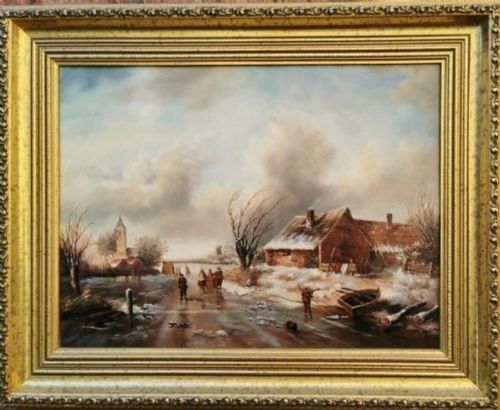
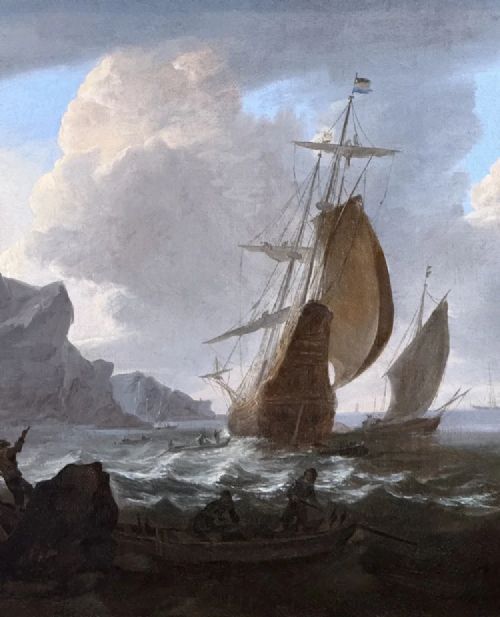
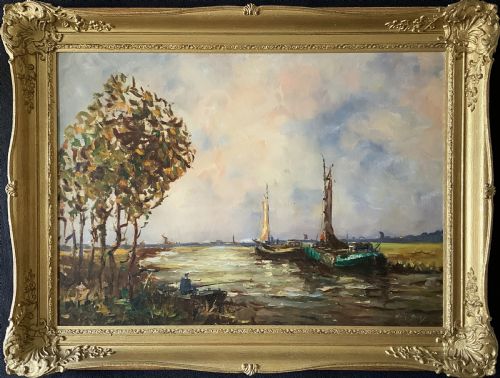
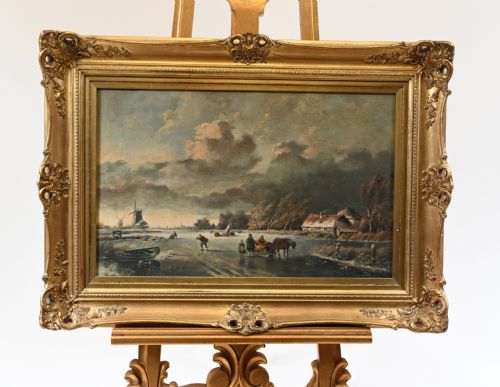
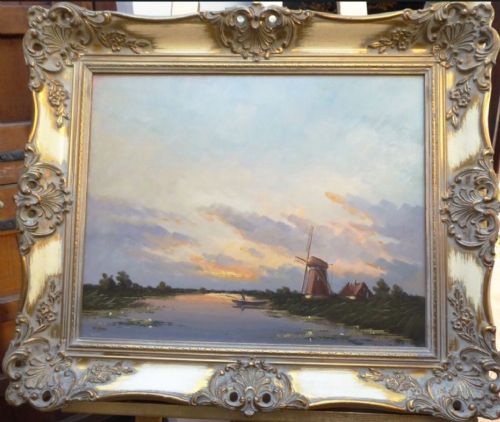
When you search for a gold frame dutch landscape, you find works capturing frozen canals, windmills, and maritime scenes set in gilded wood.
Gold Frame Dutch Landscape
A gold frame dutch landscape brings traditional northern European scenery into a room, spanning centuries of artistic tradition.
You will frequently encounter nineteenth-century works alongside pieces from the seventeenth-century golden age and mid-twentieth-century interpretations.
Subjects range from frozen winter lakes and bustling townscapes to quiet maritime shipping scenes along canals and coasts.
Distinguishing Quality
Quality rests upon the skill of the brushwork and the depth of atmospheric perspective achieved in the composition.
The craftsmanship of the giltwood frame, particularly the intricacy of the gesso moulding, adds significantly to the overall merit.
The listings here span multiple centuries, ranging from seventeenth-century golden age canvases to mid-twentieth-century oil paintings.
Bonaventura Peeters·Johannes Lingelbach·Willem Bos·Pieter Cornelis Dommersen·Cornelis Van Poelenburgh·Adrian Van Porten·Willem Anton Alexander Knip·Johannes Philippus Galjaard·Abraham Hulk Snr·James de Rijk·Hendrik Willebrord Jansen·William Raymond Dommersen·Jan Evert Morel·Job de Vogel·Gudrun Sibbons·Pieter Cornelis Steenhouwer·Constant Ludovic Artz·Alexis De Leeuw·Karel Frans Philippeau·Ludwig Hermann·Louis Smets·Frank Myers Boggs
The Gold Frame Dutch Landscape Glossary
- Giltwood
- Wood carved and covered with a thin layer of gold leaf. This material provides the characteristic metallic sheen on traditional picture frames.
- Gesso
- A plaster mixture applied to wood frames as a base for gilding. It allows craftsmen to carve crisp decorative details before applying gold leaf.
- Oil on Canvas
- Pigment mixed with drying oil applied to stretched fabric. This medium enabled artists to achieve rich colours and subtle tonal gradations.
- Dutch School
- A collective term for artists working in the Netherlands from the seventeenth century onward. It encompasses shared stylistic traits in landscape and marine painting.
Gold Frame Dutch Landscape: Frequently Asked Questions
What subjects appear in these paintings?
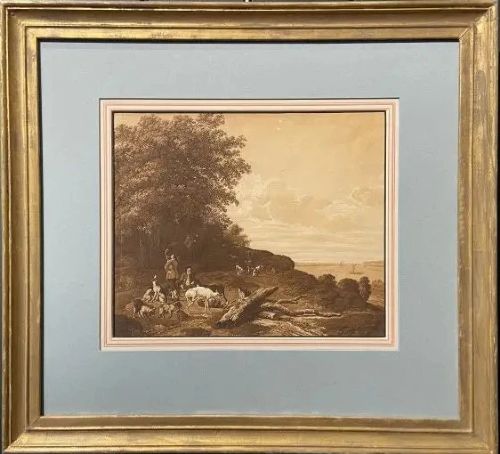
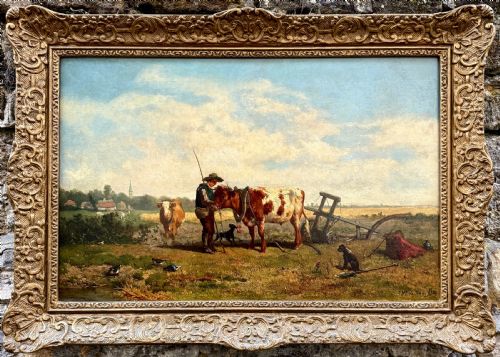
The compositions depict frozen winter canals, windmills, sheep grazing, rural tracks, and coastal shipping vessels.
Many works focus on everyday townscapes and maritime scenes set along Dutch waterways.
How should I display a gilt frame?
Hang the artwork away from direct sunlight to protect both the oil pigments and the delicate gold leaf on the wood.
Ensure placement avoids areas of high humidity or rapid temperature changes that could affect the canvas and gesso.
How do I identify a nineteenth-century piece?
Nineteenth-century works often reflect the romanticism and realism styles popular during that era, depicting figures on ice or coastal shores.
Examination of the canvas backing, stretcher bars, and framing techniques frequently reveals clues regarding the age of the item.
What is a canalscape?
A canalscape is a specific genre of painting focusing on inland waterways, boats, and the surrounding Dutch architecture.
These scenes highlight the historic relationship between the Dutch landscape and commercial or domestic water transport.