



Vintage Windmill Scene Art
Vintage windmill scene art brings together historic mills and expansive skies, offering a quiet pastoral focal point for traditional interiors.
Vintage Windmill Scene Art
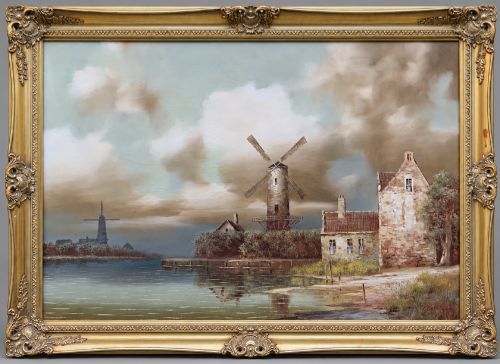
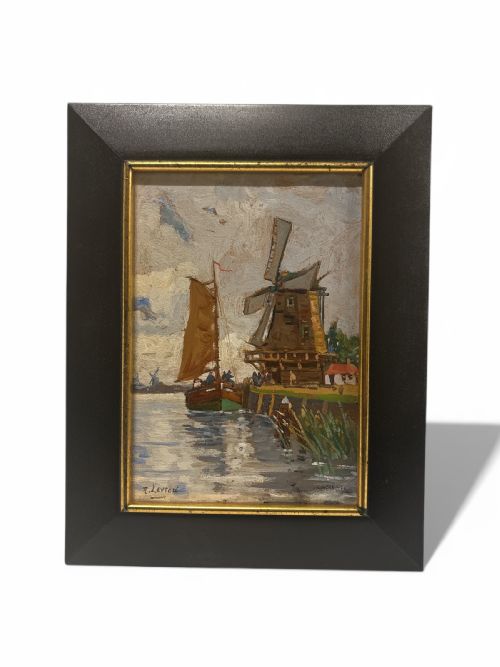
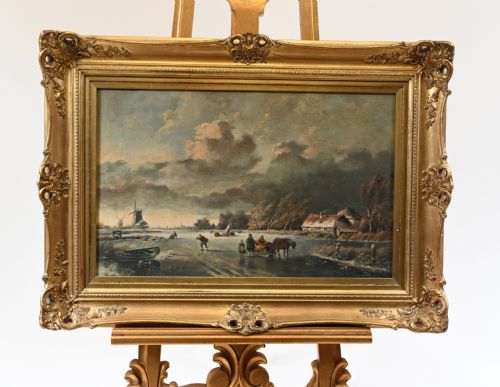
Vintage windmill scene art captures historic rural structures across canvas, paper, and glass, reflecting centuries of agricultural and coastal life. When searching for vintage windmill scene art, buyers encounter varied interpretations ranging from moody 19th-century river landscapes to mid-century naive depictions.
The pieces on this page span several distinct periods, including Victorian, Edwardian, and mid-century eras. Artists recorded these structures using oil paint, watercolour, and stained glass, often placing them within Dutch waterways, snowy scenes, or coastal views.
How these pieces were made
Makers utilised traditional mediums such as oil paint on canvas and delicate watercolours on paper to capture atmospheric light and changing weather. Several works incorporate rich oil paint layers on wooden panels or canvas, sometimes accented with gilt framing.
Techniques vary from the fine brushwork seen in Dutch realism and impressionist pieces to the simpler, direct application of naive school painting. Stained glass panels introduce an entirely different method, using painted glass to catch and refract natural daylight.
Vintage Windmill Scene Art Retail Price Guide 2026
Typical asking prices for vintage windmill scene art among the pieces listed under this phrase on Sellingantiques today, from the lower quarter to the upper quarter. They describe what is for sale here now, not the wider market.
Several artists clearly spent hours watching sails turn in the rain, ensuring every puddle and damp cloud is faithfully captured.
What varies in quality
Quality in these artworks rests primarily on the artist's ability to handle perspective, atmosphere, and the integration of the mill into its surrounding landscape. Stronger examples demonstrate confident brushwork and a balanced composition that anchors the heavy structure of the mill against open sky or water.
The choice of medium and the preservation of the surface also dictate the standing of a piece, with well-preserved oil paints and untouched watercolours commanding greater visual presence. Lesser works may rely on formulaic repetition without capturing the specific atmospheric conditions of the depicted region.
R Leyton·T Bergman·Thomas Bush Hardy·Ernest Uden·Charles Harmony Harrison·John D Walker·John Holland Snr
The Vintage Windmill Scene Art Glossary
- Oil on Canvas
- Pigment mixed with drying oil applied to stretched fabric. This medium allows for deep colour saturation and textured brushwork.
- Watercolour
- Pigment suspended in a water-based solution applied to paper. It creates transparent washes and luminous, delicate effects.
- Impressionist
- A style focusing on the visual impression of the moment, particularly shifting light and colour. Works in this style often use rapid, visible brushstrokes.
- Naive Art
- Art produced by a self-taught artist, typically characterised by a simple perspective and bright, unblended colours. These pieces offer a charming, unpretentious view of rural life.
- Dutch School
- A collective term for painting styles originating from the Netherlands, frequently featuring flat horizons, canals, and prominent windmills.
Vintage Windmill Scene Art: Frequently Asked Questions
Where were most windmill paintings created?
Many of the works originate from Dutch and British settings, reflecting the prevalence of drainage and grain mills in those regions.
Artists frequently painted local waterways, coastal marshes, and agricultural fields where windmills served as essential working landmarks.
How do I care for watercolour windmill art?
Watercolour paintings require protection from direct sunlight to prevent fading of the delicate pigments on paper.
Framing behind glass with acid-free mounts helps preserve the paper and keeps humidity away from the painted surface.
What is the difference between oil and watercolour versions?
Oil paintings on canvas offer heavier texture, deeper colour ranges, and robust surfaces that suit traditional wall hanging.
Watercolours provide a lighter, more translucent quality that captures misty skies and reflective water with subtle transparency.
How can I tell a 19th-century piece from a mid-century one?
Nineteenth-century works tend to use muted, naturalistic palettes with detailed realism, often focusing on moody atmospheric skies.
Mid-century pieces, particularly those from the naive or later decades, often employ bolder, simplified forms and brighter regional colouring.