

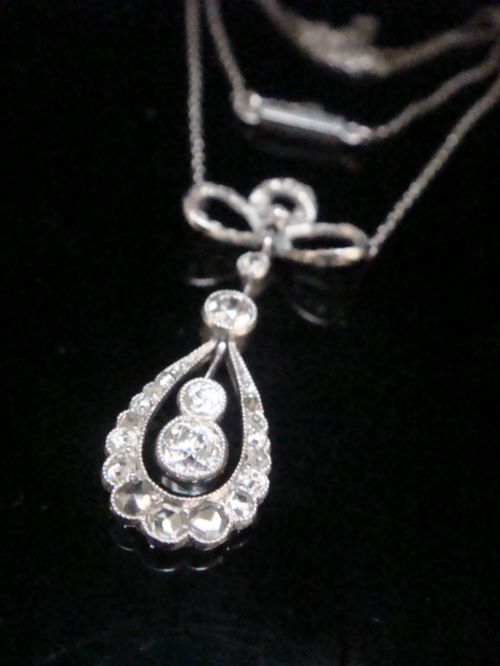


Gold Diamond Drop Necklace
A gold diamond drop necklace brings together precious metals and brilliant stones in a suspended pendant format designed to catch the light at the collarbone.
Gold Diamond Drop Necklace
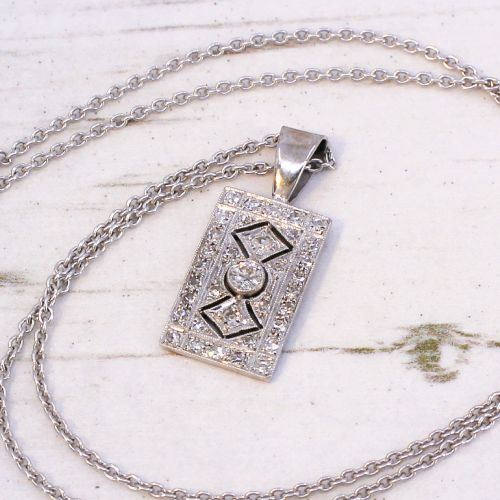
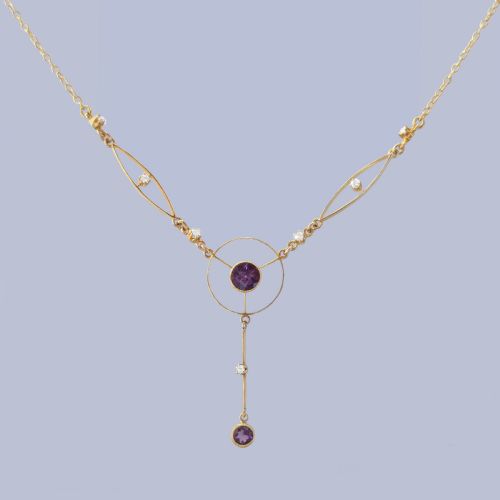
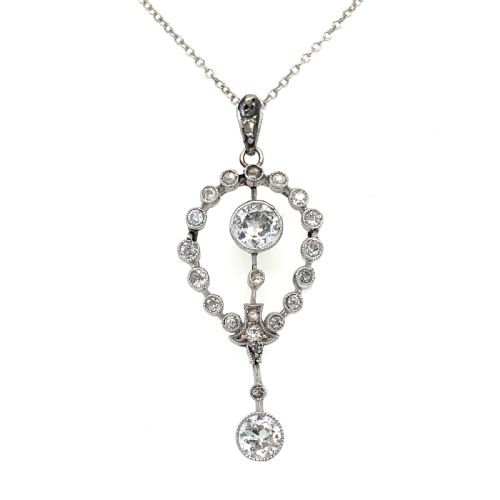
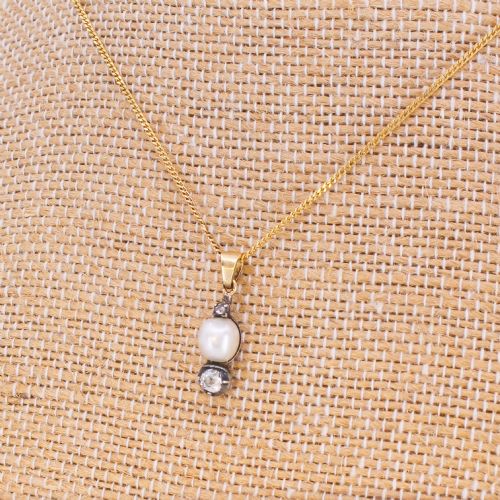
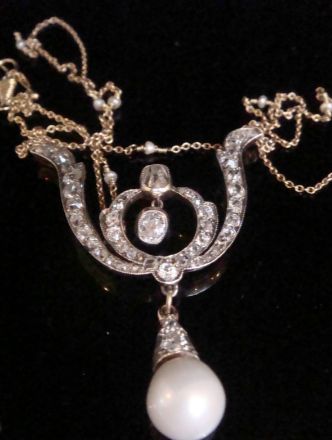
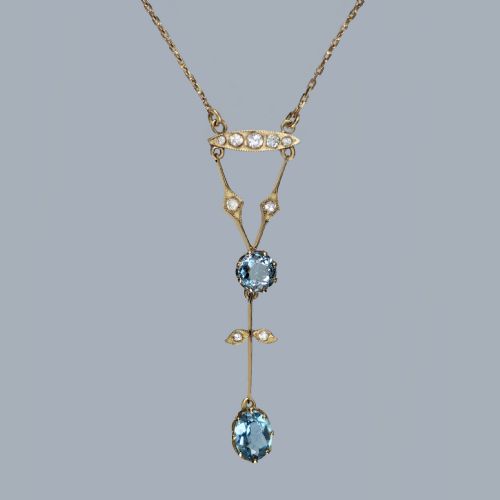
A gold diamond drop necklace spans a rich timeline from Victorian and Edwardian iterations to Art Deco and mid-century modern designs. These pieces range from delicate lavalier necklaces featuring cascading pearls and amethysts to geometric Art Deco pendants set with old-cut diamonds.
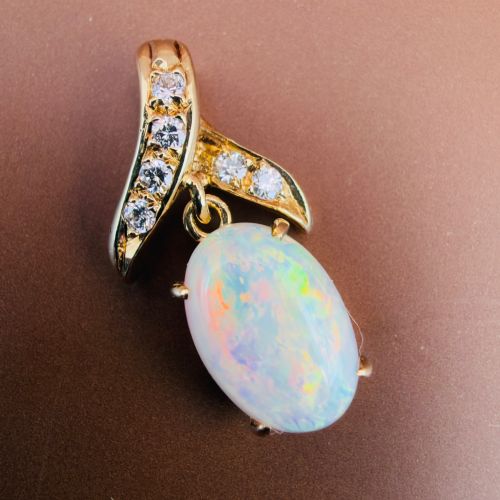
The selections available lean heavily into antique and vintage specimens, where gold works in concert with platinum and white gold to suspend aquamarines, opals, and emeralds beneath shimmering diamond clusters.
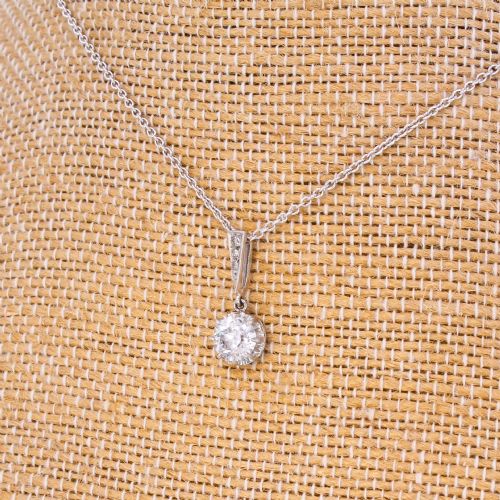
Buyers will encounter everything from simple solitaire drops on fine chains to elaborate multi-stone cluster pendants incorporating sapphires, rubies, and demantoid garnets.
How they were made
Master jewellers employed a variety of karat golds, predominantly 9ct, 14ct, 18ct, and occasionally 15ct, often pairing yellow gold with platinum or white gold settings to enhance the brightness of the diamonds.
Gemstones such as opals, aquamarines, and emeralds were secured using traditional claw, bezel, or cluster techniques, frequently complemented by natural pearls and intricate millegrain detailing on antique mountings.
Listings feature yellow gold, white gold, and platinum paired with diamonds, aquamarines, opals, and pearls across Victorian, Edwardian, and Art Deco periods.
What varies in quality
The calibre of a gold diamond drop necklace depends upon the cut, clarity, and carat weight of the central diamonds, alongside the rarity and saturation of accompanying coloured gemstones like natural pearls or Zambian emeralds.
Workmanship plays a defining role, distinguishing fluid, articulated Edwardian bow mountings and hand-pierced Art Deco platinum settings from simpler, mass-produced later iterations.
The Gold Diamond Drop Necklace Glossary
- Lavalier
- A pendant necklace featuring a central stone or drop suspended below a main decorative motif, highly characteristic of the Edwardian era.
- Old Cut
- A precursor to the modern brilliant cut, typically characterised by a smaller table, higher crown, and hand-faceted proportions that glow warmly under candlelight.
- Millegrain
- A decorative jewellery technique involving a line of tiny raised metal beads along the edges of a setting, popular in Edwardian and Art Deco design.
- Bezel
- A collar of metal that wraps around the perimeter of a gemstone to hold it securely in place, offering a sleek and protective mounting.
Gold Diamond Drop Necklace: Frequently Asked Questions
How do I date my pendant necklace?
Dating relies heavily on mount styles, gemstone cuts, and metal combinations. Edwardian pieces often utilise platinum-topped 18ct gold with millegrain work, whereas Art Deco examples display geometric lines.
Later mid-century iterations introduce bolder forms, cleaner white gold settings, and different clasp mechanisms that mark a distinct shift from antique manufacturing methods.
Are these necklaces suitable for daily wear?
Many antique and vintage necklaces can be worn regularly provided they are handled with reasonable care. Robust settings like 18ct gold and secure bezels offer good longevity.
Pieces incorporating softer gems like opals or pearls require extra mindfulness to avoid knocks, moisture, and chemical exposure during daily activities.
How should I care for antique gold and gemstone jewellery?
Gentle cleaning with warm soapy water and a soft cloth is usually sufficient for gold, diamonds, and harder stones. Harsh ultrasonic cleaners can damage delicate gems like emeralds, opals, and pearls.
Strooring each necklace individually in a soft pouch prevents scratching between pieces and protects vulnerable settings over time.