


Edwardian Sapphire Pendant
An edwardian sapphire pendant brings delicate gem-set grace to the neckline, combining fine precious stones with intricate antique metalwork.
Edwardian sapphire pendants
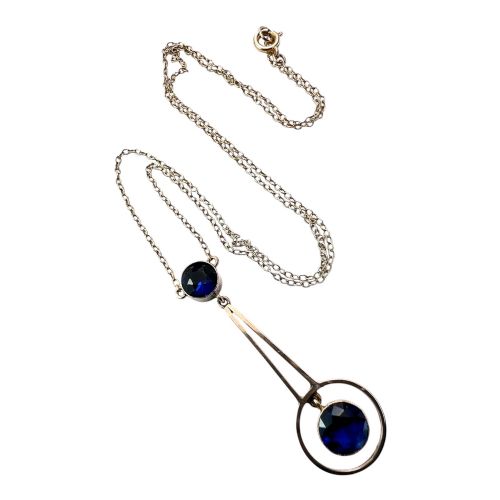
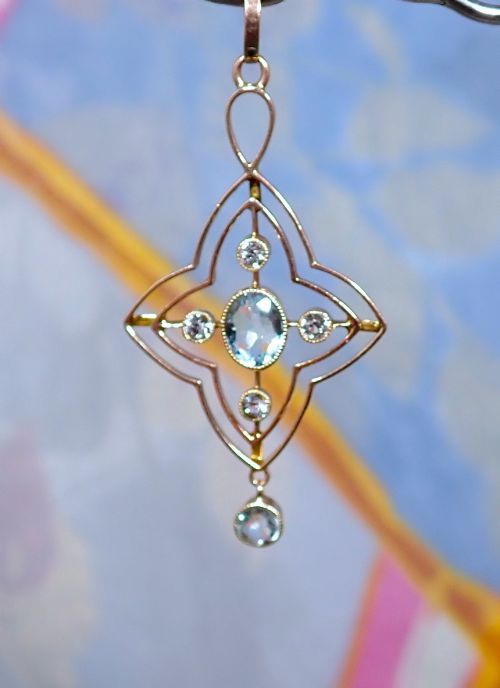
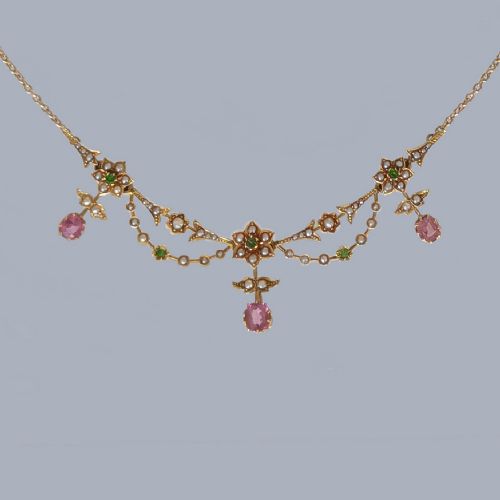
The edwardian sapphire pendant encompasses delicate floral drops, heart motifs, and geometric arrangements set with blue, yellow, pink, purple, and grey sapphires. These pieces frequently pair the central stone with diamonds, pearls, or moonstones, reflecting the refined tastes of the early twentieth century.
Buyers will encounter items spanning the Victorian era, the Edwardian period, and the Art Deco style. The primary forms are pendants and necklaces utilising platinum, yellow gold, and silver settings.
Originating predominantly from the early 1900s alongside neighbouring periods, these jewels showcase the transition from organic floral wreath designs to more structured symmetrical forms.
Materials and construction
The construction relies on precious metals including platinum, 15ct yellow gold, 9ct gold, and silver to securely house the gems. Master jewellers utilised techniques appropriate for lightweight, high-detail mounts that maximise the passage of light through each stone.
Stones such as oval cut Ceylon sapphires, yellow sapphires, pink sapphires, and old cut diamonds are integrated alongside natural pearls and moonstones. Metalwork often incorporates openwork foliate drops and wirework frames typical of the era.
Retail Price Guide 2026
Typical UK retail prices for edwardian sapphire pendant, calculated from the Sellingantiques database of over a million retail prices indexed since 2003. This retail price guide relies exclusively on Sellingantiques data; no external sources or auction records are used, so the figures do not describe the wider market.
The documented periods span the Victorian era, the Edwardian years around nineteen ten, and Art Deco designs up to nineteen twenty-five.
Judging quality
The sophistication of the metalwork distinguishes superior pieces, where delicate platinum or gold settings enhance the overall design without overpowering the stones. The integrity of the original mount and the subtlety of the floral or geometric motifs dictate the standing of each pendant.
The Edwardian Sapphire Pendant Glossary
- Sapphire
- A precious gemstone found in blue, yellow, pink, purple, and grey colour varieties. It belongs to the corundum mineral family and provides exceptional hardness for daily wear.
- Edwardian
- A stylistic period spanning the reign of King Edward VII, characterised by light, lace-like platinum and gold settings. Pieces from this era often employ floral and garland motifs.
- Old cut diamond
- A diamond cut by hand before modern machinery, featuring a smaller table, higher crown, and deep pavilion. These stones exhibit a distinctive, softer scintillation under candle or low light.
- Foliate drop pendant
- A hanging ornament shaped to resemble leaves or foliage. This design was popular during the early twentieth century for adding organic movement to necklaces.
- Platinum
- A dense, ductile precious metal prized for its strength and silvery-white finish. It allowed jewellers to create ultra-fine settings that securely held gems with minimal visible metal.
Frequently Asked Questions
How do I care for an antique sapphire pendant?
Clean these delicate pieces gently with warm soapy water and a soft brush, avoiding harsh chemical dips that can damage pearls or older settings. Store them individually in lined boxes to prevent the metal and stones from scratching.
Because Edwardian settings are intricate, periodic inspection by a professional jeweller ensures the claws holding the sapphires and diamonds remain secure.
Can I wear an edwardian sapphire pendant every day?
Sapphires possess high natural durability, making them suitable for regular wear when handled with reasonable care. However, the delicate gold or platinum wirework and associated pearls require mindfulness during physical activities.
Removing the necklace before sleeping or swimming preserves the structural integrity of the antique mountings and prevents accidental bending of the fine metal.
How do I distinguish Edwardian pendants from Victorian pieces?
Edwardian pieces frequently utilise platinum to create light, lace-like frameworks, whereas Victorian items lean more heavily towards yellow gold and heavier, closed-back settings. The introduction of platinum allowed for airier, diamond-dense designs.
Motifs also provide clues, with Edwardian examples favouring airy floral wreaths and garlands compared to the more solid sentimental clusters of earlier decades.
What chain should I use with these pendants?
Authentic period pendants are best paired with fine antique gold or platinum chains that match the weight and colour of the original mount. The proportion of the chain should not overpower the delicate drop.
A subtle trace link or belcher chain allows the focus to remain entirely on the sapphire and its surrounding gemwork.