
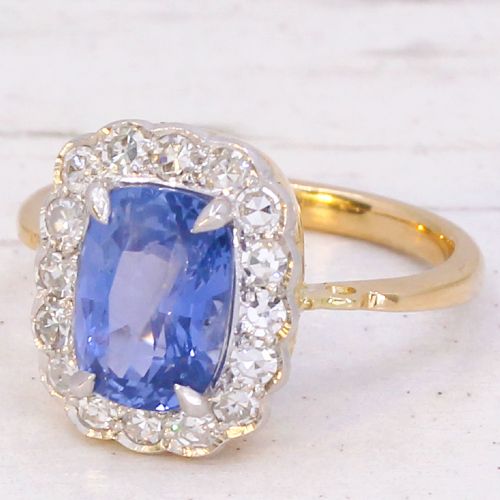
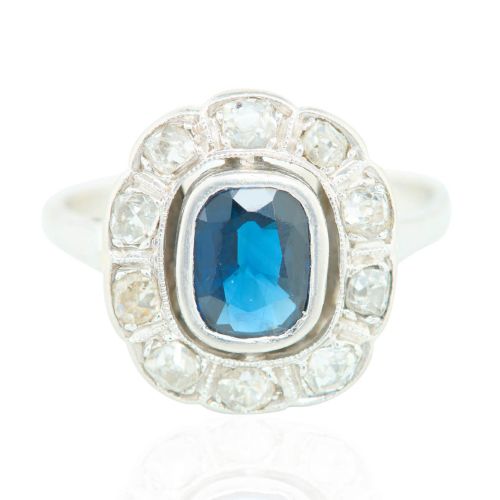
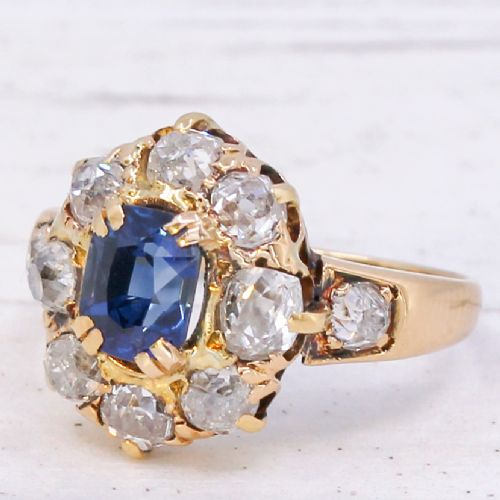
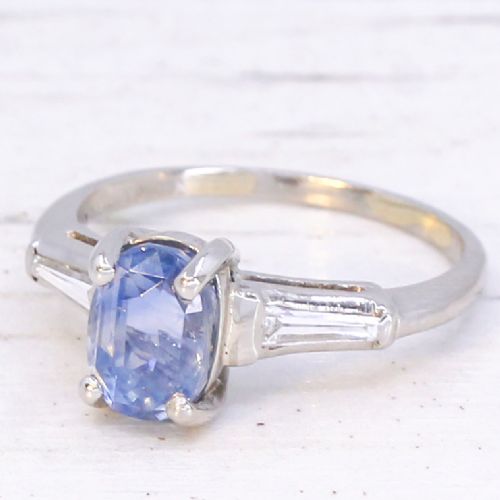
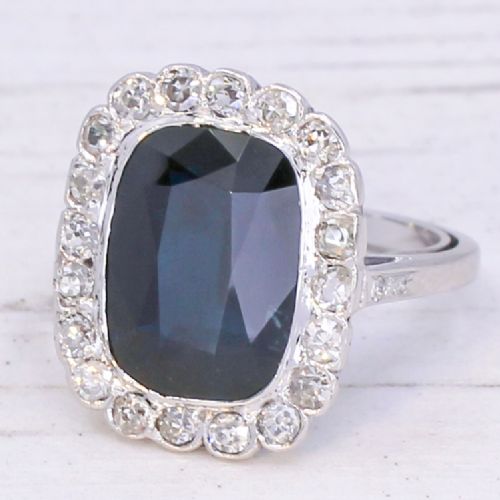


Cushion Cut Sapphire
These cushion cut sapphire pieces span Victorian to Mid-Century designs, offering classic stones set in platinum and gold.
Cushion Cut Sapphire
A cushion cut sapphire brings a soft, pillowy outline to rings, pendants, and brooches across several historical eras. You will most frequently encounter cluster rings and solitaires dating from the Edwardian, Art Deco, and Mid-Century periods.
The selection includes stones of various origins, such as Ceylon, Burma, and Kashmir, accompanied by diamond accents in platinum or yellow and white gold settings.
How they were made
Goldsmiths set these cushion cut stones into durable platinum or cast them in yellow and white gold, often utilising cluster and halo arrangements to frame the central gemstone with diamonds.
Cutting techniques evolved from old cut diamonds and traditional sapphire facets in the Victorian and Edwardian eras to the geometric precision of Art Deco mounts.
Cushion Cut Sapphire Retail Price Guide 2026
Typical asking prices for cushion cut sapphire among the pieces listed under this phrase on Sellingantiques today, from the lower quarter to the upper quarter. They describe what is for sale here now, not the wider market.
Some yellow sapphires in these historical settings outweigh the accompanying diamonds by several carats.
What varies in quality
The distinction lies in the natural intensity and purity of the sapphire's colour, alongside the absence of artificial treatment in stones originating from notable regions like Ceylon or Kashmir.
Finishing quality is evident in the delicacy of the platinum or gold metalwork and how securely the diamond accents complement the central cushion cut stone.
The Cushion Cut Sapphire Glossary
- Cushion cut
- A gemstone shape featuring rounded corners and larger facets that increase brilliance. This historic cut creates a soft, pillow-like appearance.
- Cluster ring
- A central gemstone surrounded by a border of smaller stones, typically diamonds. This arrangement maximises visual impact on the hand.
- Platinum
- A dense, durable precious metal favoured for fine jewellery settings. Its strength allows for secure, delicate claw work.
- Transition cut
- A diamond facet style popular between the old European cut and the modern brilliant. It bridges traditional and contemporary cutting methods.
- Unheated
- A sapphire that has not undergone thermal enhancement to improve colour or clarity. These natural stones hold particular interest for collectors.
Cushion Cut Sapphire: Frequently Asked Questions
What periods do these sapphire pieces come from?
The available pieces span from the late Victorian and Edwardian eras through the Art Deco period into the Mid-Century years.
Each period brings distinct metal choices and setting styles, ranging from yellow gold twist designs to geometric platinum clusters.
How do I care for a vintage sapphire ring?
Sapphire is a hard gemstone suitable for daily wear, but antique settings require gentle handling and periodic professional checks.
Clean the stones with warm soapy water and a soft brush, avoiding harsh ultrasonic cleaners that might disturb older platinum or gold prongs.
What is the difference between Ceylon and Burmese sapphires?
Ceylon sapphires typically display a bright, vibrant blue tone, while Burmese stones often present a deeper, velvety royal blue.
Both origins are represented in these historical pieces, alongside yellow, pink, and unheated varieties.
Are the diamond accents original to the rings?
The listings feature period-appropriate stones, including old cut and transitional cut diamonds set alongside the central sapphires.
These complementary gems match the manufacturing standards of their respective Edwardian, Art Deco, or Mid-Century dates.