



Victorian Ruby Jewellery
Victorian ruby jewellery brings together deep red corundum and warm gold in rings, brooches, and lockets that survive from the nineteenth century.
Victorian Ruby Jewellery
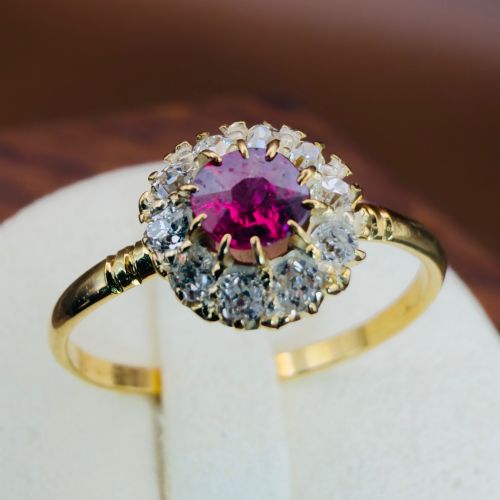
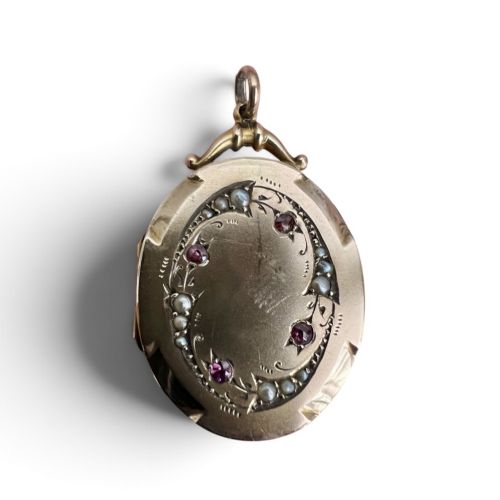
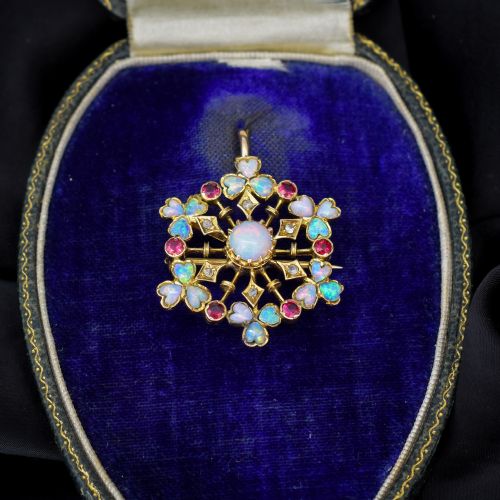
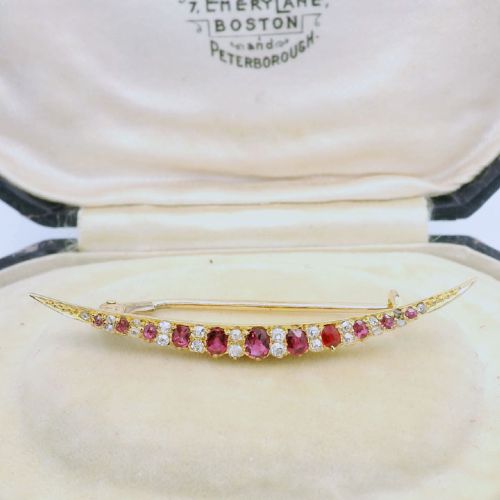
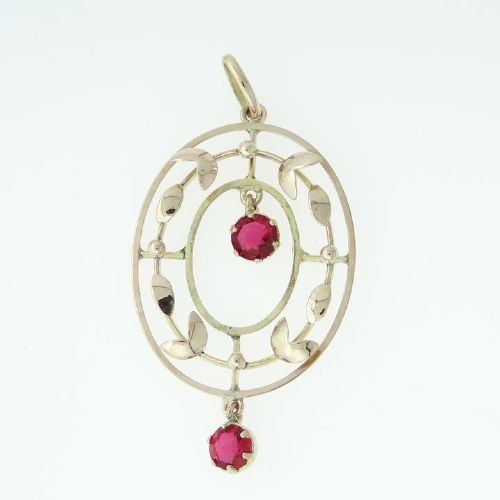
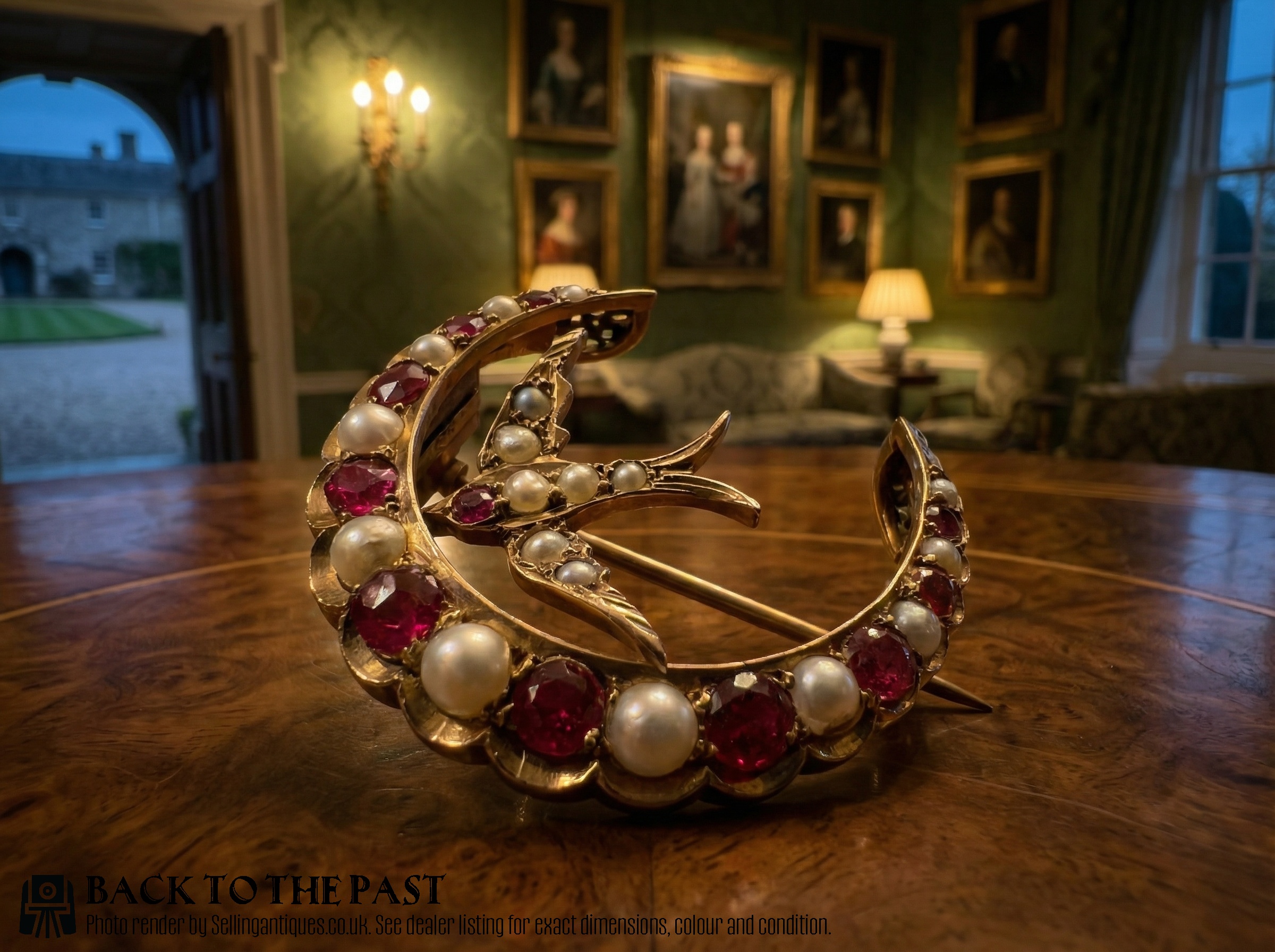
Victorian ruby jewellery encompasses rings, brooches, pendants, lockets, and necklaces fashioned during the nineteenth and early twentieth centuries. Buyers seeking these items will find cluster rings, starburst designs, and crescent brooches most frequently represented on this page.
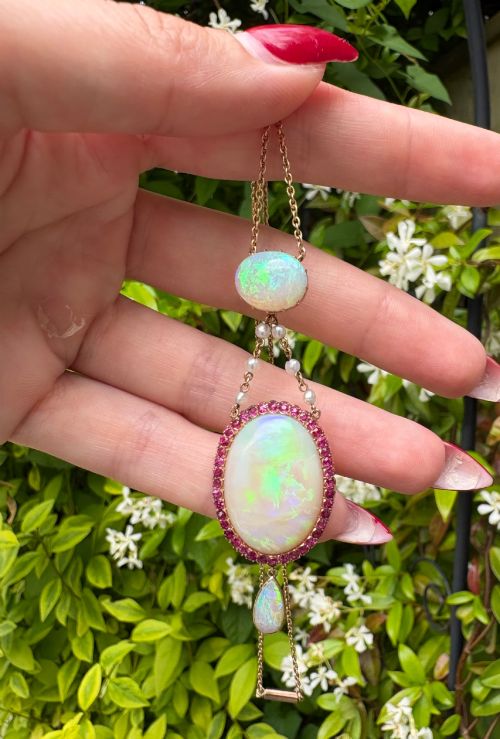
The materials span ruby, diamond, pearl, and opal set within varying purities of gold, including 9ct, 15ct, and 18ct yellow and rose gold. Pieces often cross stylistic boundaries into Edwardian, Art Nouveau, and Belle Epoque aesthetics while retaining their core nineteenth-century character.
Forms range from intimate snake serpent necklaces and swallow brooches to substantial multi-stone rings and pendants. Each category reflects the decorative priorities of the period, prioritising symbolic motifs alongside coloured gemstones.
How they were made
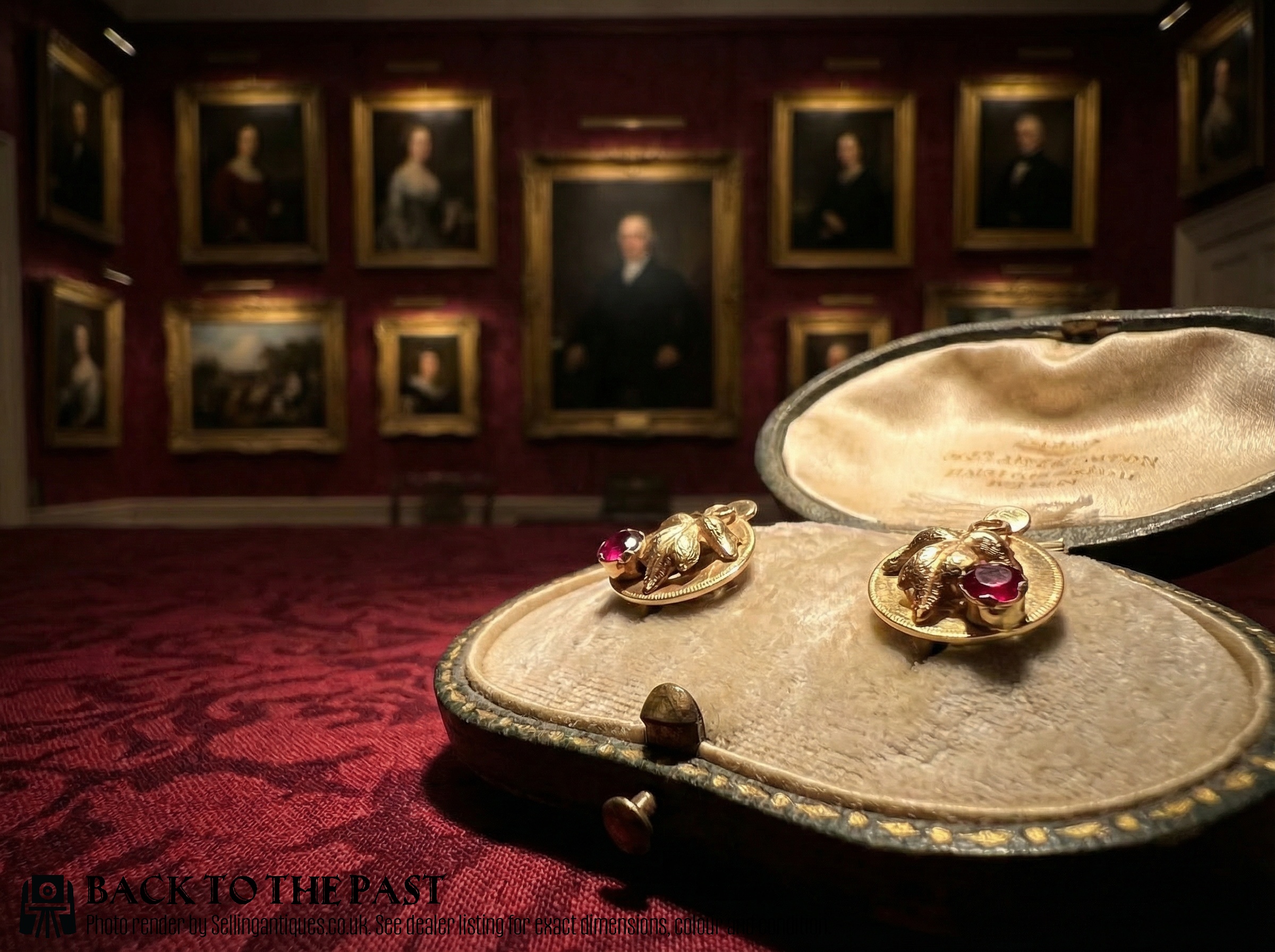
Goldsmiths constructed settings predominantly in 9ct, 15ct, and 18ct gold, utilising both yellow and rose hues to frame the stones. Stones such as old cut diamonds, pearls, and rubies were secured by hand-tooled claws, star settings, or flush gypsy mounts.
Techniques included detailed chasing, engraving, and enamel work, particularly visible on serpent motifs and commemorative lockets. Gemstones were sourced from regions like Mogok and Burma, then shaped by hand into old mine cuts, navette profiles, and cabochons.
Listings feature periods from the Victorian era through Edwardian and Art Deco times, utilising 9ct, 15ct, and 18ct gold.
What varies in quality
Quality differentiates by the origin and treatment of the rubies, with unheated Burmese stones commanding distinct attention from collectors. The clarity, cut proportion, and colour saturation of the primary gem dictate the visual impact of a cluster or solitaire ring.
The finesse of the metalwork, from the crispness of a starburst engraving to the structural integrity of a hollow bangle, marks the skill of the original maker. Preservation of original gemstones without modern replacements preserves the historical weight of a piece.
The Victorian Ruby Jewellery Glossary
- Navette
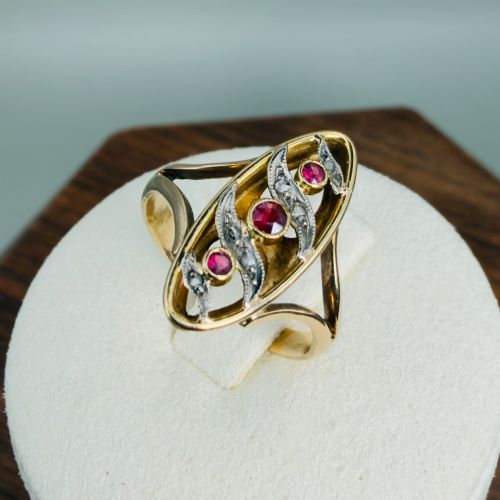
- A boat-shaped gemstone setting that tapers to points at either end. This elongated silhouette sits flat along the finger or across a pendant.
- Gypsy ring
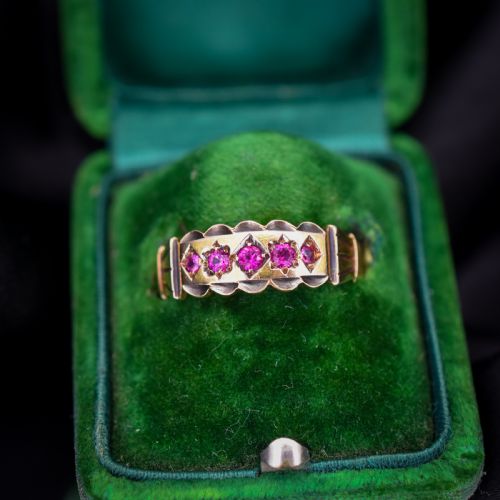
- A band featuring stones flush-set directly into the thick gold metal. The surface of the band slopes smoothly down to meet the table of the gemstone.
- Old cut diamond
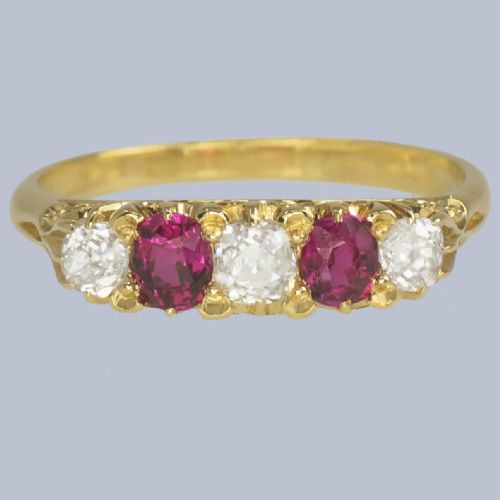
- A hand-faceted diamond shape common in the nineteenth century featuring a smaller table and a higher crown. These stones display chunky facets rather than modern mathematical symmetry.
- Trilogy ring
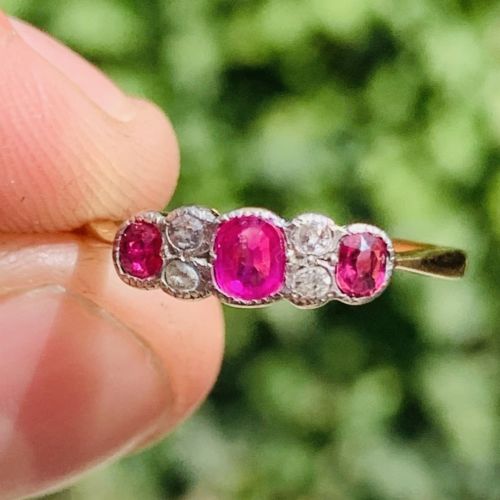
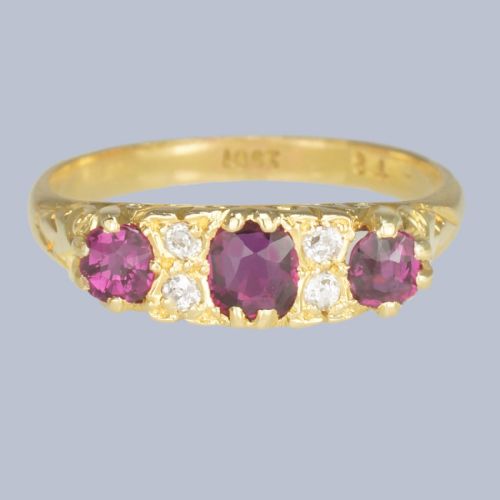
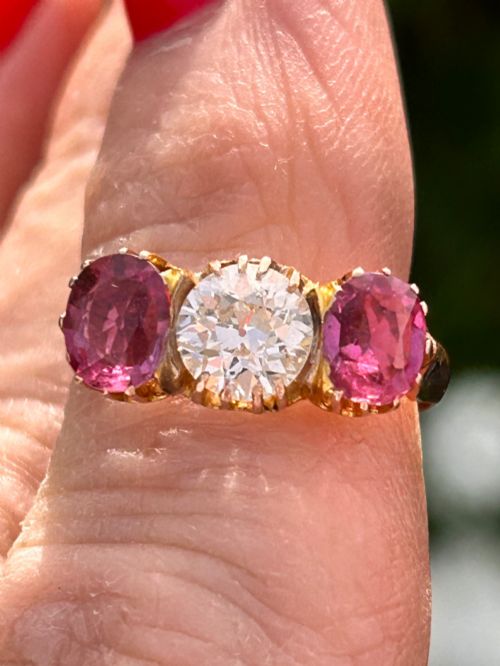
- A ring holding three principal gemstones in a row, traditionally representing the past, present, and future. Diamonds and rubies are frequently paired in this configuration.
- Crescent brooch
- An ornament shaped like a waxing moon, often pavé-set with pearls and rubies. It represents rebirth and feminine energy in nineteenth-century symbolism.
Victorian Ruby Jewellery: Frequently Asked Questions
How do I care for Victorian ruby jewellery?
Victorian ruby jewellery requires gentle handling due to the age of the settings and the presence of softer gems like pearls or opals. Clean pieces using warm soapy water and a soft brush, avoiding harsh chemical dips or ultrasonic cleaners.
Store items individually in fabric-lined boxes to prevent softer stones from scratching the gold or rubies. Periodic inspection by a jeweller ensures that claws holding older stones remain secure.
Are these rubies natural or treated?
The rubies found in these listings are predominantly natural, with many originating from mines in Burma. Gem reports occasionally accompany unheated stones to verify their natural status and lack of artificial enhancement.
Simulated stones and synthetic rubies also appear in pieces from the turn of the twentieth century, reflecting the technological developments of the period. Examining the interior of the stone under magnification reveals natural inclusions or growth patterns.
What gold purity should I expect?
Victorian and Edwardian items utilise a range of gold purities, including 9ct, 15ct, and 18ct yellow and rose gold. British pieces often display hallmarks or stamps that indicate the exact gold standard and assay office.
Fifteen-carat gold is a distinct marker of nineteenth-century British manufacture, as this standard was abolished in the early twentieth century. Higher carats like 18ct appear frequently in fine cluster rings and substantial necklaces.
How can I tell the period of a ring?
Dating relies on a combination of gemstone cuts, metal colours, setting styles, and any accompanying hallmarks. Old mine cut diamonds and heavy claw settings typically point towards the mid-to-late nineteenth century.
Design motifs such as flowing Art Nouveau lines or symmetrical Edwardian filigree help narrow down the decade of creation. Inscribed dates inside bands offer direct evidence of when a piece was commissioned or gifted.