

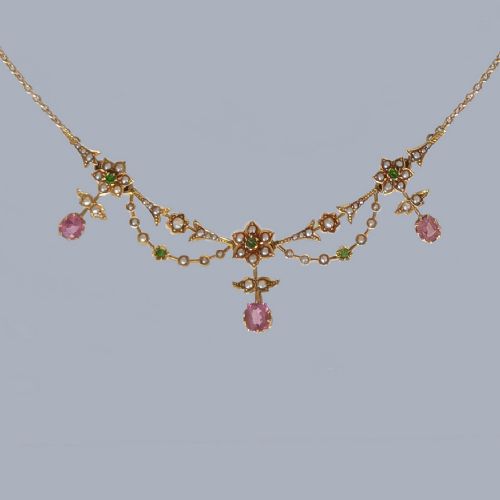


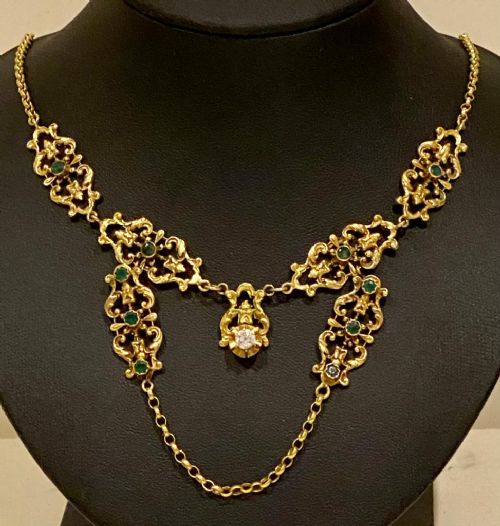


Antique Festoon Necklace
An antique festoon necklace drapes the neck with linked chains and suspended drops, bringing a graceful, historical elegance to any collection.
Antique Festoon Necklace
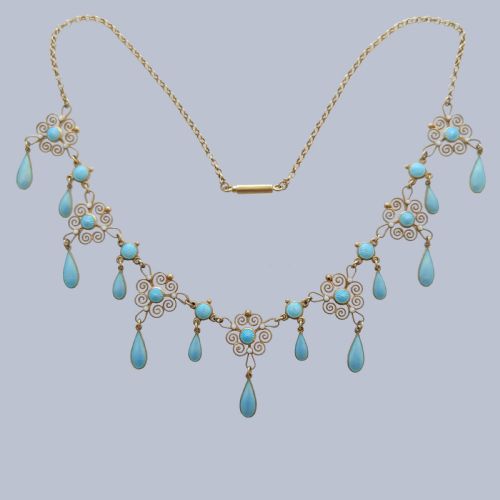
The designs range from gemstone-rich fringes incorporating diamonds, rubies, and sapphires to silver and enamel creations by renowned makers. Most pieces combine distinct periods and styles, showing the evolving tastes of the nineteenth and early twentieth centuries.
Necklaces and pendants dominate the forms available here, often utilising gold in various carats alongside sterling silver. Each specimen carries the specific craftsmanship of its era, from intricate seed pearl work to bold coloured gemstones.
Materials and construction
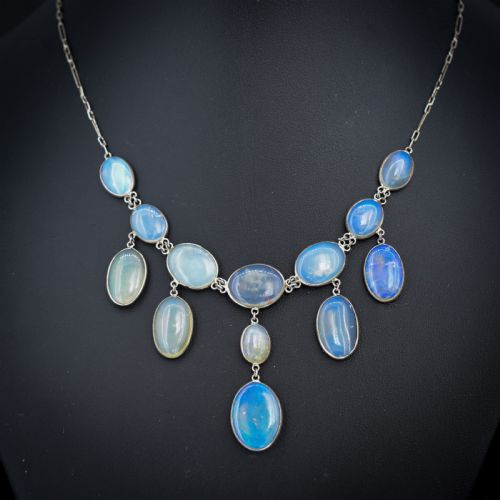
Goldsmiths and silversmiths utilised 15ct and 18ct yellow gold alongside sterling silver to build the articulated links and foundational frames of these necklaces. Stones such as diamonds, amethysts, rubies, and opals were meticulously set by hand into the metalwork.
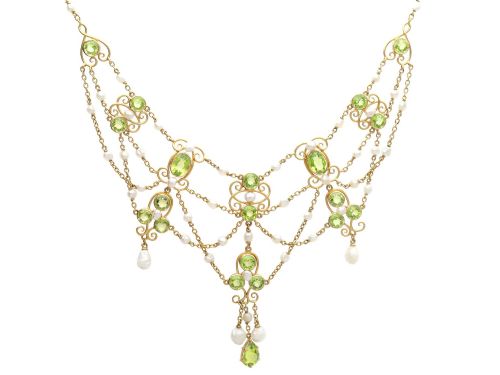
Enamel work and seed pearls frequently accented the designs, particularly during the Edwardian period and the Arts and Crafts movement. Artisans also employed old cut diamonds and natural moonstones, securing them in layered drops and swags that demanded high precision.
Antique Festoon Necklace Retail Price Guide 2026
Typical asking prices for festoon necklace among the pieces listed under this phrase on Sellingantiques today, from the lower quarter to the upper quarter. They describe what is for sale here now, not the wider market.
Some Edwardian designers hid tiny seed pearls inside gold swags just to make the reverse side as charming as the front.
The markers of quality
The distinction between ordinary and exceptional work lies in the delicacy of the articulation and the integration of the suspended drops. Superior pieces maintain fluid movement across every linked section without rigidity.
Gemstone selection and the precision of the metal setting also dictate the standing of a piece. Master workshops invested greater labour in matching stones like pink sapphires, garnets, or precious topaz and finishing the reverse of the setting with equal care.
Marius Hammer·Liberty & Co
The Antique Festoon Necklace Glossary
- Festoon
- A necklace style characterised by draped chains, swags, and suspended drops that resemble a garland of flowers or ribbon.
- Lavaliere
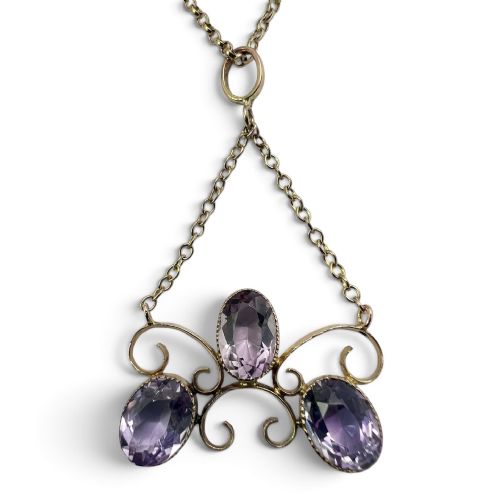
- A pendant necklace featuring a central drop suspended below a smaller motif, popular during the Victorian and Edwardian periods.
- Old Cut
- A hand-faceted diamond cut predating modern brilliant standards, featuring a smaller table and a higher crown.
- Seed Pearl
- Tiny, naturally small pearls often used in clusters or strung together in delicate Edwardian and Victorian jewellery.
- Swag
- A draped chain or garland of beads and gemstones that hangs loosely between two points on a necklace.
Antique Festoon Necklace: Frequently Asked Questions
How do I care for an antique festoon necklace?
Store your necklace flat in a lined box to prevent the delicate chains and swags from tangling or kinking under pressure.
Clean the metal and stones gently with a soft cloth, avoiding harsh chemical dips that can damage enamel or pearls.
Can I wear an antique festoon necklace daily?
These delicate pieces suit special occasions and careful evening wear rather than rough, everyday activities.
Take off the necklace before sleeping, swimming, or applying cosmetics to protect the fragile links and seed pearls.
How do I identify an Edwardian festoon necklace?
Edwardian pieces often feature platinum or white gold settings, delicate filigree, and pale gemstones like moonstones or seed pearls.
Lighter, airier designs distinguish them from the heavier, more robust yellow gold constructions of the earlier Victorian era.
What is the difference between a lavaliere and a festoon?
A lavaliere centres on a single prominent pendant drop hanging from a chain, sometimes with a secondary dangling element.
A festoon utilises multiple draped chains and repeated swags across the collarbone rather than focusing on one central pendant.