
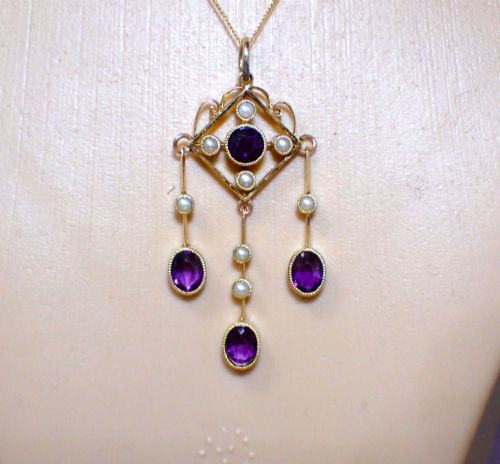


Vintage Amethyst Necklace
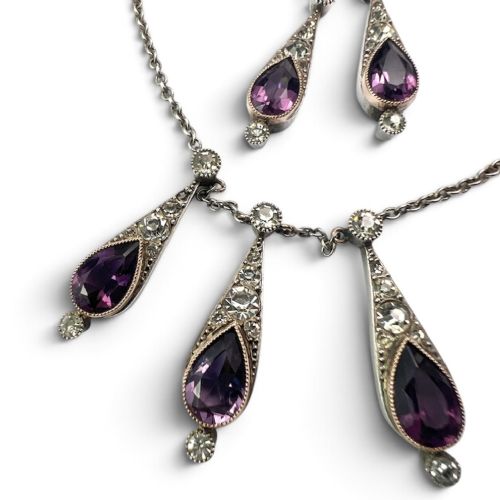
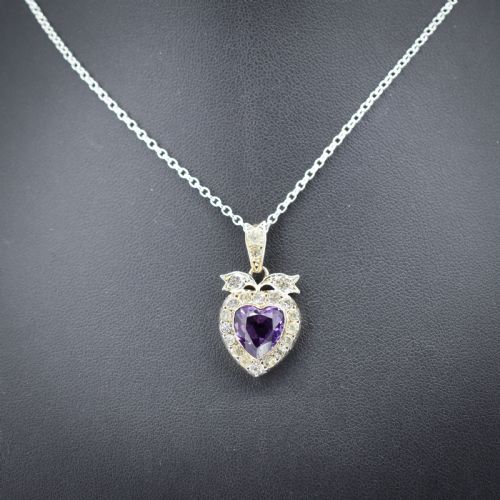
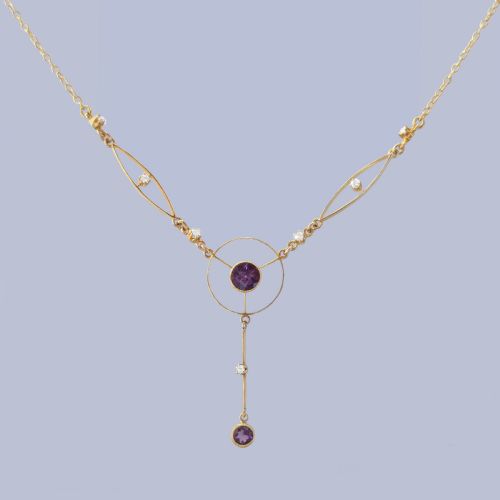
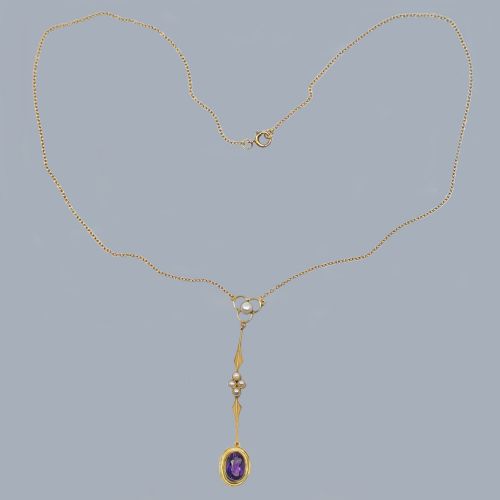
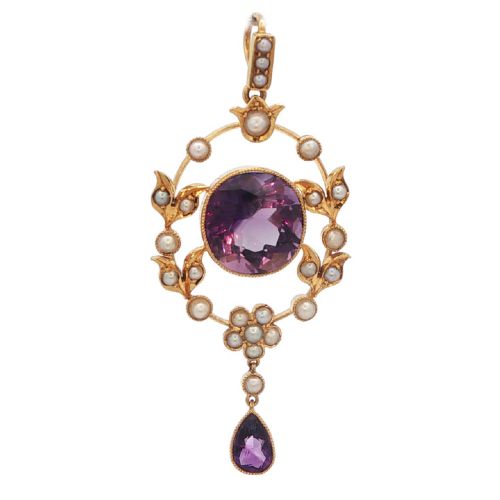
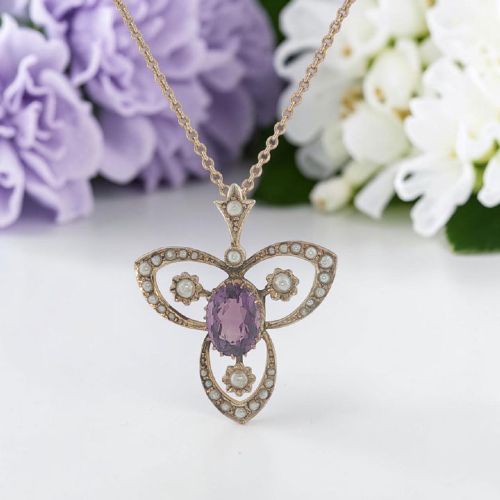
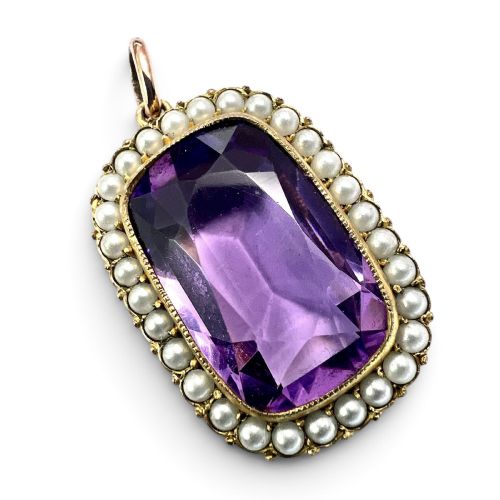
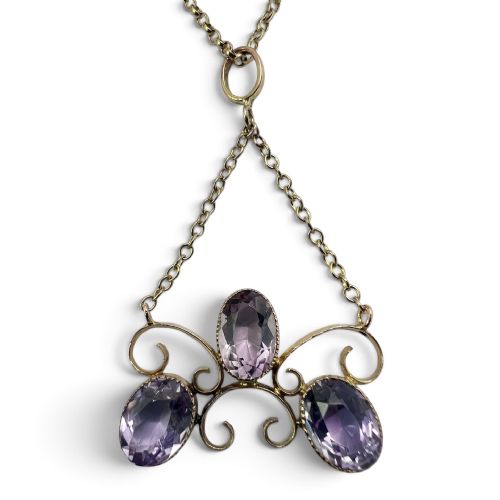
A vintage amethyst necklace brings deep purple colour and rich historic character to the neckline, combining period gold work with striking natural quartz.

What a vintage amethyst necklace is
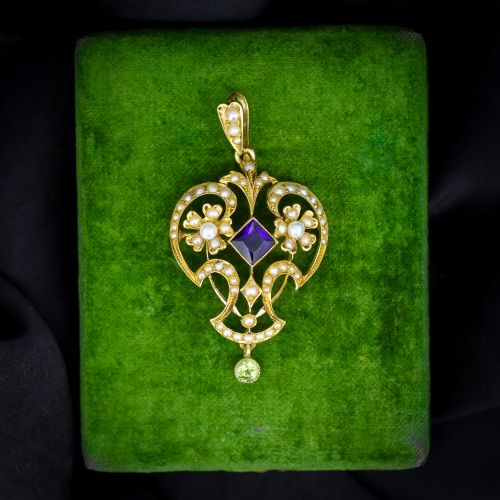
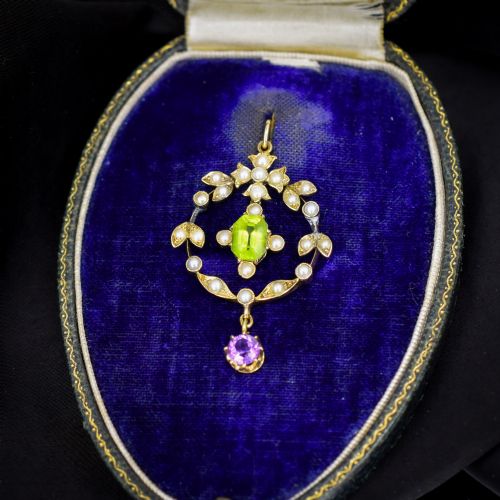
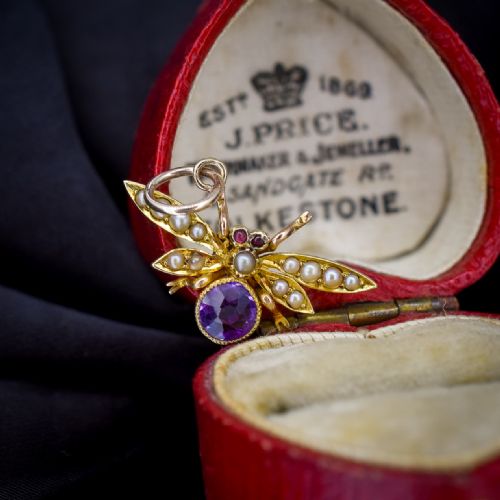
The most common examples on this page pair amethysts with nine carat gold or sterling silver, often incorporating pearls, citrine, or enamel accents.
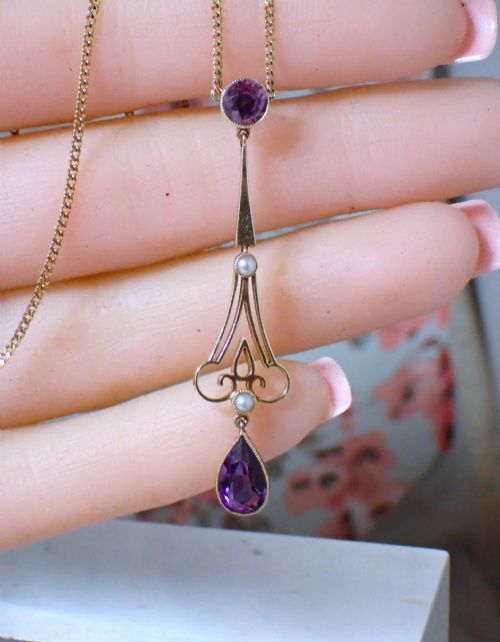
Forms vary from delicate solitary drop pendants and cluster designs to elaborate festoon and fringe necklaces created during the Victorian, Art Nouveau, and Arts and Crafts periods.
How they were made
Goldsmiths and silversmiths shaped precious metals by hand, casting and wire working intricate mounts to hold faceted or cabochon cut gemstones securely.
Specialist techniques such as plique-à-jour enamel added translucent colour to silver work, while delicate seed pearls were individually strung or wired alongside larger central stones.
Retail Price Guide 2026
Typical UK retail prices for vintage amethyst necklace, calculated from the Sellingantiques database of over a million retail prices indexed since 2003. This retail price guide relies exclusively on Sellingantiques data; no external sources or auction records are used, so the figures do not describe the wider market.
Some necklaces double as multi taskers, featuring clasps hidden cleverly within twin pearl strands so the amethyst focal point shifts from back to front.
What varies in quality
The depth of hue and clarity of the amethyst set within the pendant or link structure dictates much of the visual impact, alongside the intricacy of the surrounding metalwork.
Early handmade pieces with documented makers or complex artistic motifs like enamel and multi stone clusters command greater attention than simpler mass produced settings.
Eduard Loss
The Vintage Amethyst Necklace Glossary
- Cabochon
- A gemstone shaped and polished with a smooth convex surface rather than faceted. This style highlights the natural depth of the quartz.
- Festoon
- A necklace featuring a curved drape of chains, links, or drops suspended across the collarbone. It draws inspiration from classical garlands.
- Plique-à-jour
- An enamelling technique where enamel is applied without a backing, resembling miniature stained glass. It allows light to shine directly through the coloured glass.
- Solitaire
- A single gemstone set on its own in a pendant or ring. In these listings, it typically refers to a lone amethyst drop.
- Cluster
- An arrangement of smaller gemstones clustered tightly around a larger central stone. This technique maximises surface sparkle and colour intensity.
Frequently Asked Questions
What periods do these necklaces come from?
The pieces span multiple historical eras, including Early Victorian, Art Nouveau, Arts and Crafts, and the mid twentieth century.
Each period brings distinct stylistic choices, from heavy gold clusters to delicate enamel work and fluid silver metalwork.
What metals are typically used?
Makers used sterling silver, nine carat gold, and eighteen carat yellow gold to mount the amethyst stones.
Combinations often included secondary gems like pearls, citrine, coral, and moonstone within the design.
How should I care for my necklace?
Store the piece separately in a soft pouch to prevent the gold and softer gems from scratching.
Clean the amethyst gently with warm soapy water and a soft brush, avoiding harsh chemical dips that could harm pearls or enamel.
Are pearls commonly included?
Yes, pearls frequently appear alongside amethysts in clasps, fringes, and pendant surrounds.
They provide a soft white contrast to the deep purple quartz in Victorian and Edwardian pieces.