
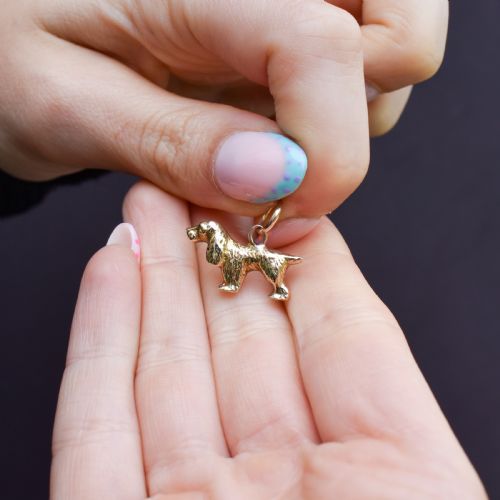
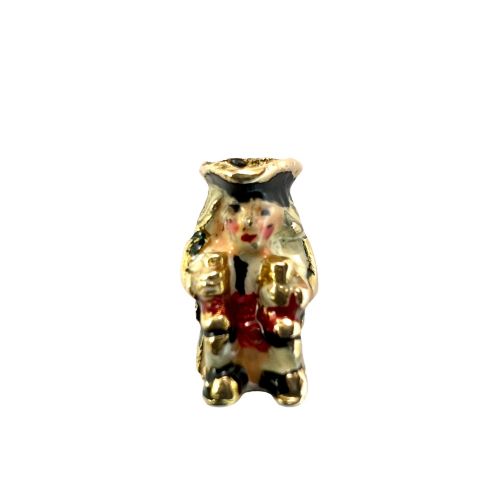


9 Carat Gold Pendant
A 9 carat gold pendant offers enduring appeal through historic gemstones and yellow gold work, spanning Victorian, Edwardian and mid-century designs.

9 Carat Gold Pendant
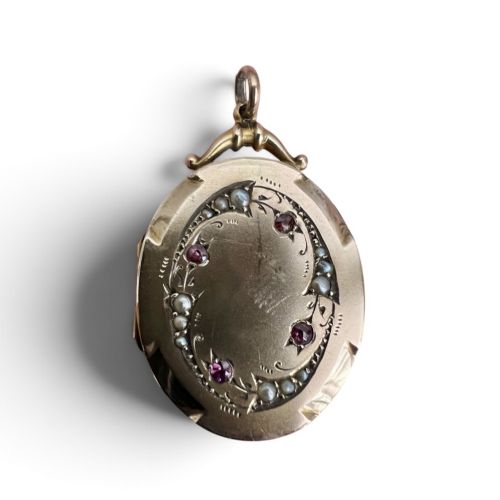
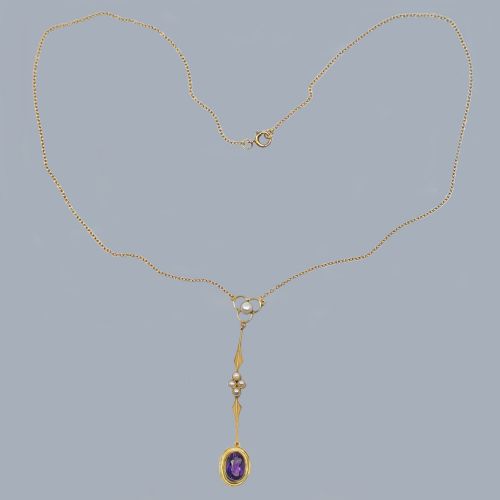
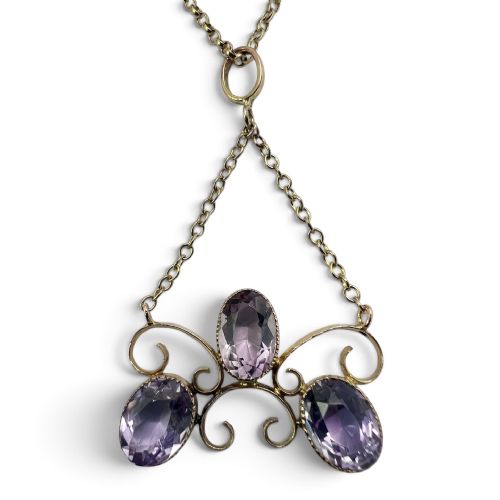
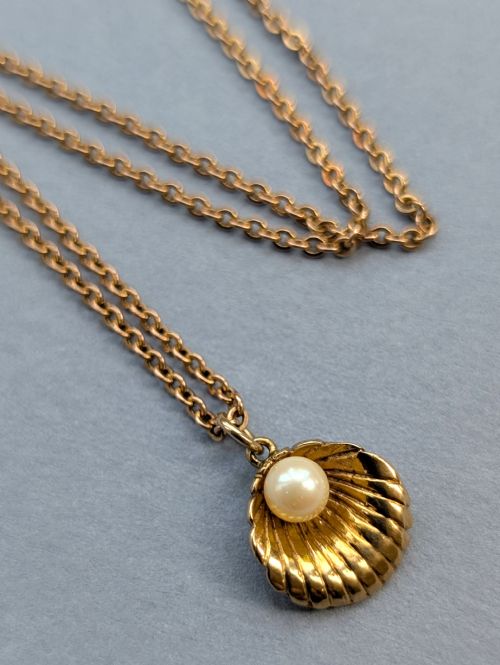
A 9 carat gold pendant sits at the heart of historic neckwear, encompassing solitary drops, locket designs, and gem-set clusters. When searching for a 9 carat gold pendant, buyers encounter pieces fashioned across multiple decades including Victorian, Edwardian, and mid-century eras. The selection ranges from simple gold charms and engraved crosses to elaborate clusters set with diamonds, rubies, and seed pearls.
The most common versions met on this page combine 9ct yellow gold with traditional gems such as amethyst, garnet, and seed pearl. These pieces demonstrate how jewellers utilised lower gold purity alongside precious and semi-precious stones to create accessible ornaments. Pendant forms span geometric Art Deco configurations, organic Edwardian motifs, and whimsical mid-century charms.
How They Were Made
Craftsmen built these pendants using 9 carat yellow and white gold alloys, shaping the metal through casting, wire-work, and hand engraving. Many historic pieces integrate closed or open settings designed to cradle old-cut diamonds, rubies, sapphires, and opals securely.
Techniques such as twisted wire framing, millegrain edge work, and claw setting define the construction methods seen across the Victorian, Edwardian, and Art Deco periods. Jewellers combined these metalworking skills with delicate seed pearl stringing and gemstone faceting to achieve intricate ornamental balance.
9 Carat Gold Pendant Retail Price Guide 2026
Typical asking prices for 9 carat gold pendant among the pieces listed under this phrase on Sellingantiques today, from the lower quarter to the upper quarter. They describe what is for sale here now, not the wider market.
Listings feature yellow gold, white gold, and rose gold across Victorian, Edwardian, Art Deco, and mid-century periods.
What Varies in Quality
Quality in these pendants rests upon the precision of the gem-setting and the crispness of the hand-engraved or chased metal details. Pieces where stones are matched uniformly for colour and cut demonstrate superior workshop origin compared to asymmetrical or hastily assembled examples.
The structural integrity of the suspension loop, the weight of the underlying gold mount, and the preservation of original settings distinguish finer examples from standard production. Workmanship that maintains sharp contours on floral motifs or geometric borders marks out the upper tier of surviving pieces.
The 9 Carat Gold Pendant Glossary
- 9ct Gold
- An alloy containing 37.5 percent pure gold mixed with other metals such as silver and copper to increase durability. This composition was widely utilised for Victorian and later jewellery.
- Seed Pearl
- Very small, naturally occurring or cultured pearls often used in clusters or delicate borders during the Georgian, Victorian, and Edwardian eras. They add a soft lustre to coloured gemstone centrepieces.
- Old-Cut Diamond
- A historic diamond cutting style characterised by a small table, high crown, and large culet, predating modern brilliant cuts. These stones exhibit a distinctive chunky facet pattern under candlelight.
- Amethyst
- A purple variety of quartz frequently mounted in Edwardian and mid-century gold pendants and drop earrings. Its rich violet tone made it a favourite for clerical and decorative rings and neckwear.
- Millegrain
- A jewellery technique featuring a line of tiny raised metal beads bordering a gemstone setting. This decorative edge work is characteristic of Edwardian and Art Deco design.
9 Carat Gold Pendant: Frequently Asked Questions
How do I date a gold pendant?
Dating a gold pendant involves examining the gemstone cuts, the alloy colour, and the manufacturing techniques employed by the maker. Edwardian pieces often feature millegrain work and seed pearls, while Victorian examples lean towards heavier engraved gold and garnet or amethyst.
Art Deco items display geometric symmetry, and mid-century pieces introduce cleaner lines alongside varied gemstone pairings.
How were antique pendants worn?
Antique pendants were typically suspended from matching gold chain necklaces, ribbons, or pinned directly to garments as convertible brooch-pendants. They served both decorative and sentimental functions, often housing miniatures or locks of hair within locket compartments.
Victorian and Edwardian wearers frequently layered multiple chains and charms to display personal milestones and familial connections.
Are these pendants suitable for everyday wear?
These gold pendants are generally robust enough for regular wear, provided the settings and suspension loops are inspected for security. Because 9 carat gold contains strengthening alloy metals, it resists daily knocks better than higher-purity gold items.
Care should be taken with softer organic gems like opals and pearls, which require protection from harsh chemicals and impacts.