



Gold Carved Footstool
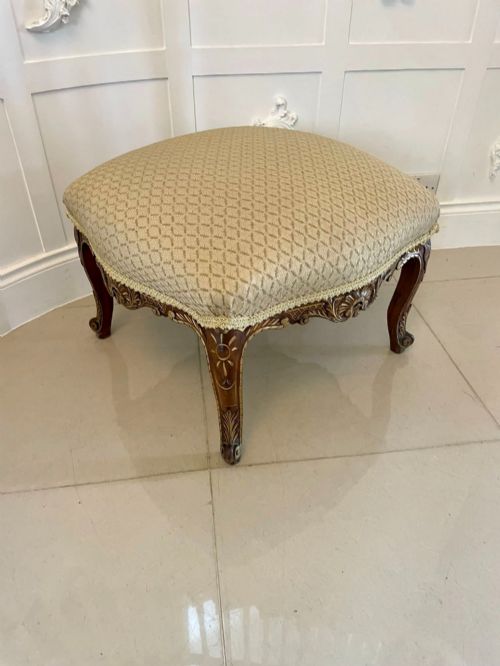
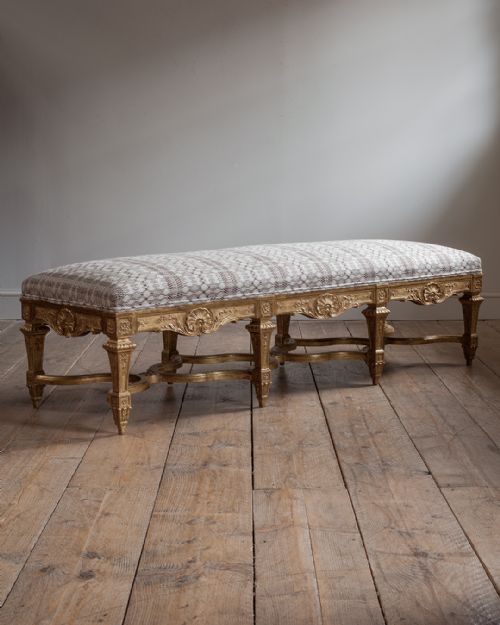
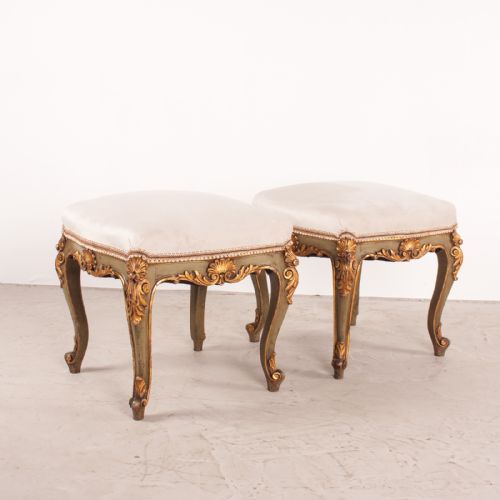
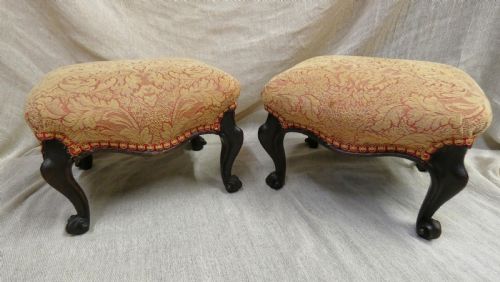
These gold carved footstool examples bring gilded warmth and carved timber frames directly to a room, offering both function and decorative presence.
Gold Carved Footstool
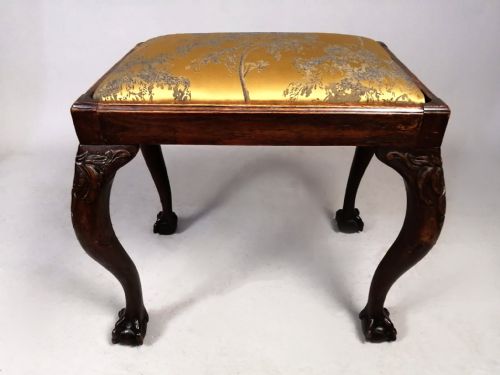
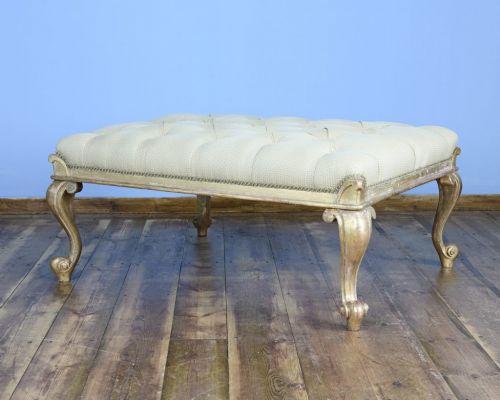
A gold carved footstool encompasses a variety of low seating forms, ranging from compact footstools and rocking gout stools to larger boudoir and centre stools. You will frequently encounter nineteenth-century pieces alongside revival designs influenced by French and English tastes.
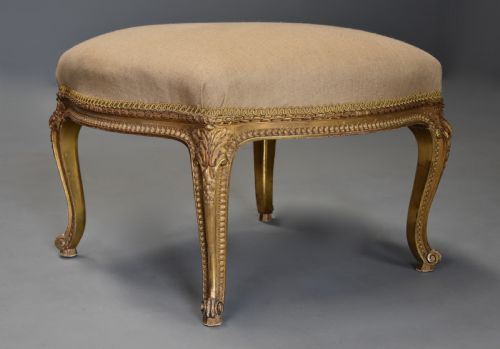
The material vocabulary centres on carved wood, giltwood, and walnut, often paired with textile upholstery such as velvet or fabric. Makers embraced historical revivals including Louis XIV, Louis XVI, and Rococo styles, shaping timber into ornamental frames.
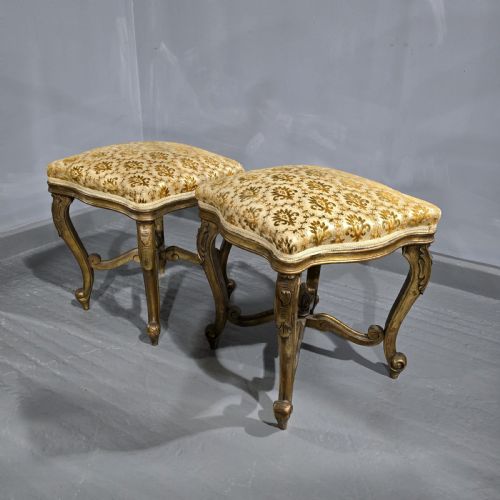
Formations include pairs of stools as well as single pieces, spanning low Middle Eastern configurations, curule frames, and grander parcel-gilt iterations. The overarching characteristic remains the combination of a carved timber base with a gilded finish.
Materials and construction
Carvers shaped solid timber bases from walnut, elm, and general hardwoods, applying detailed hand-carved ornamentation before finishing the surfaces. Gilding was then applied to the carved wood elements to create the characteristic metallic sheen seen on giltwood frames.
Upholstery completed the piece, with makers securing fabric and velvet over padding to form buttoned or plain seating tops. Painted and gilded treatments further varied the visual presentation of the wooden structures.
Listings feature walnut, giltwood, and carved timber frames spanning the Victorian era and the nineteenth century.
Judging the work
The depth and precision of the hand carving dictate the refinement of the frame, where crisply defined foliage and scrolls elevate the object. Smoother, flatter execution yields a simpler decorative effect.
The quality of the gilding and the integrity of the underlying timber frame distinguish workshop output. Original finishes and robust joinery demonstrate superior craftsmanship compared to later alterations.
LOIDRAULT FRERES PARIS·A.M.E. Fournier
The Gold Carved Footstool Glossary
- Giltwood
- Wood that has been coated with gold leaf or a metallic gilt finish. This surface treatment defines the appearance of many nineteenth-century French and English decorative stools.
- Curule
- A stool or seat design featuring intersecting curved legs shaped like an X. Originating in classical antiquity, this form remerged in nineteenth-century revival interiors.
- Parcel Gilt
- A technique where only specific portions of a wooden object are gilded, leaving other areas of the timber or paint exposed. This method highlights particular carved details on the frame.
- Rococo Revival
- A nineteenth-century design movement characterised by asymmetrical scrollwork, naturalistic floral motifs, and C-scrolls. It heavily influenced the ornamentation of Victorian seating.
- Gout Stool
- A specialised footrest designed to support a foot affected by gout, often incorporating a rocking mechanism. These functional pieces appear in nineteenth-century domestic settings.
Gold Carved Footstool: Frequently Asked Questions
What periods do these stools come from?
The selection spans the nineteenth century, including Victorian examples alongside pieces from the eighteenth and early twentieth centuries. Makers frequently drew upon earlier historical styles when constructing them.
Revival aesthetics such as Louis XIV, Louis XVI, and Rococo dominate the dates, reflecting the popularity of historicism during the Victorian era.
How were these stools used originally?
They served as functional footrests before armchairs or as low seats in boudoirs and dressing rooms. Some specialised variations, such as rocking gout stools, provided specific physical comfort.
Larger centre stools and pairs functioned as decorative furnishings within formal reception spaces, matching the prevailing interior design of the period.
Are the upholstery fabrics original?
Most pieces carry textiles and velvets that represent later reupholstery rather than the original fabric from their date of manufacture. Fabric replacement is standard maintenance for antique seating over time.
The underlying wooden frames and carved giltwood structures retain their age while the soft furnishings are updated for modern use.
How do I distinguish French and English styles?
French-influenced pieces often display ornate Louis revival carving, giltwood finishes, and rounded boudoir forms. English examples frequently utilise walnut, mahogany, or elm with simpler Victorian framing.
Regional workshops adapted international decorative trends, resulting in a diverse mixture of continental aesthetics and British craftsmanship.