
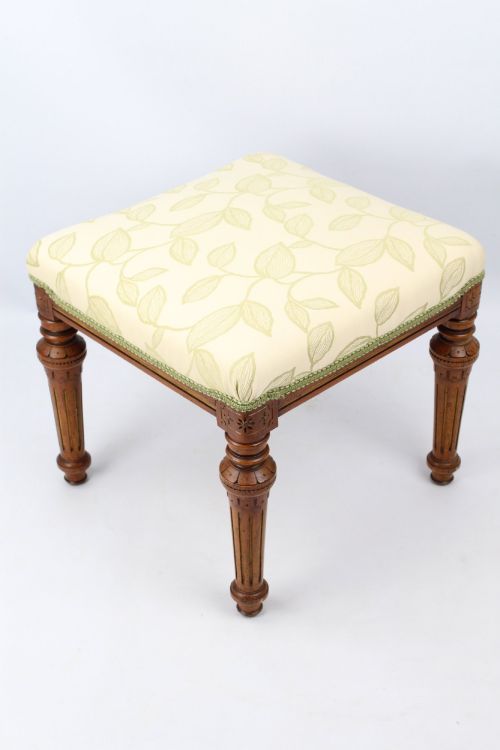
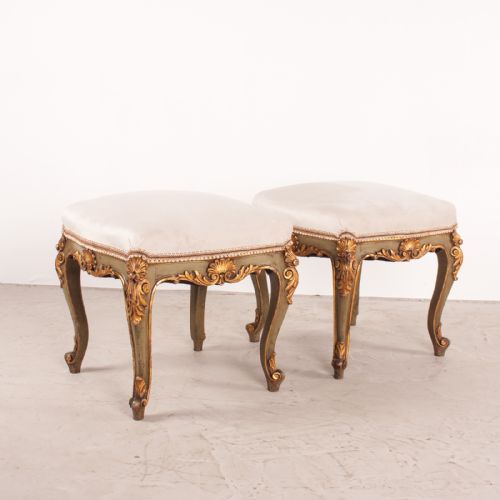

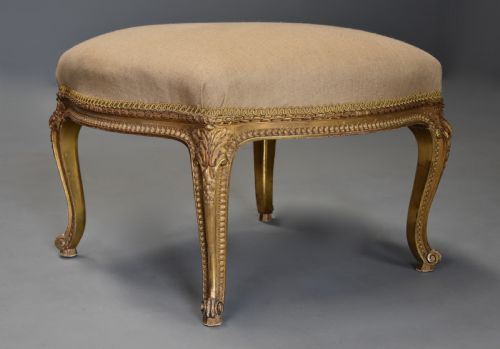


Gilded Low Stool
These gilded low stool examples bring period seating to a room, offering compact forms covered in fabric and textile.
Gilded Low Stool
A gilded low stool provides compact seating designed to sit near chairs or dressing tables, frequently taking the form of footstools, ottomans, and low stools. The selection spans the nineteenth century, Regency era, and Edwardian period, bringing varied ornamental designs into a domestic interior.
Buyers frequently encounter nineteenth-century examples and Regency pieces, alongside specific items from the eighteen sixties, seventies, eighties, and nineties. Continental and French rococo revivals appear alongside Victorian iterations and Edwardian chinoiserie.
Construction relies on timber and carved wood finished with gold leaf, giltwood, or paint, paired with upholstered fabric, linen, and textile elements. Brass components also occur in these low seating forms.
Materials and construction methods
Carvers shaped timber and carved wood into intricate scroll tops and frames before applying gold leaf, giltwood, or paint to the surfaces. Craftsmen utilised traditional joinery to build the low frames intended to support upholstery.
Upholsterers finished the pieces using fabric, textile, and linen over padding, occasionally incorporating brass details or black lacquer finishes as seen in Edwardian chinoiserie works.
One French maker went to the trouble of stamping their giltwood stool so definitively that we still know a Paris workshop touched it.
Judging the quality of a gilded low stool
Depth and precision of hand carving distinguish superior frames from simpler production, particularly within rococo revival and Regency items. Crisp execution in the giltwood or gold leaf application elevates the visual weight of the timber beneath.
Integrity of the original structure and the refinement of secondary materials, such as specific textiles and brass accents, separate standard examples from workshop pieces bearing maker stamps.
Mathew Gregson·Loidrault Freres Paris
The Gilded Low Stool Glossary
- Giltwood
- Timber coated with gold leaf or a gold-coloured finish. This surface treatment defines the primary visual characteristic of many nineteenth-century seating pieces.
- Rococo Revival
- A nineteenth-century style reviving eighteenth-century asymmetrical scrollwork and naturalistic ornamentation. This aesthetic dominates the French and Victorian pieces on the market.
- Regency
- An early nineteenth-century British design period known for classical restraint and scrolled forms. Pieces from this era often feature mahogany or gilt elements.
- Chinoiserie
- European interpretation of Chinese artistic traditions, featuring lacquered surfaces and painted motifs. Edwardian examples utilise this decorative approach on low seating.
Gilded Low Stool: Frequently Asked Questions
What is a gilded low stool used for?
These low seating pieces functioned primarily as footstools or dressing table seats in nineteenth-century interiors. Their compact dimensions allowed them to sit easily in front of larger chairs or beside tables.
Today, they serve equally well as movable footrests or decorative accents in living spaces and bedrooms.
How do I identify a Regency period stool?
Regency pieces often display classical lines, mahogany structures, and specific scroll top details reminiscent of design books from the early nineteenth century. They tend to exhibit less ornate asymmetry than later revival styles.
Comparing the woodwork and silhouette against documented Regency forms helps confirm the period of manufacture.
What materials are common on these stools?
Timbers such as oak and mahogany form the foundational structure, finished with gold leaf, giltwood, or paint. Upholstery consists of various textiles, including linen and patterned fabrics.
Additional elements like brass fittings or black lacquer occasionally appear on specific Continental and Edwardian examples.
How should I care for antique giltwood?
Giltwood requires gentle dusting with a soft, dry cloth to protect the delicate gold leaf surface from abrasion. Avoid liquid cleaners and modern chemical polishes that can lift or dissolve the historical finish.
Keep the items away from direct sunlight and fluctuating humidity to preserve the underlying timber and gilding.