


Gold Brass Stick Stand
These gold brass stick stand pieces keep hallways tidy and offer bright metallic warmth, combining utility with distinct period character.
What gold brass stick stand pieces are
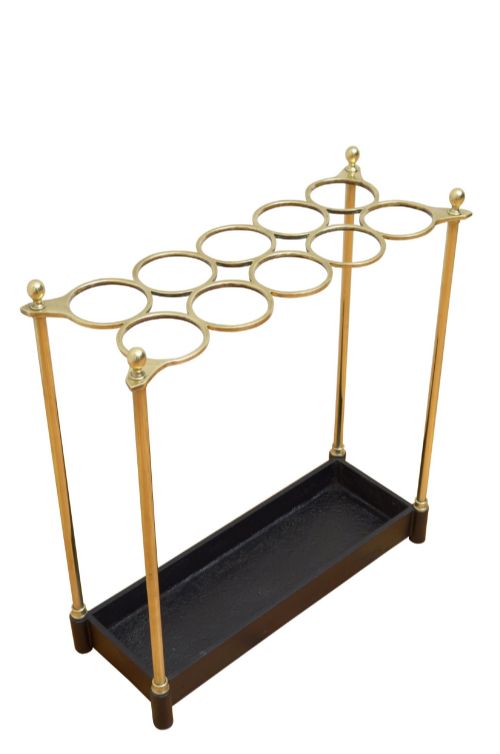
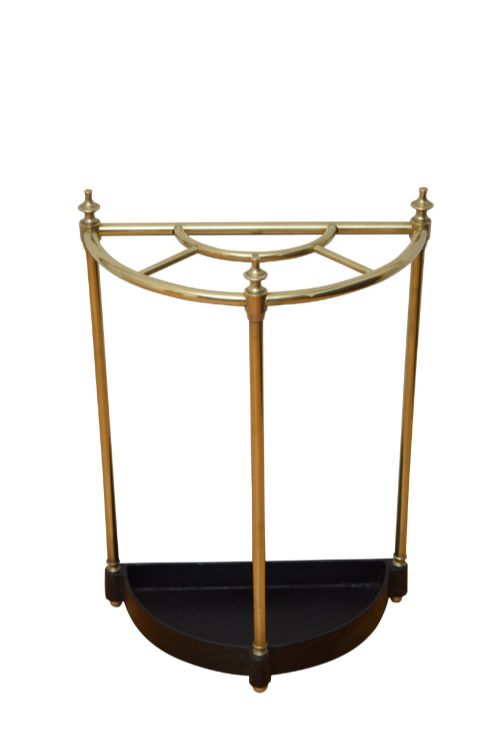
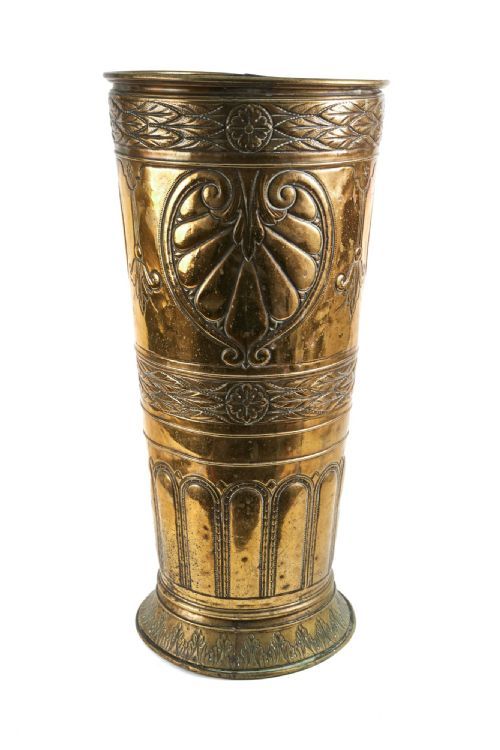
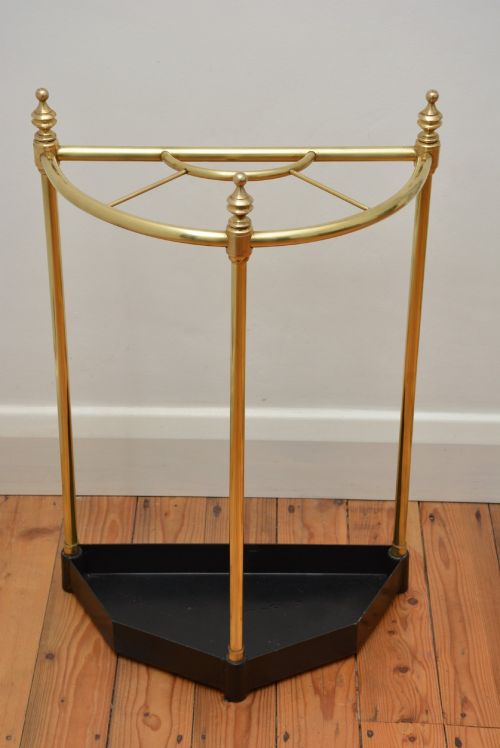
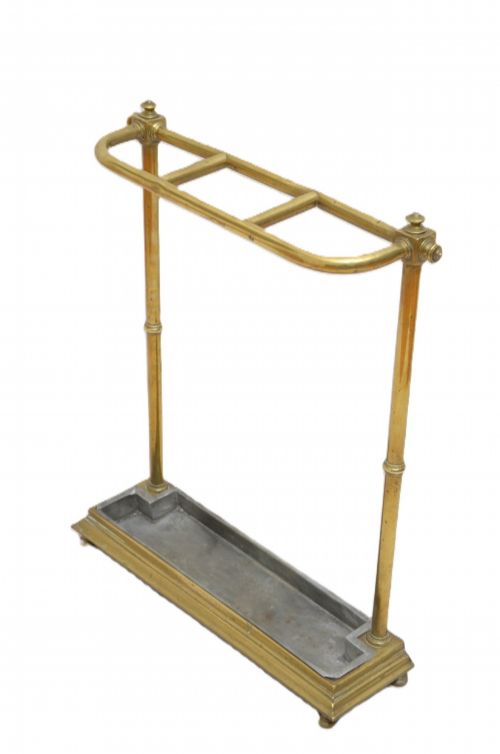
A gold brass stick stand serves as a practical hallway receptacle for umbrellas, parasols and walking sticks, appearing in forms such as demi-lune shapes, corner units and large freestanding designs. These metal vessels organise entryways while introducing decorative shine through bright brass surfaces.
The selection on this page centres on items from the nineteenth century, the Victorian era, and the Edwardian period, alongside examples dated around nineteen hundred, nineteen ten, and nineteen twenty. Buyers frequently encounter variations that incorporate specific decorative traits like Art Nouveau influences or space-saving corner profiles.
How they were made
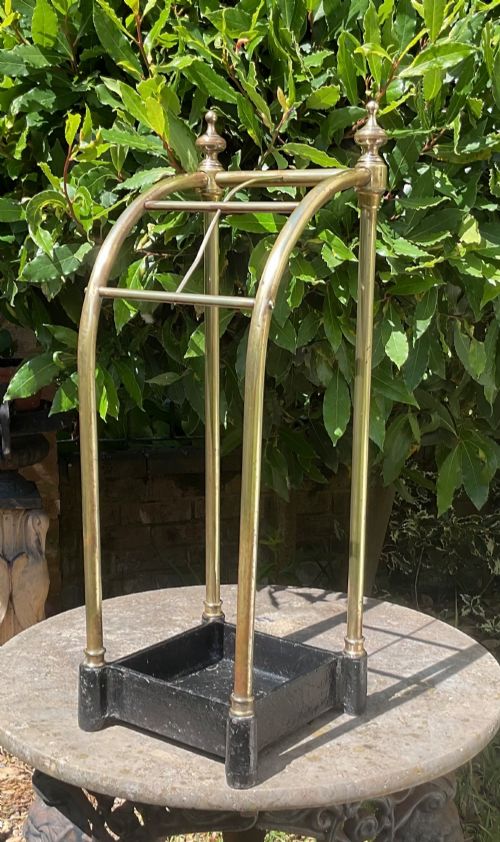
These items utilise brass as the primary metal, often combined with heavy cast iron elements to provide stability at the base. Makers shape the metal through casting and sheet manipulation to form curved frames, loop dividers, and supportive trays.
Construction techniques focus on creating robust containers capable of holding wet umbrellas without tipping. Artisans join structural panels and incorporate decorative motifs that reflect Victorian, Edwardian, and Art Nouveau design vocabularies.
Retail Price Guide 2026
Typical UK retail prices for gold brass stick stand, calculated from the Sellingantiques database of over a million retail prices indexed since 2003. This retail price guide relies exclusively on Sellingantiques data; no external sources or auction records are used, so the figures do not describe the wider market.
Every umbrella stand secretly hopes a nobleman's carved cane will visit.
What varies in quality
Quality differences lie in the substance and weight of the metalwork, distinguishing solid castings from lighter, pressed sheet alternatives. Superior examples display crisp definition in decorative flourishes and substantial construction that resists daily wear.
The refinement of the silhouette and the integration of functional elements, such as dedicated drip trays or well-proportioned handle loops, separate standard utilitarian vessels from more ambitious decorative hall accessories.
The Gold Brass Stick Stand Glossary
- Demi-lune
- A half-moon shape designed to sit flat against a hallway wall to save floor space. This configuration is common among nineteenth-century hall furnishings.
- Cast iron
- A heavy, durable metal alloy utilised in bases to anchor tall umbrella stands securely. It prevents tipping when heavy walking sticks rest inside.
- Art Nouveau
- A decorative style characterised by flowing, organic lines and plant-inspired motifs. Pieces from this movement often feature sinuous brass loops.
- Edwardian
- A period spanning the early twentieth century noted for lighter, refined domestic interiors. Stick stands from this era often exhibit simplified proportions.
Frequently Asked Questions
Where should a stick stand go?
These items belong in hallways, porches, or boot rooms where visitors arrive with wet coats and umbrellas. Placing them near the front door catches drips before they reach timber or carpeted flooring.
Their compact footprints, particularly demi-lune and corner variants, allow them to fit neatly into narrow corridors without blocking walkways.
How do I clean brass?
Maintenance involves dusting with a soft cloth and occasionally washing away grime with mild soapy water. Avoid harsh chemical cleaners that strip away the aged patina built up over decades.
Preserving the natural surface honours the historical character of Victorian and Edwardian metalwork.
Are these stands heavy?
Many examples incorporate heavy cast iron bases to counteract the tall, narrow profile of walking sticks and umbrellas. This weight distribution prevents the vessel from toppling when items are placed inside.
Lighter models rely on wide footprints or wall-mounting brackets to maintain stability.
How do I date a brass stand?
Dating relies on identifying stylistic markers such as Art Nouveau curves, Victorian proportions, or Edwardian simplicity. Material combinations, including cast iron elements, also offer clues to the manufacturing decade.
Comparing construction techniques with documented pieces from the nineteenth and early twentieth centuries helps narrow the era of origin.