

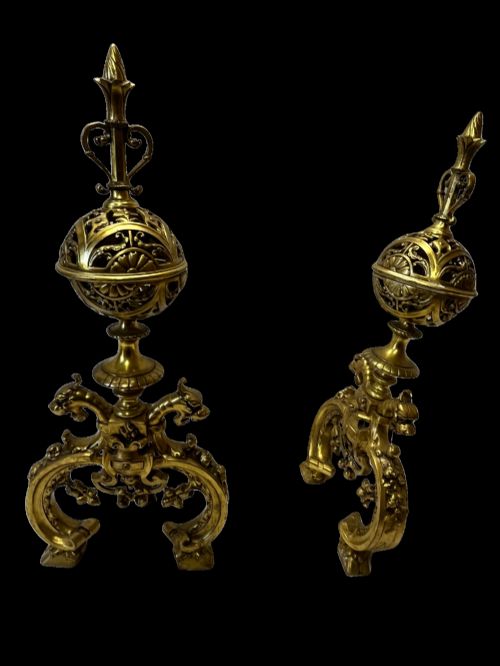
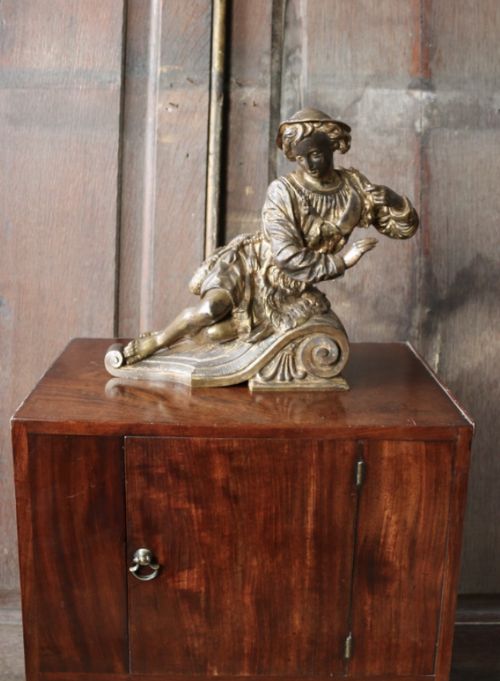


Gold Brass Hearth Chenets
Gold brass hearth chenets bring warmth and decorative focus to a fireplace, offering a practical way to support logs while anchoring the room's period scheme.
Gold Brass Hearth Chenets
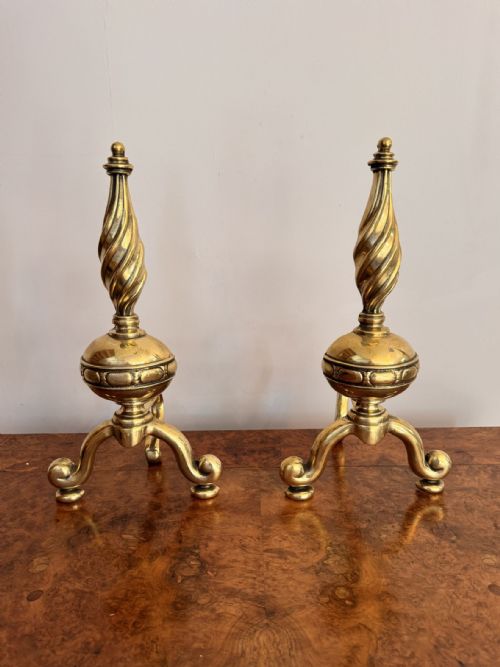
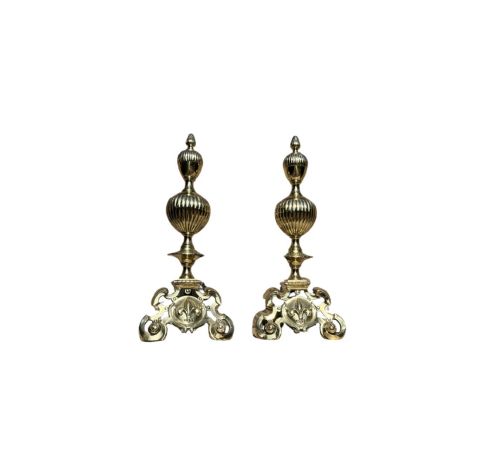
Gold brass hearth chenets are fireplace accessories designed to hold wood above the hearth floor for better airflow and burning. When you search for gold brass hearth chenets, you encounter pairs of decorative fire dogs dating from the eighteenth century through to the Victorian era.
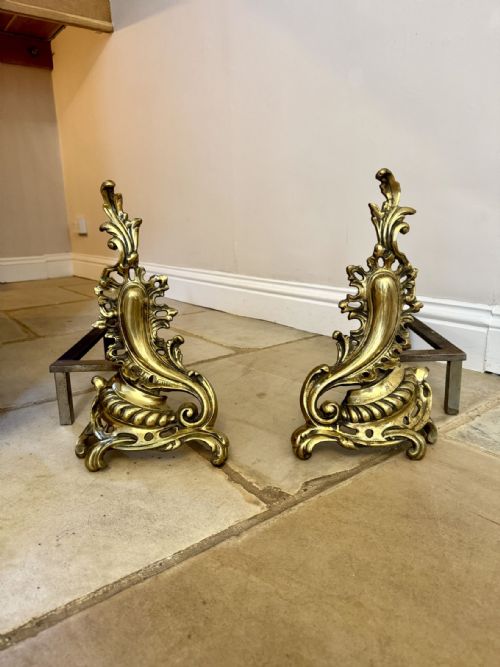
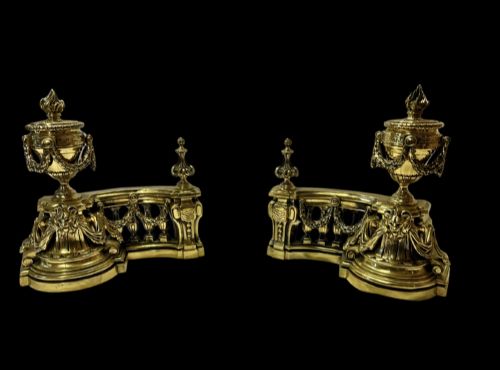
The selections span English Regency examples alongside French Rococo, Louis XVI, and Baroque revival pieces. These items frequently appear paired with fenders or statuary elements.
Most examples rely on cast brass, ormolu, and gilded bronze to achieve their metallic lustre. Their forms range from simple nineteenth-century utilitarian pairs to substantial decorative works modelled after French chateau designs.
Materials and construction
These pieces utilise metals such as brass, cast iron, and bronze, often finished with fire gilding or ormolu mounting. Makers employed casting techniques to shape intricate scrollwork and figural statuettes.
Many nineteenth-century iterations combine cast brass bodies with iron billets meant to withstand intense hearth heat. Surface gilding and bronze casting provide the distinctive golden sheen seen across Regency and Rococo styles.
Assessing quality
Quality rests on the crispness of the casting and the depth of the chasing on the brass or bronze surface. Finer pairs exhibit sharp detail in sculptural figures and organic scrollwork rather than softened edges from worn moulds.
Substantial weight and sturdy iron billets indicate robust construction intended for actual hearth use. The sophistication of the period style, from French Rococo revival to restrained Regency lines, dictates the visual distinction between standard and superior pieces.
The Gold Brass Hearth Chenets Glossary
- Chenet
- A French term for fire dog, used interchangeably with andirons to describe the decorative front supports placed on a hearth.
- Ormolu
- Finely ground high-carat gold applied to a bronze base using a mercury amalgamation technique, common in eighteenth and nineteenth-century French pieces.
- Firedogs
- The utilitarian term for metal supports that keep logs elevated inside an open fireplace.
- Regency
- An English design period spanning the early nineteenth century defined by classical restraint and neoclassical motifs.
- Rococo Revival
- A nineteenth-century style drawing on eighteenth-century French design with asymmetrical scrolls, acanthus leaves, and naturalistic curves.
Gold Brass Hearth Chenets: Frequently Asked Questions
What is the purpose of chenets?
Chenets sit at the front of an open fireplace to support logs, improving airflow beneath the wood for a cleaner burn. They also serve a purely decorative function, framing the hearth with polished metalwork.
Historically, they protected the back wall or hearth floor from intense heat while adding architectural presence to the room.
How do I clean brass chenets?
Dust accumulated from the hearth should be removed gently with a soft brush to protect the surface metal. Avoid harsh commercial polishes that can strip original gilding or modern lacquer.
Periodic wiping with a dry or slightly damp cloth maintains the lustre without harming ormolu or gilded bronze finishes.
Are chenets and fire dogs the same thing?
Yes, chenets and fire dogs describe the same type of hearth furniture, with chenets often implying a more decorative French origin. Both terms refer to upright metal supports used in open fireplaces.
Listing titles often use both words interchangeably to help buyers identify the objects.
How do I date a pair of chenets?
Dating relies on stylistic clues, such as the exuberant curves of Rococo revival pieces or the restrained geometry of Regency design. The weight, casting technique, and metal composition also point toward specific manufacturing eras.
19th-century copies often emulate 18th-century French chateau models, requiring close inspection of the casting quality to determine age.